The Other China
重陽節
The 18th of October 2026 is the Ninth Day of the Ninth Month in the traditional Chinese calendar 農曆九月初九. It marks the Double Ninth or Double Brightness Festival 重陽節, a celebration that follows shortly after the Harvest or Mid Autumn Festival 中秋節.
The Double Ninth is the autumnal counterpart to the Qingming Festival on the Eighth Day of the Third Month (see In the Shade 庇蔭 in New Sinology Jottings) which, apart from the commemoration of ancestors and sweeping of family graves, is also a time for spring outings (called 郊遊 or 踏青) undertaken to celebrate the season. Now, in the autumn once more it is time to climb a height to enjoy the spectacle of nature, to celebrate the passage of time with relatives and friends and to enjoy the fruits of the season, including dogwood berries 茱萸 and chrysanthemums 菊花, the petals of which were traditionally macerated in wine to encourage longevity (or at least to help numb the pain of existence); moreover, ‘nine’ 九 jiǔ is a homophone for ‘long’ or ‘continuous’ 久 jiǔ. This is why the day is related to long life and the agèd; it is also known as the Chrysanthemum Festival 菊花節.
In this celebration of the northern autumn of 2026, the Beijing artist Lao Shu again plucks virtual chrysanthemums at the imagined home of Tao Yuanming 陶淵明, the famous poet-recluse who is traditionally associated with the flower.
***
***
China Heritage first celebrated the Double Bright Festival in October 2017 as part of a newly launched series titled New Sinology Jottings. At the time I noted that the essays in this seres were in the style of ‘jottings’ 筆記 or 劄記, a genre familiar to readers of traditional Chinese prose. I called these essays ‘New Sinology Jottings’ 後漢學劄記 in keeping with the spirit of New Sinology 後漢學, that is the study of and engagement with the Chinese and Sinophone worlds that I had advocated from 2005.
The Jottings, composed in the spirit of New Sinology, encourage an understanding of the Chinese world that does not artificially sequester an appreciation of culture, thought and religion from an understanding of politics, society and economics. Mine is a kind of Sinology that has evolved during the present era of reinvented Chinese traditions; its approach constantly recalls the diverse strains of history and culture that underpin the multiverse of China, a polyphonous world that the party-state of the People’s Republic attempts to dominate, silence, corral or eliminate.
New Sinology Jottings are not some kind of self-indulgent chinoiserie or post-imperial gewgaw. Their aim is not to provide readers with a light dusting of China literacy. Rather they take China past and China present seriously as they help readers appreciate, in a modest fashion, the skein of influences, ideas and traditions that continue to enliven the Chinese world.
***
The autumn is a time of late bounty, seasonal change, lingering beauty and finality. In 2026, we have the season in the company of the Beijing artist Lao Shu. For earlier chapters in this miniseries, see:
- Lao Shu’s Autumnal Wistfulness, 1 September 2026
- Lao Shu’s Cornucopia, 3 September 2026
- Lao Shu and the Autumnal Equinox of 2026, 23 September 2026
- Lao Shu’s Appetite for Autumn, 25 September 2026
- Persimmons and Lao Shu’s Existential Autumn, 1 October 2026
- Time to Pay Another Visit to Tao Yuanming, 10 October 2026
- Lao Shu’s Autumn in the Hills, 14 October 2026
***
My original celebration of the Double Brightness Festival, published on 28 October 2017 under the title Ninth of the Ninth 重陽 Double Brightness, was written in New York. I was staying with Lois Conner, friend, photographer, collaborator, at her apartment in Gramercy Park. Together we participated in the opening of Art and China after 1989: Theatre of the World, an exhibition mounted by the Guggenheim Museum, at the invitation of the curator Alexandra Munroe (see China’s Art of Containment, my review of the exhibition).
— Geremie R. Barmé,
Editor, China Heritage
18 October 2026
The Ninth Day of The Ninth Month
The Bingwu Year of the Horse
丙午赤馬年九月初九重陽節并老年節
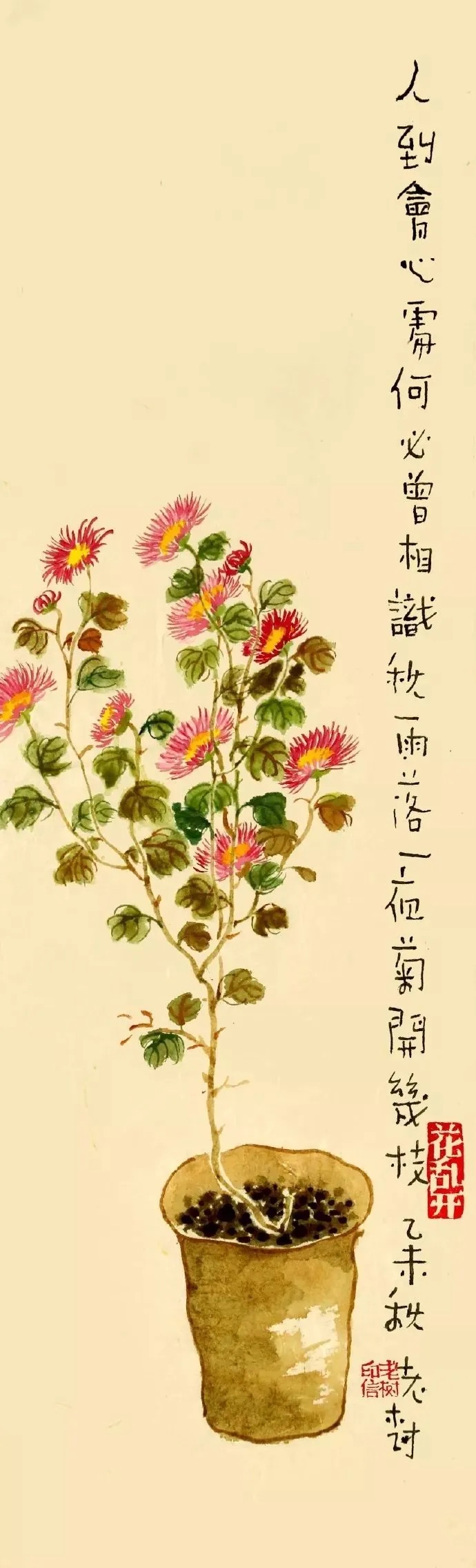
When your heart-minds are in sync
there’s no need to meet up in person.
After a long night of this autumn rain
blossoming chrysanthemums say it all.
— Lao Shu, autumn, Yiwei Year of the Goat [2015]
***
Chrysanthemums
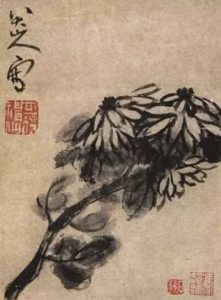
The chrysanthemum has been cultivated in what is known today as Henan province 河南省 since the Song dynasty: the northern Song (960-1127 CE) had its capital at Bianliang 汴梁 or 汴京, modern-day Kaifeng. In 1983, the authorities in Kaifeng named the chrysanthemum the city flower and declared the Double Ninth to be the Chrysanthemum Cultural Festival. But the flower has older, and more ethereal, associations.
The recluse-poet Tao Yuanming (陶淵明 or 陶潛, 365–427 CE) has long been celebrated for his association with the chrysanthemum. A number of his poems are among the most often quoted, and over-interpreted, in the literary tradition. Famed for having given up service to the state for a life of leisure, writing, drinking, and occasional agricultural pursuits, Tao Yuanming is the archetype of a man who has rejected the onerous demands of the day to pursue instead the cultivation of the self. This quest for quietude, one also tinged with worldly concerns and fears, is recorded in poems that, for over 1600 years, have inspired artists and writers alike.
Even today, some who are encumbered by the demands of work, family and a myriad of obligations may think they are but ‘recluses at court’ 朝隱, biding their time in onerous employment in the hope of one day seeking out greener pastures. Others sidelined by political fate may strike a superior pose and pretend regardless to be otherworldly aesthetes while all the time yearning for a place in the hierarchy of the state; it is a mindset summed up in the expression ‘although one may physically be in the mountains, the heart is obsessed with the court’ 人在山林心在朝.
In this celebration of the northern autumn of 2026, the Beijing artist Lao Shu again plucks virtual chrysanthemums at the imagined home of Tao Yuanming 陶淵明, China’s most famous poet-recluse.
***
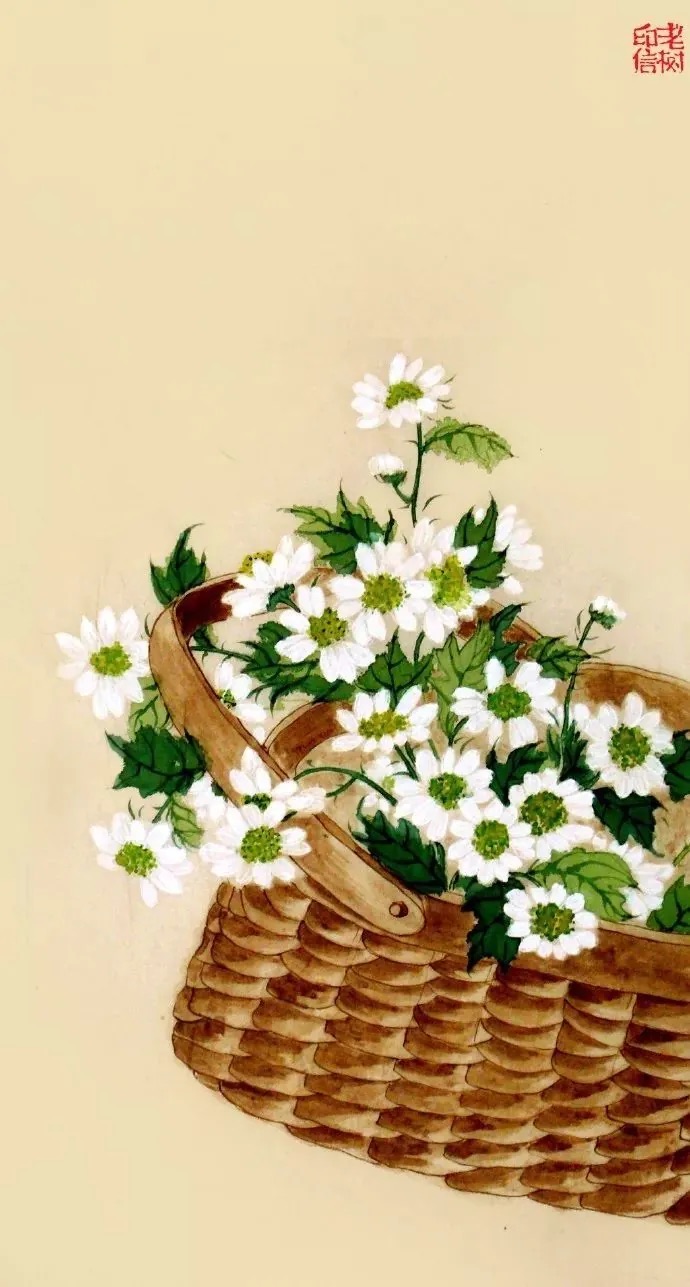
昨日再訪陶淵明,柴門緊閉又未成。
折了幾枝野菊花,坐聽空山吹大風。
I went to visit Tao Yuanming again yesterday,
but that rustic gate was closed tight against me.
So, I picked a few sprigs of chrysanthemum then
sat down to listen to the wind howling in the hills.
Note: Here ‘rustic gate’ 柴門 — that is a gate made out of brush or scrap wood — is a synecdoche for Tao Yuanming, his humble dwelling and reclusive life. The expression features in the elegy that Tao wrote for himself, 自祭文:
茫茫大塊,悠悠高旻。是生萬物,余得為人。自余為人,逢運之貧。簞瓢屢罄,絺绤冬陳。含歡谷汲,行歌負薪。翳翳柴門,事我宵晨。
‘Alas, alas, this vast clod, earth, that illimitable high firmament, together produce all things, even me who am a man. But from the time I attained human estate, my lot has been poverty. Rice-bin and wine-gourd have often been empty, I have faced winters in thin clothes. Still, I have gone happily to draw water from the brook and have sung as I walked under a load of firewood, going about my daily affairs in the obscurity of my cottage.’
J.R. Hightower translates 翳翳柴門 as ‘the obscurity of my cottage’.
For more on Tao Yuanming in China Heritage, see:
- Catching Sight of South Mountain
- Substance, Shadow, Spirit
- Feckless Sons, Poet-Readers and Garbage Time
- Visiting Tao Yuanming in the Autumn
***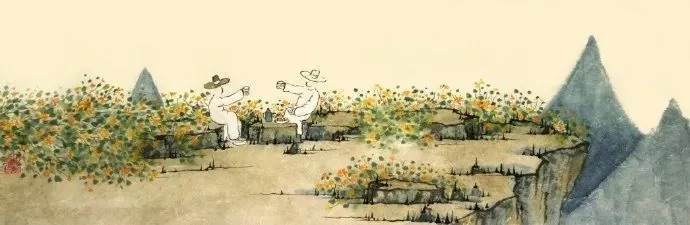
又逢重陽節,微信約朋友。
登高看新菊,臨風吃老酒。
平時總在忙,難得能聚首。
大醉下山去,相扶一起走。
Double Brightness Festival has come again
and so we make a WeChat date to meet up.
Climbing on high we appreciate the blossoms and
drink aged rice wine as the wind billows around us.
We’re usually too busy to have moment together like this,
now, tipsy, we are making our way down the hill
giving each other a hand as we wend our way.
***
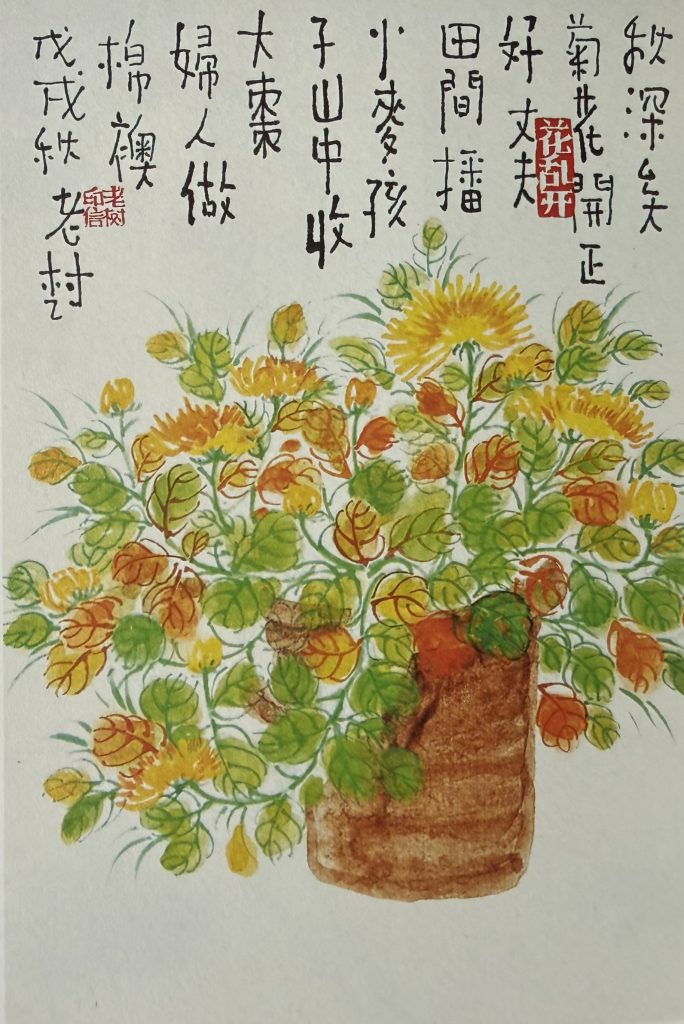
Deep autumn:
the chrysanthemums are now in full bloom,
the husband is planting wheat in the fields,
the children are picking dates from the trees
as the wife makes padded clothes for the winter.
— Lao Shu, autumn, Wuxu Year of the Dog [2018]
***
Source:
- 老樹,重陽節快樂 and《老樹日曆》,2026年10月15日
***
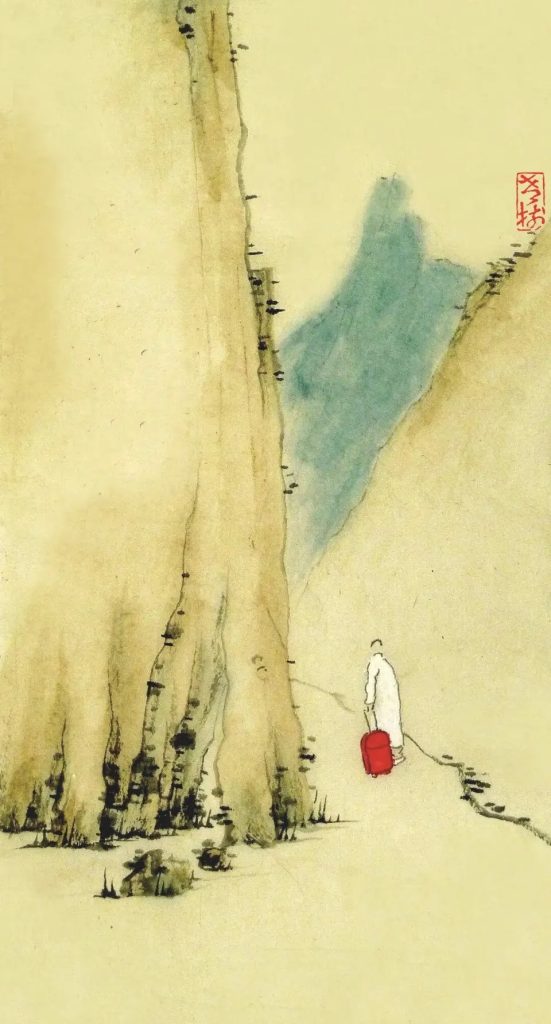
人世忒不清靜,名利惹人心煩。
何時收拾行李,獨自遁入秋山。
The world just won’t leave you in peace and
the obsession with money and fame is a bore.
Don’t you think it’s about time to pack your bags,
set off by yourself and disappear in the autumn hills?
— 老樹,宜遁入秋山,《老樹日曆》,2026年10月17日