蛇尾馬頭
The 2014 Year of the Horse was my birth year — I turned sixty on 4 May 2014 — a fateful time and one that Indian astrologers had warned me would be a time of extreme danger. I had an inkling that things would go badly on the Eve of the Lunar New Year. That night, after having given a talk about our recently published China Story Yearbook 2013: Civilising China 文明中華 with colleagues at Harvard University, I broke a toe. It made a mockery of one of the clichéd benedictions related to the Year of the Horse: 萬馬奔騰, ‘May all your horses gallop forth!’ Back in Australia I learned that I had Stage 3 cancer. It was the beginning of the end of my formal academic life although, not long after, China Heritage would become my métier.
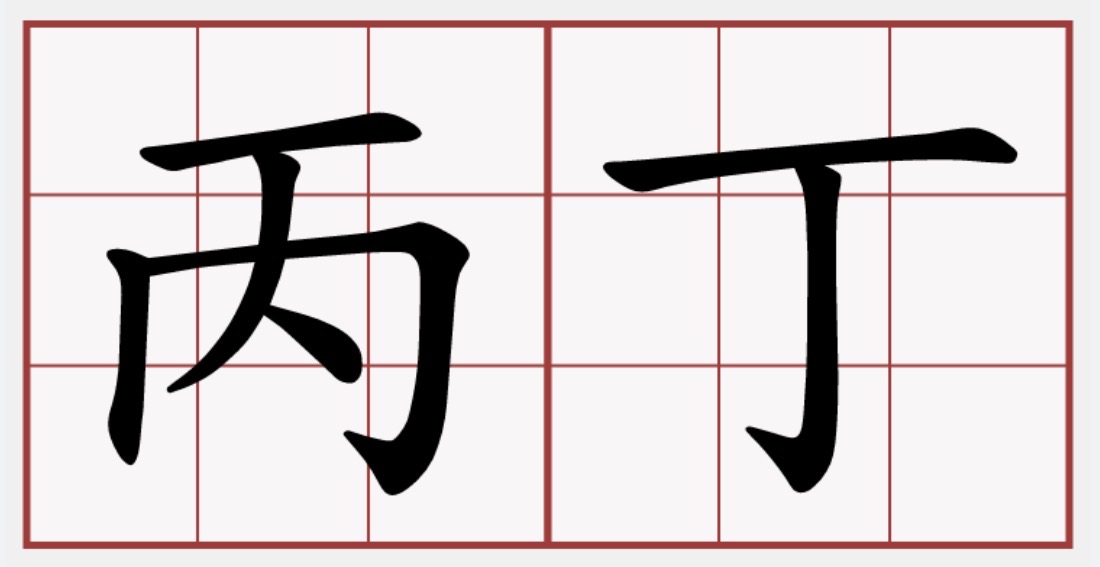
Having weathered the turn of the sixty year wheel in 2014, the Catastrophic Bing-Ding Biennium 丙午丁未劫 of 2026-2028, a 雙火年份, doesn’t seem to be so daunting. Then again, at the age of seventy-two, what could possibly go wrong? I offer a few Year of the Horse Chinese expressions that might help help forestall disaster:
- 馬失前蹄 — be careful of making a misstep;
- 人仰馬翻 — things could go belly up; and,
- 悬崖勒馬 — pull back from the brink of disaster.
For more on the ill-omened years ahead, see On the Cusp of Fire — The Flaming Horse and The Blood-red Ram, published at the end of the Yisi Year of the Snake 乙巳蛇年尾.
***
It is four decades since Beijing saw the tentative revival of Temple Fairs 廟會. Friends encouraged me to visit the ‘cultural fair’ being held at the Altar of the Earth 地壇 in late 1985 and, by Spring Festival 1986, the authorities were supporting what promised to be a new cultural and commercial opportunity. It was a Year of the Tiger and temple fairs have flourished ever since. I recall with gratitude the poet and publisher Yan Wenjing (嚴文井, 1915-2005) for encouraging me to visit that first post-Mao temple fair. In that same year, as a result of the controversies surrounding the play We《WM•我們》, I met Wang Zheng 王正, the father of my friends Ziyin and Zhaohui, as well as their actress-mother Fang Jufen 方菊芬. During the 1990s and early 2000s, the. Wang family regularly invited me to celebrate Spring Festival with them. Every year at this time, my thoughts turn to these dear Beijing friends.
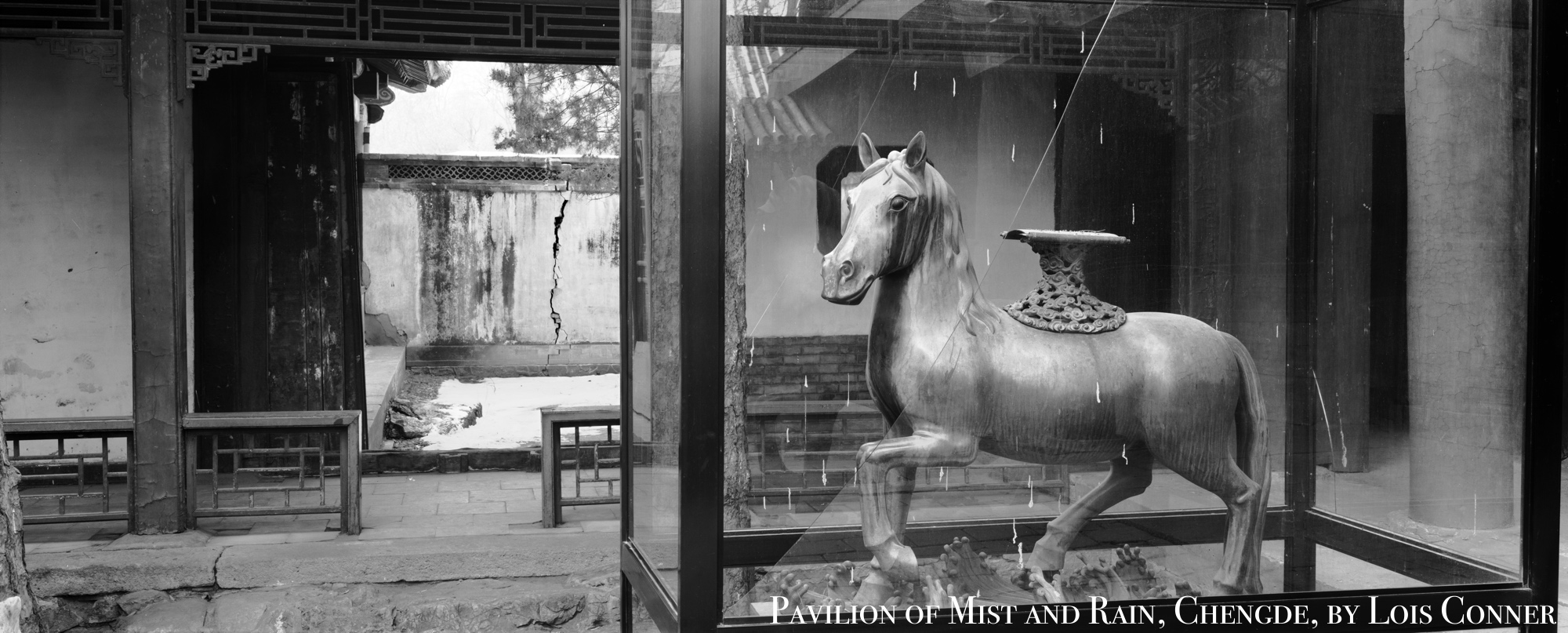
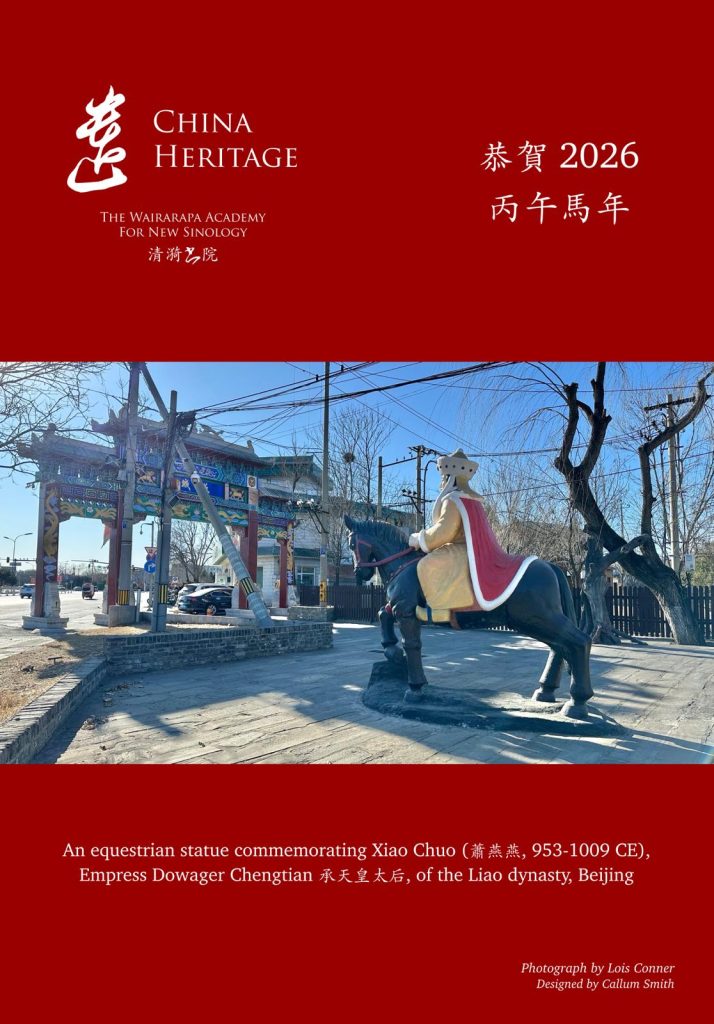
My thanks also to the photographer Lois Conner for allowing China Heritage to use some of the work that she made in February 2026 when she was in Beijing for the opening of a major exhibition on the Italian architect Andrea Palladio at the National Museum of China. My thanks, too, to Callum Smith, our webmaster, for designing our greeting cards for the Year of the Horse. Both Lois’s work and Callum’s handiwork also appear in: 1 January 2026 — a Masthead for The Year of the Horse.
— Geremie R. Barmé
Editor, China Heritage
16 February 2026
New Year’s Eve
Last Day of the Twelfth Month of
The Yisi Year of the Snake
乙巳蛇年臘月廿九除夕
***
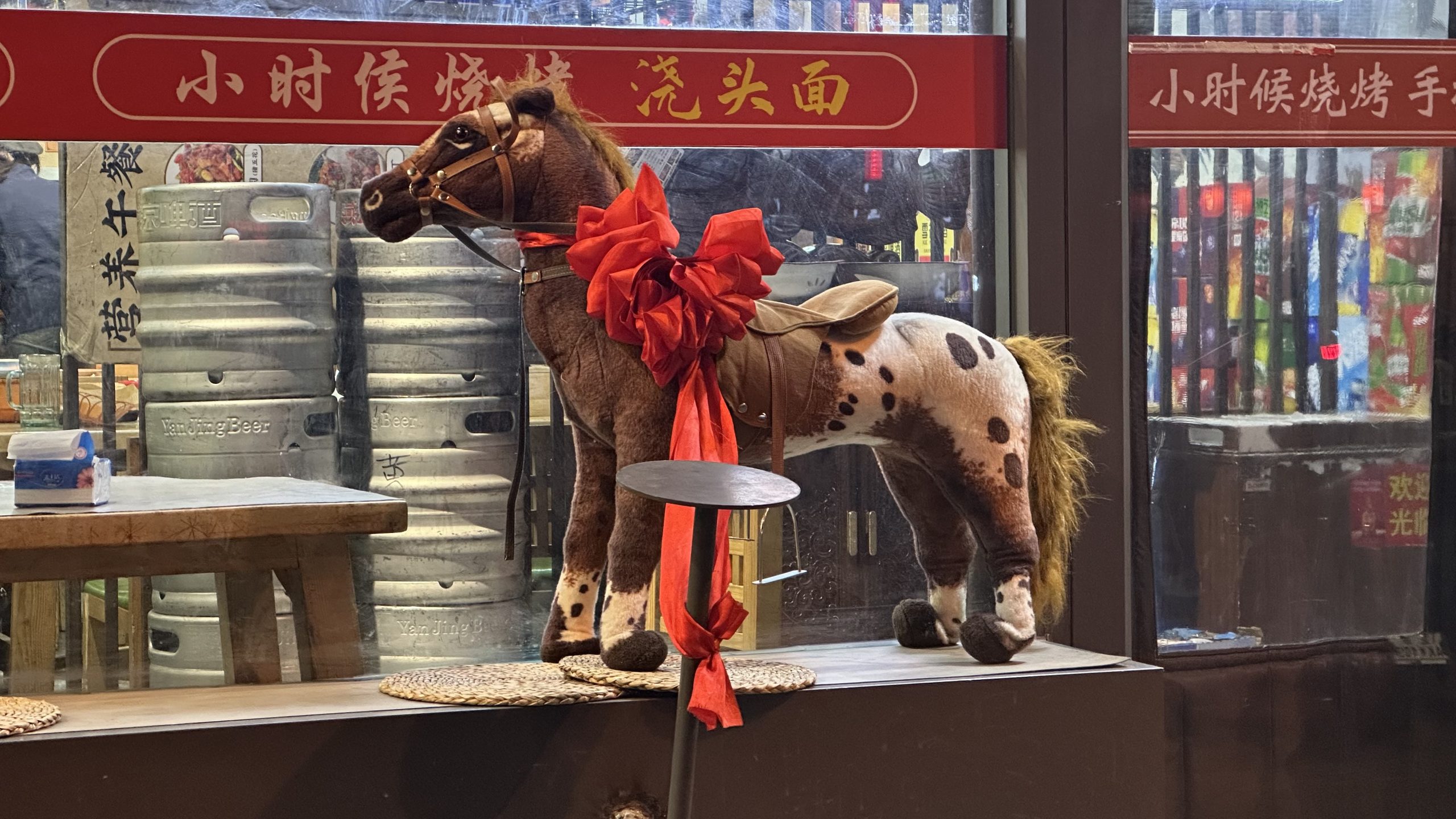
We previously noted that, according to the sixty-year cycle of the Chinese calendar, the upcoming Bingwu Year of the Fire Horse 丙午火馬年 will be the first half of what is traditionally known as a ‘Catastrophic Bing-Ding Biennium’ 丙午丁未劫, aka 赤馬紅羊劫. The totemic animals of Bing-Ding — 2026-2028 — are the horse and the ram and they are associated with the element Fire. It has long been claimed said that calamities ensue when they occur together.
The Portents of Bing and Ding 丙丁龜鑑, a Song-dynasty compendium by Chai Wang 柴望, records that up until that time either natural or man-made disasters had occurred twenty-one times during Bingwu and Dingwei years. Essays From the Rong Studio 容齋隨筆, another work of the Song period, was just as unequivocal:
During Bingwu and Dingwei years, China has repeatedly experienced major changes, be they threats born within the land or humiliations originating with the barbarians outside. 丙午、丁未之歲,中國遇此輒有變故,非禍生於內,則夷狄外侮。
***
On the Malediction of the Horse-Ram
Li Chengpeng
translated by Geremie R. Barmé
Back during the Great Qing, whenever there was a conjunction of Horse-Ram Years, various sage-like figures and sketchy monks would frequent the Forbidden City in an attempt by the Court to forestall astrological disaster. Because of the excess of the Fire Element during the Bing-Ding years, red clothes and robes were banned as were all of the usual red festive decorations. It was all about balancing the Five Elements and avoiding ‘adding fuel to the flames’ 火上澆油.
The Bingwu Year of 2026, the Flaming Horse, and the Dingwei Year of 2027, a Blood-red Ram, occurring in conjunction mean that the Fire Element is reinforced and the ‘double whammy of fire’ 雙火疊加 can easily upset the delicate balance of nature potentially resulting in disaster.
There’s some evidence for this belief:
- 1966 to 1968 were Horse and Ram years. That’s when the Cultural Revolution engulfed China.
- 1906 to 1907, the previous Horse-Ram conjunction, saw the rule of the Qing dynasty imperilled and the promulgation by the Court of the ‘Edict to Establish a Constitutional Monarchy’ and all that followed in its wake … In December of that same year, 1906, the Ping-Liu-Li Uprising 萍瀏醴起義, an armed insurrection that involved the revolutionary Tongmenghui and various secret societies, broke out. Although the uprising failed, it presaged the end of the dynasty.
[Addendum:
- In the Dingwei Year of 1847, the Russian Empire occupied vast tracts of land in China’s north-east. In Guangzhou a popular struggle against excessive rents broke out and in Hunan province Lei Zaihao rose up in rebellion. Also in Guangzhou, the people of Huangzhuqi organised armed opposition to the English. The rebel Feng Yunshan was arrested by local authorities, an event that contributed to the Taiping Rebellion [Feng himself was made Southern King of the new Heavenly Kingdom].
公元1847年(丁未)沙俄吞併中國西北領土。廣州反租地鬥爭。湖南雷再浩起義。廣州黃竹岐人民抗英。馮雲山被捕(太平天國開始發跡)。]
This talk of recurring ‘Bing-Ding catastrophes’ ( 丙午丁未劫, aka 赤馬紅羊劫) can be traced back to Chai Wang who compiled The Portents of Bing and Ding in the Song dynasty [discussed earlier]. According to his calculations, during the 1000 years from the fall of the Qin dynasty in the second century BCE up to his day in the eight century CE, every time a Bingwu-Dingwei biennium occurred there was an increased likelihood that chaos would break out.
He was pretty much spot on, too:
- During the Fire Horse-Red Ram Years of 1126-1126, the armies of the Jin dynasty invaded Bianliang, the capital of the Northern Song, a disaster famously known as the Humiliation of Jingkang 靖康之恥 [which resulted in the emperor and members of the court being captured and the relocation of the Song capital to Lin’an, present-day Hangzhou, in the south].
- In the Bingwu Year of 195BCE, Liu Bang, the founding emperor of the Han dynasty passed away and when Empress Lü took the throne she executed his loyal ministers and members of his extended clan. This nearly led to the collapse of the Han dynasty itself.
- In the Bingwu Year of 15BCE, Wang Mang usurped the throne. This marked the beginning of the end of the Western Han dynasty.
Such fun! And there’s lots more like that, though I’ll stop here. So, dear reader, as you pause to appreciate the profundity of Chinese culture remember to avoid indulging in feudal superstition. Be sure to cooperate with the authorities and be careful to eat yellow chillies over the new year holidays and avoid those inflammatory red ones.
Over and out.
大清那會兒,每逢赤馬紅羊年,便有高人或妖僧出沒紫禁城,以助皇家克防劫難。據說是因為火太旺,忌穿紅色衣服,宮里忌掛紅色飾品,以避免“火上澆油”,維持五行平衡。
普及一下:赤馬通常指丙午年(如2026年),紅羊指丁未年(如2027年),天干地支五行均屬火,形成“雙火疊加”格局,火氣過旺,打破平衡,易引震蕩。
比如1966年(丙午年,赤馬年) 和 1967年(丁未年,紅羊年),文革。
1906年(丙午年,赤馬年) 和 1907年(丁未年,紅羊年)。清末民情激蕩,清廷頒布《宣示預備立憲諭》,這是之後一切的開始……
同年12月初,萍瀏醴起義爆發,這是同盟會發動的第一次武裝起義。
赤馬紅羊劫說法源於源於讖緯文化。南宋一個名叫柴望的學者,編寫了《丙丁龜鑒》,統計了從秦朝到五代共一千多年的歷史,發現每逢丙午、丁未年,國家發生動亂的概率比較高。他歸結為“赤馬紅羊劫”。
還挺准。北宋末年的赤馬紅羊劫,公元1126年(丙午年),金兵攻破北宋都城汴京。這就是著名的“靖康之恥”。
公元前195年(丙午年)漢高祖劉邦逝世,呂後大殺功臣和劉氏血脈,險些顛覆漢家江山。
公元前15年(丙午年)王莽篡權,西漢王朝走向終結。
好玩兒,還有好多,不一一細說了。敬請各位品味中華傳統文化之博大精深,不要亂搞封建迷信。配合政府,過年吃黃辣椒,不吃紅辣椒。
散朝。
— 李承鹏,X,2026年2月8日
***
***
There’s a segment in the Spring Festival Extravaganza broadcast by Beijing TV:
A made-in-China robot kowtows to wish a happy new year.
Get it? Others used the compass that we invented to navigate the high seas, while we employed it to divine fengshui for burial plots.
Others built robots to help humanity engage in productive labour, but we also use them to pay obeisance to the ancestors.
Shit hot, eh? It’s China’s win-win scenario.
— Li Chengpeng, 12 February 2026
北京台春晚有個節目:國產機器人現場給人磕頭拜年。
嗯嗯,別人把指南針用於大航海,我們拿來在墳頭看風水。
別人發明機器人幫助人類工作,我們還可以讓它來磕頭拜祖宗。
牛逼,我們雙贏。
— 李承鵬,X,2026年2月12日
***
***
***