Celebrating New Sinology
真偽莫辨
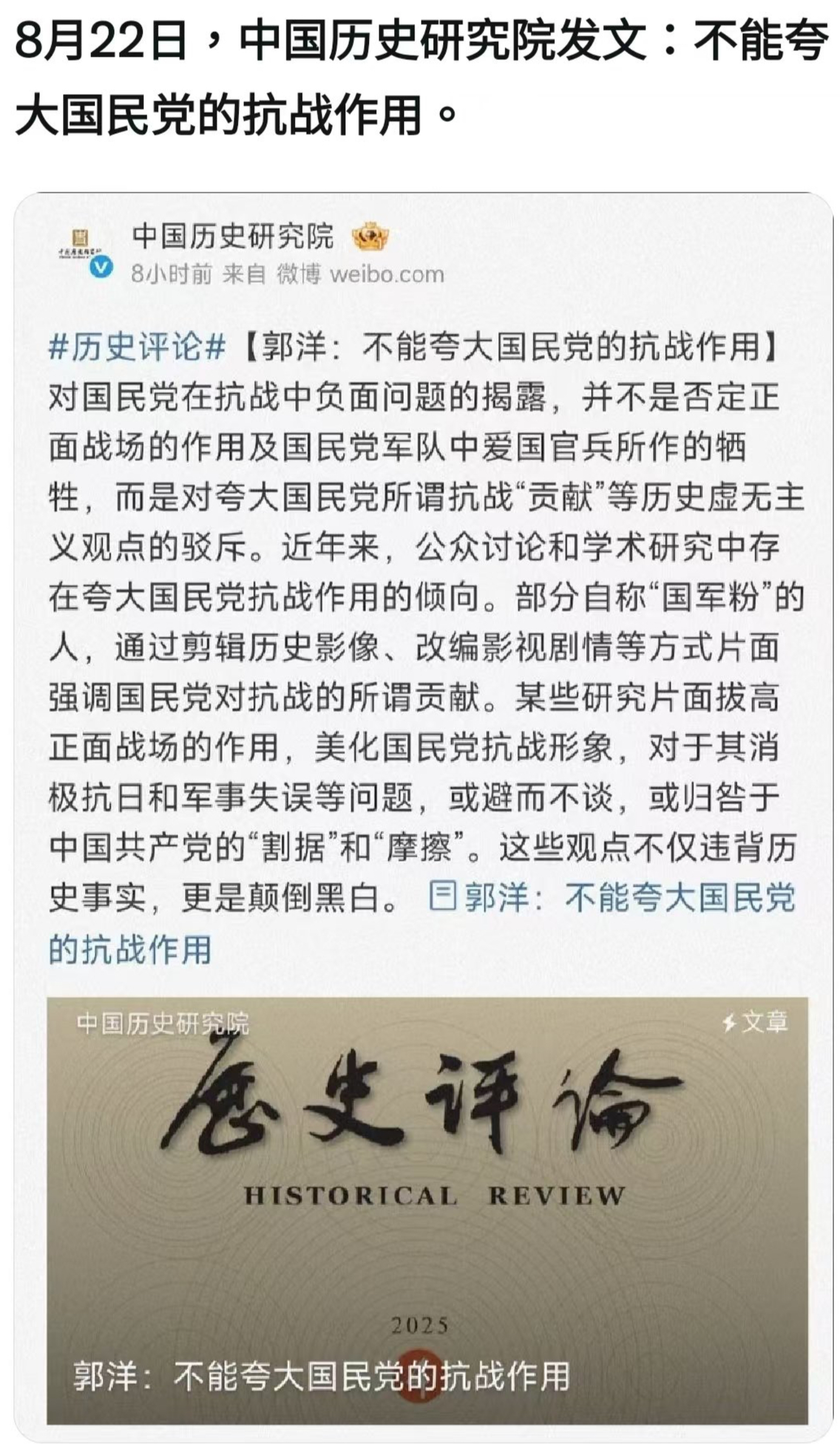
In this chapter of Celebrating New Sinology, published on the eve of the 3 September 2025 Victory Day parade in Beijing, we start with a short essay on the ‘70-20-10 Strategy’ attributed to Mao Zedong in 1937 and the debates surrounding the Second Japanese War. This is followed by an excerpt from The Party on parade, an essay by Charles Parton, Chief Adviser to the China Observatory at the Council on Geostrategy.
We are then guided by Dai Qing 戴晴, one of China’s leading independent investigative historians, and the observations she made about the war in As if to Break Free of the Autocratic Gloom, a speech that she delivered a little over eighteen months before Xi Jinping’s rise to power. This is followed by a sardonic dialogue that circulated online in the weeks before 3 September; it revolves around the homophone kàng rì — 抗日 (‘to resist Japan’) and 炕日 (‘to fuck on a kang [platform bed]’).
Thereafter, we reproduce a Q&A with Evan Osnos of The New Yorker regarding China’s military parades recorded in the lead-up to the grand 1 October National Day parade in 2009. An annex to that exchange features links to other parades in Tiananmen and a quotation from The Propaganda of History by W.E.B. Du Bois. We conclude with Where Have All the Flowers Gone?, an antiwar song by Pete Seeger that was released in 1955. It is sung by Marlene Dietrich, a German performer who was famous for her opposition to the Nazis.
***
Contents
This chapter is divided into the following sections. Click on a title to scroll down:
***
Since 2005, I have promoted New Sinology 後漢學 and encouraged a holistic approach to the study of China. In doing so I have emphasised the tradition of 文史哲 wěn shǐ zhé, one that embraces the ‘literary, historical and intellectual’ of both the past and the present, along with the demands of western scholarship and internationally recognised disciplines. To accommodate that old formula to the realities of China’s post-1949 party-state, we can also translate 文史哲 as ‘propaganda/ PR, mytho-poetic historiography and Stalino-Maoist based ideology’. And, when it comes to China’s Historical Nihilism — that is its decades-long official campaign on historical fact and narrative truth — I believe that it is incumbent upon those who are interested in pursuing a serious engagement with contemporary China, be they Chinese or non-Chinese, to emulate the spirit of independence and intellectual rigour championed by Chen Yinque (陳寅恪, 1890-1969, aka Chen Yinke), both in the epitaph he composed for Wang Guowei (王國維, 1877-1927) in 1929 and in his principled rejection of the blandishments of Mao Zedong in 1953, on the eve of the devastation of Chinese scholarship (for more on these significant moments in China’s modern intellectual history, see The Two Scholars Who Haunt Tsinghua University; and, 1954 — China’s Dark Enlightenment, Hu Shih & the Nobility of Failure).
To have a meaningful intellectual, scholastic or cultural engagement with China and the Sinophone world today requires an effort to study modern history, both as seen in the funhouse mirror of the Communists and their institutions, and as appreciated by independent-minded scholars, analysts and media commentators wherever they may be. To accept The China Story touted by the party-state — one that is meticulously curated and constantly policed — regardless of whether it is for personal, or professional convenience, is to be a willing collaborator in an Empire of Lies. To quote a famous line from ‘An Assured Way to Salvation’ 救亡決論, published by Yan Fu 嚴復 in 1895:
華風之弊,八字盡之:始於作偽,終於無恥。
(One can sum up the Chinese temper in the following way: ‘Born in hypocrisy its epitome is shamelessness.’)
***
We explain the significance of 真偽莫辨 zhēn wěi mò biàn, the rubric of this chapter, below. My thanks, yet again, to Reader #1 for going over the draft of this chapter and picking up a number of typographical errors. Those that remain are solely my responsibility.
— Geremie R. Barmé
Editor, China Heritage
1 September 2025
***
Related Material:
- Geremie R. Barmé, Mirrors of History: On a Sino-Japanese Moment and Some Antecedents, Asia-Pacific Journal: Japan Focus, 19 May 2005
- 林冠瑜,賴清德說“終戰”符合台灣人史觀,DW,2025年8月20日
- Brian Hioe, Historical Memory of the End of Pacific War Contested Between the KMT and DPP, New Bloom Magazine, 20 August 2025
- Zichen Wang, Ma Ying-jeou on the 80th Anniversary of Victory in the War of Resistance Against Japan, Pekingnology, 1 September 2025
- 紀念中國人民抗日戰爭暨世界反法西斯戰爭勝利80週年大會
- 張傳林,《南京照相館》的這個情節安排可謂置中國人於忘恩負義之地,CND刊物和論壇, 2025年8月17日
- Ren Jinjing, Key Facts Cannot Be Twisted — On the Historical Distortions and Aesthetic Diminishment of Nanjing Photo Studio (《南京照相馆》), Chinese Literature & Arts, 17 August 2025
- Manya Koetse, Remembering War in a New China, What’s on Weibo, 22 August 2025; and, The Final Countdown to China’s Big V-Day, 2 September 2025
- John Fitzgerald, Where were you in the World Anti-Fascist War?, The Strategist, 26 August 2025
- 袁騰飛, 《南京照相館》最該講的歷史真相為啥沒講?, 油管, 2025年8月30日
- Charles Parton, The Party on parade, Observing China, 1 September 2025
- Joe Leahy and Kathrin Hille, Xi Jinping outlines China’s ambition to reshape world order in showpiece summit: Shock-and-awe ‘victory day’ military parade this week seeks to recast second world war narrative, Financial Times, 1 September 2025
- Joseph Torigian, Xi and Putin Weaponize WWII’s Legacy, ChinaTalk, 2 September 2025
- Meredith Chen, China scholars urge ‘truthful’ World War II accounts amid Western ‘historical nihilism’, South China Morning Post, 2 September 2025
- Li Yuan, A Hidden Camera Protest Turned the Tables on China’s Surveillance State, The New York Times, 2 September 2025
- David Bandurski and Alex Colville, Historical Revisions on Parade, China Media Project, 4 September 2025
70-20-10
Geremie R. Barmé
‘Our firm policy should be to devote 70 percent of our efforts to expansion, 20 percent to dealing with the Kuomintang and 10 percent to resisting Japan.’
我們的固定政策應該是百分之七十的擴張,
百分之二十應付國民黨,百分之十抵制日本。
This ‘70-20-10 Strategy’ 七二一方針 — summed up in Chinese as 七分發展,二分應付,一分抗日 — has for decades been ascribed to Mao Zedong who supposedly outlined his wartime policy in a secret speech to his fellow leaders in October 1937. According to The Official China Story, one promoted with increasingly monotonous bellicosity by Beijing, however, the Communists were in fact the ‘mainstay’, 中流砥柱 zhōng liú dǐ zhù, of the war effort as well as being the ‘unrelenting backbone’ 不屈的脊梁 bùqūde jǐ liáng of the resistance. Such claims are mendacious.
[Note: See Xin Haonian 辛灝年, ‘The “anti-Japanese” strategy of the Yan’an government’ 延安政府的「抗日」戰略, YouTube, 19 January 2016.]
On 10 October 1965, Chiang Kai-shek, China’s wartime leader and President of the Republic of China, referred to the ‘70-20-10 Strategy’ in a speech marking the fifty-fourth anniversary of the founding of the republic. Half a century later, in September 2015, while the Communist party-state-army lavishly commemorated Victory Day and the defeat of Japan, claiming yet again China’s victory as theirs in Beijing, in Taipei Ma Ying-jeou, President of the Republic of China, repeated Chiang’s claim and called on the Communists to respect historical truth.
[Note: See also 海濤,國共抗日爭主流,誰是支流逆流,VOA,2015年9月7日; and, 抗戰主力之爭。Regarding recent international scholarship on the subject, see Hans J. van de Ven, War and Nationalism in China: 1925–1945 (Routledge, 2012); and, Rana Mitter, Forgotten ally: China’s World War II, 1937-1945 (Mariner Books, 2014).
For the competing narratives of the latter-day KMT and the Taiwan-focussed DPP, see:
- 林冠瑜,賴清德說“終戰”符合台灣人史觀,DW,2025年8月20日;
- Brian Hioe, Historical Memory of the End of Pacific War Contested Between the KMT and DPP, New Bloom Magazine, 20 August 2025; and,
- Zichen Wang, Ma Ying-jeou on the 80th Anniversary of Victory in the War of Resistance Against Japan, Pekingnology, 1 September 2025.]
***
***
Historical Nihilism
Over the years, China Heritage has frequently picked at the skein of historical distortions, fables and blatant lies that underpin the background and founding of the People’s Republic of China, as well as describing the absurd contortions that Party leaders and their propagandists/PR professionals twist themselves into to explain the numerous contentious events and periods in China’s post-1949 history. Since the 1980s, we have also run something of an informal tally of efforts made by Chinese historians, scholars and journalists to contest the self-serving historical fallacies of the party-state, often at great personal risk to themselves.
As we suggested in The Narcotic Narcissism of Official History in Trump’s America and Xi Jinping’s China, it is impossible to imagine historians in China today being able to tabulate, debate and contest the all-encompassing and relentless Historical Nihilism of Xi Jinping and China’s party-state-army. There is simply no way that China’s vast corps of highly trained historians and incisive media commentators could in any significant way emulate the Trump Against History series published by The New Republic in August 2025.
A gathering of independent minded historians convened to discuss the Second Japanese War (or, any other controversial topic in late-dynastic, modern or contemporary Chinese history) is impossible. Similarly, any exchange of such ideas written for publication would be swiftly censored. After all, even at the height of the so-called open eras of Jiang Zemin and Hu Jintao censorship, bans, interdictions and legal threats were commonplace.
We have previously written about The Herald of History 歷史的先聲, edited by Xiao Shu 笑蜀, published on the eve of the fiftieth anniversary of the People’s Republic. The modest volume brought together publicly stated undertakings made by Mao Zedong, Zhou Enlai, Liu Shaoqi and other Communist leaders during the Civil War in the late 1940s in support of support multi-party democracy, the rule of law, media openness and broad-based human rights. A compendium of lies, betrayals and broken promises, the book documented how the Chinese Communist Party had used disinformation to win hearts and minds during the Civil War. Confronting Beijing with its historical hypocrisy during a year of celebration was a brazen act of lese-majesty and the book was banned shortly after it appeared. Xiao Shu has been hounded by the authorities ever since.
[Note: For more on foundational lies of the PRC, see The fog of words: Kabul 2021, Beijing 1949; and, The Right to Know & the Need to Lampoon.]
Yuan Weishi 袁偉時, a respected historian who pointed out the egregious historical errors and blood-thirsty narratives contained in officially approved high-school text books in 2006, was attacked and silenced. The magazine in which he expressed his concerns was suspended, its editor cashiered and it only resumed publication some months later under new, Party-approved management. It was hardly an isolated incident. Shortly before the Party celebrated the seventieth anniversary of the end of the Japanese War in 2015, the editor of Vicissitudes of Our Ancestors 炎黃春秋 was denounced for having had the temerity to question the veracity of the official account of five wartime martyrs that had been included in the school curriculum. This, along with a raft of other ‘crimes’ 罪行 which were enumerated by the prestigious Academy of Social Sciences in Beijing, led to the permanent closure of what from 2002 had been China’s most influential and respected semi-independent history journal. Similar examples of official censorship and persecution are too numerous to list here.
Empires of Lies
On 3 September 2025, party-state-army leader Xi Jinping will officiate over a military parade that celebrates China’s military might while reaffirming some of the foundational lies at the heart of the People’s Republic. The Chairman of Everything will be joined by Vladimir Putin of the Russian Federation and Kim Jung Un, dynastic ruler of the Democratic People’s Republic of Korea, two fellow autocratic leaders whose countries similarly promote historical nonsense, as well as by Iranian President Masoud Pezeshkian and Min Aung Hlaing, leader of the Burmese junta, and Asif Ali Zardari of China’s ‘all-weather friend’ Pakistan, of course. Only days earlier, Turkey’s Recep Tayyip Erdoğan and India’s Narendra Modi — political figures who are also noteworthy for their antagonism to independent historical inquiry — joined Xi Jinping at the annual Shanghai Cooperation Organisation summit in Tianjin. The comity of these autocrats is described as an ‘axis of upheaval’. Given the celebration of the 1945 victory over fascism, it is ironic that these revanchist quasi-fascist states are squaring off against the United States, a country that itself is unmistakably leaning in to its own form of ‘fascism with American characteristics’ (see The Duck of American Fascism in Contra Trump).
As Nick Zeller observed of the upcoming parade:
The best way to remember the defeat of fascism in WWIl has to be a highly coordinated military parade showcasing advanced weaponry to a who’s who of authoritarian leaders while fearing criticism so much you mandate that anyone with a balcony overlooking the event relocate to a different building.
Xi, Putin and Kim will be joined on the podium of Tiananmen Gate by a bevy of China-friendly international dignitaries, including our local has-beens Helen Clark and John Key, former prime ministers of New Zealand, influence-peddlers who have become ingratiating fellow-travellers. Bob Carr, a former Australian foreign minister and a fellow who thinks of himself as something of a history buff, will also join in the merriment. The very presence of such thirsty opportunists in Beijing lends support, although not perhaps lustre, to ‘The China Story historical-academic-PR complex’ which the Communist Party promotes worldwide. What should we call this clutch of ‘former people’? Maybe ‘useless idiots’ will do.
Here I pause to point out that as the fifth generation Party leader, Xi Jinping is not only heir to the lies that his predecessors told themselves, the Chinese people and the international community, he is also the first modern Chinese ruler who doesn’t really know any better. Previous generational leaders — Mao Zedong, Deng Xiaoping and even Jiang Zemin — along with their comrades, were close enough to the historical realities that they purposefully distorted for political gain that they actually knew the truth behind the lies that they and their propagandists promoted from the 1930s. Xi Jinping and his former-Red Guard politburo, however, were born in an era of imposed ignorance and they have only ever known the Party’s falsehoods. They grew to maturity during the heyday of Maoist mendacity and their official careers have kept them in a kind of historical bubble which, even if they evinced interest in any form of truth-telling that was unsullied by dogma, doctrine and delusion, could only have been pierced in ways that may have well endangered their bureaucratic fortunes. The supreme irony is that as these leaders, and their claque of PR people and hack academics, outlaw challenges to their record under the label of ‘Historical Nihilism’ 歷史虛無主義, they are wilfully blinding themselves and their nation to history. Then again, perhaps such obduracy is well suited to an age in which the law of the jungle holds sway.
Sino-Japanese Relations and the Dialectic of History: 始於作偽,終於無恥。
As mass protests against Japan unfolded in cities throughout China in April 2005, Premier Wen Jiabao, who was on an official visit to New Delhi, remarked at a news conference that:
‘Only a country that respects history, takes responsibility for its past, and wins over the trust of the people of Asia and the world at large can take greater responsibility in the international community.’
Facing up to history, respecting history, learning the lessons of history are all themes of both official and popular protests against Japan’s officially-sanctioned textbooks, the visits of government officials to the Yasukuni Shrine in Tokyo and the perceived failure of Japan as a nation to show full and continued contrition for the acts of imperial aggression throughout East and Southeast Asia before and during WWII.
I remember well as a young scholar living in Kyoto in 1982 hearing about and then being party to the heated discussions of Chinese students at Kyoto University when the first ructions regarding Japanese high-school textbooks appeared. The texts being protested against then used the vocabulary of modest obfuscation to describe Japan’s egregious acts of aggression in China, in particular at the time of the Marco Polo Bridge Incident, the bloody occupation of Nanjing and the invasion of East China.
Such popular discontent has been a feature of the creation of the ‘public’ since the end of the Cultural Revolution. The outrage and despair felt by Chinese colleagues then has, in later generations, only grown as new texts, even if only marginal within the Japanese education system, feed into a perception that China’s neighbour continues to avoid confronting its—albeit imperial—past. There is an abiding—and even mounting—sentiment that ‘Japan’ continues to be insensitive to the feelings of others in the region in regard to that past, and that it is a nation that is incapable of redressing those wrongs through meaningful, substantive and sustained acts and expressions of official contrition. This is also despite the fact that the issue of comfort women and the atrocities in Nanjing are now mentioned in some texts, even if inadequately. At the same time, continuous regional unease and even hostility towards Japan appears to have encouraged and legitimated a resurgence of neo-nationalism in Japan itself.
Injunctions such as Premier Wen Jiabao’s to learn from history and not to repeat the mistakes of the past have been commonplace in China for decades. Indeed, such admonitions have been characteristic of elite political pronouncements, historical writings, thought and philosophy in China from well before the Christian era. The classical Tang-era expression 以史為鑒 yi shi wei jian, ‘use history as a mirror’ (in which one reflects on one’s own image), is still in common use.
However, some commentators — dissenting writers on the Chinese-language Internet, and scholars and political scientists internationally — were much exercised by Wen Jiabao’s magisterial and, they felt, patronizing statement in April 2005. Many were quick to point out that, if the Chinese government wants to invoke history as a guide to the present, and to use it as a standard by which countries should measure themselves, then China and the Communist Party that rules it, should take a long hard look at their own woeful record. Many said that China itself has little respect for the truths of history or that as a nation it was incapable of formulating a suitably responsible attitude to its own past (be it that of the deadly 1950s, the suppression of the Lhasa Uprising, the famine of the early 60s, the Cultural Revolution era, or in regard to more recent popular ructions such as the repression of peaceful mass protests in 1989 and 1999).
Adding further to the overlapping of histories, and accounts of atrocities and violence, was the presence in mainland China of Lien Chan 連戰, head of the KMT, formerly the ruling party in Taiwan, and prior to 1949 the party at the heart of the Republic of China’s government, who led a ‘peace visit’ in April-May 2005.
For at this juncture, we should also be mindful of the fact that for over forty years, the Chinese Communist Party as the ruling party on the mainland invoked the crimes, the mass murders, the deadly policies and the class warfare essayed by the KMT as a justification for its rule and its ruthless repression of opponents. For its part, the KMT government on Taiwan never tired in its propaganda against the ‘Communist bandits’ on the mainland to speak of the brutality, violence and mass murders being perpetrated by their enemies, the victors in the Civil War of the late 1940s and the founders of the People’s Republic of China. A rhetorical pitched battle between these contenders for national political and cultural legitimacy was once bellicose and incessant. It continues today with different actors and in muted form.
Having said this, let me speak of histories of a more recent provenance, histories that are also related to protests, outpourings of emotion and questions of constructed truthfulness.
I would suggest that there is another historical moment that has had a profound impact on the forging—and the fragility—of the Sino-Japanese relationship. I would like to take another step back in time, to 27 September 1972. That was the day on which Mao Zedong, Chairman of the Chinese Communist Party, met in Beijing with Japanese Prime Minister Tanaka Kakuei during his ground-breaking official visit to the People’s Republic. As a result of that meeting and the attendant discussions by the leaders and their officials, Sino-Japanese relations entered the present stage of what is called ‘normalization’.
The US-based historian Yinan He noted in ‘National Mythmaking and the Problems of History in Sino-Japanese Relations’, a paper delivered at a conference on the memory of war at MIT in January 2003, that:
The Chinese government was rather quick to accept Japanese superficial apology and concede claims for war reparation in exchange for early diplomatic normalization. Shortly before Tanaka’s visit to China, the CCP Central Committee issued an internal policy document stating that Sino-Japanese normalization would first of all “contribute to the struggle against the American and Soviet hegemonism, especially the Soviet revisionism,” but also [be] useful for opposing Japanese militarist revival, liberating Taiwan, and mitigating tensions in Asia. It was clear to China that a quick Sino-Japanese normalization was highly profitable in strategic terms, compared to which settling historical account was considered [to be of] secondary interest.
[Note: See “關於接待日本田中首相訪華的內部宣傳提綱”1972年9月7日, in 《建國以來毛澤東文稿》,北京:中央文獻出版社,1987-1990年,第十三冊,第316頁。]
For his part, Mao Zedong, the party chairman who, along with his premier Zhou Enlai, was designing post-Cultural Revolution China’s reengagement with the world, saw the history of the past and the relationship of his party’s rise to power in a very particular way.
When he met with Japanese Prime Minister Tanaka on 27 September 1972, Mao Zedong expressed his views with characteristic irony.
Mao: We must express our gratitude to Japan. If Japan didn’t invade China, we could have never achieved the cooperation between the KMT and the Communist Party. We could have never developed and eventually taken political power for ourselves. It is due to Japan’s help that we are able to meet here in Beijing.
For his part, Tanaka used a vacuous and abstract formulation in regards to the war of a kind that has become all too familiar since this encounter. He said,
‘By invading China Japan created a lot of trouble for China.’
To which Mao replied that:
‘If Japan hadn’t invaded China, the Chinese Communist Party would not have been victorious, moreover we would never be meeting today. This is the dialectic of history.’
In that one simple exchange, the foundations for the unsettled and continued unsettling Sino-Japanese relationship were laid out. Mao, in Trump-like moment surrendered his, and by extension China’s, advantage and foreclosed the future. Again, we recall Yan Fu 嚴復:
始於作偽,終於無恥。
‘From hypocrisy to shamelessness.’
This then is a mirror of History.
[Note: For details, see 當代中國外交資料組編,《新中國外交與領事工作》,資料卷三,北京:當代中國出版社,1987年,第127-138頁及《毛澤東的國際交往》,北京:中共黨史出版社,1995年,第41頁。]
— this section draws on GR Barmé, Mirrors of History: On a Sino-Japanese Moment and Some Antecedents, Asia-Pacific Journal: Japan Focus, 19 May 2005
Nanking Photo Studio
The Chinese rubric of this chapter, 真偽莫辨 zhēn wěi mò biàn, means ‘to confound truth with deception’, or ‘confabulate the real and the counterfeit’. Here we use it to refer to the film Nanking Photo Studio 南京照相館 (aka Dead to Rights) a box-office hit that was released in the lead-up to the 3 September Victory Day celebration.
In the film, John Magee, an Episcopal missionary, and George Fitch, general secretary of the International Committee for the Nanjing Safety Zone, the two foreigners who played a key role in documenting and disseminating evidence about The Rape of Nanking, a horrifying atrocity perpetrated by the Imperial Japanese Army in 1937-1938, are written out of the story and replaced with fictitious young Chinese protagonists. It’s an egregious elision that, despite all China’s official blather about ‘the community of shared destiny’, purposefully wipes out the humanistic presence of foreign historical figures. As the cultural critic Ren Jingjing observes:
Nanjing Photo Studio chooses invention to achieve a “higher patriotism,” while neglecting the most basic contract of historical storytelling: whoever did the deed should be recorded under his or her own name. Since the main plot relies on “film smuggled out—opinion aroused—international pressure” as its engine, the attribution of “who shot, who carried, who published” is not dispensable trim; it is the foundation of the drama. Shift it, and the house tilts. To sacrifice the stability of fact for instant emotional assent is to forfeit the work’s persuasiveness over time.
For a less orotund critique of the film, see Yuan Tengfei, an independent historian based in Beijing who miraculously continues to avoid being completely silenced by the authorities:
- 袁騰飛, 《南京照相館》最該講的歷史真相為啥沒講?, 油管, 2025年8月30日。On the Nanking Massacre and the military parade in Beijing on 3 September 2025, see Whipling, Beijing parades tanks, and narratives.
The unabashed sleight of hand demonstrated in Nanking Photo Studio continues and compounds the habitual distortions of the historical record practiced by the Communists for eighty years. The foundations of the Official Story of the Sino-Japanese War are built on shifting sands, creating thereby an edifice that is a rebarbative admix of truth and fiction 真偽 zhēn wěi. The cynical utilitarianism behind the distorting historical mirror of Official China insults the past and is an affront to the present.
Why This Parade Now?
Charles Parton
80 years after the end of the war, such a parade seems out of place to many outsiders, for whom reconciliation has long replaced hostility. For the CCP, the effort and expense are not without reason, nor without the sacrifice of truth in the service of propaganda. The Chinese Civil War continued for much of the 14 years of resistance. The bulk of the fighting was carried out by the army of the Nationalist Party, also known as the Kuomintang (KMT), while the CCP kept its powder dry for the eventual struggle with the KMT. Even Mao Zedong, founder of the PRC, wryly acknowledged this: when Kakuei Tanaka, then Prime Minister of Japan, apologised in 1972, he quipped that without the invasion, the communists would still be confined to the hills by the KMT.
Why is the CCP holding the parade?
In June, the State Council Information Office held a press conference to introduce the overall arrangements for the commemorations of the 80th anniversary. It listed the following purposes of the parade:
- To highlight the pivotal role of the CCP in the war. ‘To demonstrate China’s responsibility to resolutely safeguard the results of victory in the Second World War…and to actively promote the building of a community with a shared future for mankind…To unwaveringly uphold world peace.’
- To demonstrate the political awareness of the PLA and its obedience to the party (it is important to note that the PLA has always been the party’s army, not a national army).
- To showcase the PLA’s progress in modernisation, battle readiness and becoming a world-class force, capable of integrated joint operations, mastering new technologies and forms of warfare, and winning future wars.
- To inspire the party, PLA and people of all ethnic groups ‘to unite more closely around the Party Central Committee with Comrade Xi Jinping at its core…and to…build a strong nation and achieve national rejuvenation through Chinese-style modernisation’.
It is interesting to contrast this with an explanation published in the People’s Daily, a CCP-administered newspaper, in 2015. Its considerable candour applies equally to 2025:
- ‘To demonstrate China’s military strength. Currently, great power competition has reached a critical juncture, and the room for compromise and manoeuvring between major powers is shrinking. This is reflected in specific international events, such as the rift between the US [United States] and Russia, and between Europe and Russia over Ukraine, and the currency wars in which countries refuse to give in…Only with this hard power can we instil fear in our opponents in international competition, secure cooperation from our partners, and steer the strategic landscape in our favour.’
- ‘To deter Japan and demonstrate to the world China’s unwavering resolve to maintain the postwar world order…In recent years, fuelled by the US’ return to the Asia-Pacific region to contain China, Japan has become increasingly aggressive towards China. Not only has it ‘nationalised’ the Chinese territory of the Diaoyu Islands, it has also attempted to deny history and its aggression against China, and is showing signs of returning to a militaristic path. These actions indicate that Japan is attempting to subvert the post-World War II international order and change its status as a defeated nation.’
- ‘To showcase the military’s appearance, spirit and weapons to the Chinese people, building confidence and increasing their sense of pride…[which] is particularly crucial during China’s period of deepening institutional reform and economic restructuring.’
- ‘To demonstrate to corrupt elements that, in addition to the ‘sword handles’ of the Discipline Inspection Commission and the political and legal system, the ‘sword handle’ of the People’s Liberation Army is also firmly in the hands of the Party and the people.’
Perhaps unsurprisingly, this aggressive – and honest – piece has been scrubbed from the internet, as have official records of the 2015 press conference which introduced the parade to domestic and foreign journalists. A decade on, candour is not invited to the parade.
The purposes of this year’s parade encompass all of the above. In sum, Xi wants to reinforce the party’s legitimacy and claims to have ended the so-called ‘century of humiliation’ of foreign semi-colonial behaviour in the PRC; to remind the people that the PLA is the party’s army, which will maintain the CCP in power; to send a message of deterrence to other countries that the PRC is not to be messed with, whether regionally (the East and South China Seas) or globally; and to convince Taiwan that resistance is futile and ‘reunification’ inevitable.
To strengthen the last two intentions, there is consistent emphasis that ‘all the weapons and equipment on display in this parade are domestically produced, active main battle equipment’; and on displaying ‘all types of capabilities, including command and control, reconnaissance and early warning, air and missile defence, firepower, and integrated support.’
Likely domestic reactions
The parade is not the only activity. At the June press conference, Hu Heping, Deputy Minister of the Propaganda Department, emphasised ‘focusing on mass participation’. Other events will commemorate the start of hostilities with Japan in 1931 (18th September), the liberation of Taiwan (25th October), and the Nanjing massacre (13th December). Commemorative medals, stamps and coins will be issued, and a new batch of war sites certified. All regions and departments are to ‘leverage the role of various grassroots cultural platforms, and widely organise themed, diverse and educationally meaningful mass commemorative activities…such as laying wreaths, visiting memorial facilities, paying respects to martyrs’ tombs and holding public memorial services.’ Education, literature, music and online activities are to be pressed into service, and Hong Kong, Macao and Taiwan ‘compatriots’ will hold a symposium.
Given the system and controls on society, any taking of the temperature of public reaction is impossible to measure, but the likelihood is that the parade will be generally well-received. Most Chinese people will be uplifted by patriotism and nationalist fervour. Inevitably, some will contrast the expense and the pomp with the current economic malaise, unemployment and falling living standards.
Foreign participation and likely reaction
In 2015, approximately 1,000 foreign troops in eleven contingents took part in the parade. This year it seems none are invited, not least perhaps because a Russian contingent would look bad as the full-scale invasion of Ukraine grinds on.
Nor will the list of attending heads of state, ministers and other dignitaries match 2015 in breadth. The Shanghai Cooperation Organisation (SCO), a CCP-led economic and security organisation positioned as a counterweight to the North Atlantic Treaty Organisation (NATO), concluded its meeting in Tianjin on 1st September, and many leaders of member countries will stay on. But so far, it appears that from the European Union (EU), only Robert Fico, Prime Minister of Slovakia, will attend, and no ministers. In 2015, former democratic national leaders such as Sir Tony Blair, former Prime Minister of the United Kingdom, attended; this year they will not. Even EU ambassadors are said to be boycotting the event, while the Japanese government is reported to have asked European and Asian countries to refrain from attending, in blunt contrast to ten years earlier when Shinzo Abe, former Prime Minister of Japan, kept quiet but stayed away because of ‘his schedule in parliament’.
One leader who was absent in 2015 but will be present this time is Kim Jong Un, Supreme Leader of North Korea. Relations, bad a decade ago, have since strengthened.
Foreign analysts will look for indications that Xi’s control over the military is shaky or firm (this author believes the latter), and similarly for his health. The main take away will – or should – be that however much the CCP declares its peaceful intentions and a ‘community of shared future for mankind’, it is a regime ultimately reliant not on the support of the people, but on military might; and that such might could one day be directed against free and open countries. They should also consider that the PLA is not the only threat, but a more visible one than sub-threshold actions such as interference, cyber warfare, creation of dependencies and more.
Perhaps the last word should go to George Orwell, taken from his essay ‘The Lion and the Unicorn: Socialism and the English Genius’, for whom ‘The goose-step, for instance, is one of the most horrible sights in the world…It is simply an affirmation of naked power’ to be associated with totalitarian states. ‘Why is the goose-step not used in England?…because the people in the street would laugh’. They won’t in Tiananmen.
***
Source:
- Charles Parton, The Party on parade, The Investigator, No. 16/2025, in Observing China, 1 September 2025 (excerpt)
***
I was over forty when I learned the truth about the war with Japan
Dai Qing
Translated by Geremie R. Barmé
China’s self-imposed civilisational darkness, in particular the country’s ‘manufactured ignorance’, that is, the state-sponsored beclouding of understanding and the despoliation of education both serve to aid and abet the asphyxiation of the spirit.
The country’s leaders willfully and knowingly engage in policies aimed at national nescience and sciolism. This enterprise is engineered in such as way as to make it impossible for the Chinese to understand their history and the historical figures who have played an essential role in it.
It is remarkable that, in an era that has witnessed an explosion of all kinds of media and means of communication, China’s government has chosen to employ a claque of unproductive and obscurantist hacks who are devoted to keeping the country and its vast population in the dark.
One marvels at the tenacity and inventiveness of the power holders and, for that matter, at the complicity of those over whom they rule, that is, the Chinese people themselves who perversely take pride in their self-serving accommodation with the status quo. In their mute compliance and twisted view of ‘common sense’ they are co-creators of a ‘modern political discipline’ which has led to a society wide lack of tolerance, let alone respect, for different opinions. It rejects the idea of a public sphere in which people broadly agree on the rules of engagement yet fosters rather an unwillingness to engage in the art of compromise … .
Integral to the tireless pursuit of self-legitimation, China’s rulers have developed a well-honed talent for bowdlerising and repackaging history. Since they enjoy a monopoly over the country’s assets, as well as political power, they are in an unrivalled position to devote as many resources as necessary to achieving their purpose. ….
It was back in the early 1980s that I happened upon a slim volume that, on the surface, shouldn’t have been of any interest. The Order of Battle of the Chinese Army During the Anti-Japanese War of Resistance was compiled and published by the Museum of History in Beijing. Only when I read it did I realise that, despite everything we had been taught, China’s eight-year-long sacred war with Japan [of 1937-1945] could not possibly have been led by the Chinese Communist Party.
[Note: See, for example, 1937年國民革命軍戰鬥序列.]
The armies and campaigns that we had been taught about — including accounts of the campaigns of the Eighth Route Army, the New Fourth Army, the victory at Pingxing Guan and tunnel warfare — were, in fact, only a minuscule part of a vast theatre of military operations under the command of the National Army [of the Nationalist government of Chiang Kai-shek], which far outnumbered the Communist forces. In fact, the National Army prosecuted military campaigns that were far more important, more noble and far bloodier [than those we knew about]. The efforts of the National Army that was so much larger than that of the Communists were the crucial factor in protecting the nation.
The National Revolutionary Army — not counting the air force or the various ground forces engaged in Burma, India or the far northwest — consisted of forty field armies. The much-vaunted Eighteenth Field Army under the command of Zhu De and Peng Dehuai was merely one of forty! Then there are the absurdly distorted accounts of the ‘Victory at Pingxingguan’ [although heavily promoted by the Communists, it was little more than a minor battle involving minimal losses on both the side of the Communist forces and the Japanese. The Reds captured 100 trucks full of supplies and they promoted the victory as a major achievement although it was the only division-size battle they fought during the entire war]. As for the celebrated role played by Lin Biao’s forces during the melée, they were little more than logistical backup that played a minor role after the Communist army had ambushed the Japanese [a tactic crucially supported from the air by the Nationalists].
At the time [I read that booklet] I had already passed ‘the age of confusion’ [as Confucius put it; that is, over forty years old. Dai Qing was born in 1941]. Moreover, I had reached my forties without ever having suffered political persecution and I had never gone hungry. I was completely educated by and within our system. Yet, here I was, completely ‘confused’ by what proved to be basic historical facts.
[Note: Dai Qing’s shock at learning about the actual role of the National Army was all the more profound because she had grown up with the family of Ye Jianying (葉劍英, 1897-1986), a military leader in the Communist Party who, along with Zhou Enlai, had been a senior Communist liaison officer who worked closely with the National government during the war.]
Since China has long instituted policies of open-door economic reform, added to by the impact on the everyday lives of normal people of online culture, more fact-based accounts of past events, more believable depictions of historical figures should by all rights be appearing in dedicated publications, in the mainstream media, in online forums and in popular discussions and debate. Tragically, however, political repression is ever present and the lure of money overshadows everything, so much so that among the Chinese who ‘have no need to fret over their basic livelihood’ there is an unspoken consensus view that it’s best to keep your mouth shut. Mindless spoofs of historical events produced for mass media consumption are the preferred fodder of the masses, including on such public platforms as the radio, TV, in commercial books and in school texts … … all are weapons in the armoury deployed by the rulers to maintain their political dominance.
— excerpts from Commemorating a Different Centenary — Dai Qing on the 1911 Revolution
***
***
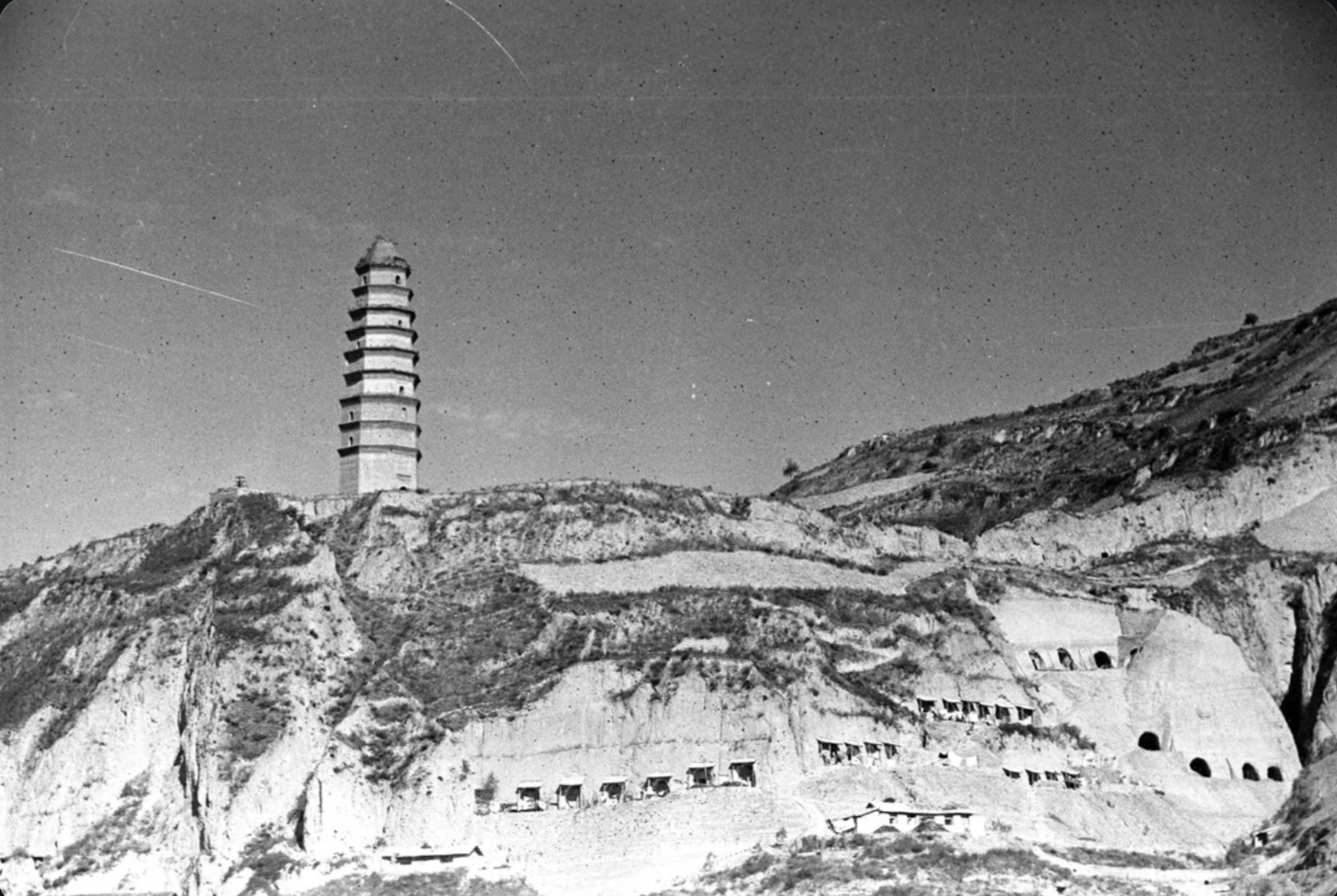
別人在抗日的時候你在幹什麼?在炕日。
問:台兒莊血戰的時候您在哪兒?
答:在延安!問:淞滬會戰時您在哪兒?
答:延安!問:徐州會戰時您在哪兒?
答:延安!問:武漢保衛戰時您在哪兒?
答:延安!問:石牌保衛戰時您在哪兒?
答:延安!問:桂南會戰時您在哪兒?
答:延安!問:上高會戰時您在哪兒?
答:延安!問:湘西會戰時您在哪兒?
答:延安!問:這些大的戰役您一次都沒參加,您這是……?
答:嗯,反正我是抗日戰爭的中流砥柱!繼續問:還有三次長沙會戰、還有棗宜會戰、衡陽保衛戰、桂林保衛戰、遠徵軍赴緬甸作戰等等一系列重大戰役,您都在哪兒?
答:不是告訴你了嗎,我還在延安!延安!!延安!!!問:您為什麼不上前線去殺鬼子啊?
答:傻了吧?延安是領導全國抗戰的中心啊,我不在延安待著還上哪兒啊?繼續問:既然延安是抗戰的領導中心,那麼它在整個抗戰中,遭受過多少次日軍的戰略轟炸?重慶在六年半中總計遭受了兩百多次日軍的戰略轟炸,它被當時的世間輿論公認為與倫敦、莫斯科齊名的反法西斯英雄城市……請問延安呢?
答:……….繼續問:八年抗戰中,國軍少將以上將領殉國人數是兩百多人,請問你們連級以上的軍官陣亡人數是多少?
答:這個嘛,無可奉告!我們沒有統計過……繼續問:日本國公佈了二戰在華陣亡的人員數據:死於國軍之手為31萬8883人,死於共軍之手為851人,死於蘇聯紅軍之手為12萬6607人,被蘇聯紅軍俘虜的關東軍80余萬,另被蘇聯紅軍拘壓的日本僑民167萬多。基本與中國社會科學院的數據相吻合。日軍死於國軍之手為31萬8883人。以上數據來自日本統計,日方在二戰中死亡的人員都有準確的姓名、年齡、家鄉,部隊、死亡地點、被誰所殺詳細紀錄,每個人都在靖國神社有位置。請問你有什麼想法?
答:………繼續問:您口口聲聲中流砥柱,那麼請問您都打過哪些仗啊?
答:這還用問,你翻開我們的歷史書看一看不就知道了?什麼地雷戰、地道戰、游擊戰、麻雀戰、襲擾戰,那都是我親自打的啊!嫌少是吧?你沒見我們剛剛把八年抗戰改為十四年抗戰了嗎?繼續問:這就能證明你們是抗戰的中流砥柱了?您怎麼不把抗戰的歷史延長到1894年甲午戰爭那一年呢?那樣的話,到1945年抗戰勝利,你們豈不是整整抗戰了半個多世紀?
答:謝謝提醒,下次再見!
— Petrichor, X, 22 August 2025
***
***
Q. & A.
Evan Osnos & Geremie R. Barmé
29 September 2009
Why does China still conduct military parades? On Thursday, October 1st, Beijing will host the sixtieth-anniversary celebration of the founding of the People’s Republic. The Communist Party leadership has elevated the event into a state-religious holiday, of sorts, centered on a massive military parade—including five thousand soldiers arranged partly by height—followed by a civilians’ parade involving a hundred thousand citizens.
Geremie R. Barmé, Professor of Pacific and Asian History at the Australian National University, is a leading expert on Chinese culture and intellectual history. Recently, he co-published a pair of great pieces, with scholar Sang Ye, on the history of China’s National Days celebrations. They are available, here and here, at the site of China Heritage Quarterly.
***
I asked Barmé about the imagery and significance of these spectacles. Our exchange follows.
The iconography of a military parade seems at odds with China’s general effort to avoid arousing international concern about its rise, suggesting, instead, that this is for a domestic audience. What is the message, and who exactly is it supposed to persuade?
China’s party-state often expresses its contradictory impulses between state-orchestrated displays of martial vigour and celebratory spectacles of civil achievement. I would note that, originally, Qin Entombed Warriors in the form of gargantuan puppets (piying) were to feature in one scene of the Zhang Yimou-designed Olympic Opening Ceremony of August 8, 2008. The phalanx of warriors was choreographed to perform a victory march into the Bird’s Nest Stadium during the show. At the last minute, however, the scene was deleted by Party leaders who were concerned that it would send the wrong kind of message—that of triumphalism—to the world.
The primary aim of the October 1, 2009, military parade, which is after all only one part of the Grand Parade (da yuebing) designed for Tiananmen that day, was stated in rather stark terms some months ago. In the “Propaganda and Education Outline for the Military Parade in the Capital on the Occasion of the Celebration of the Sixtieth Anniversary of the Founding of New China,” produced by the PLA Logistics Department and published in the PLA News (Jiefang Jun bao) on February 10th, it says that:
This military parade is a comprehensive display of the Party’s ability to rule and of the overall might of the nation. It has a profound political significance in that it bolsters confidence in the Party’s leadership and belief in socialism with Chinese characteristics… This Grand Parade is the first of its kind in the new century. It is a crucial manifestation of the recent victory of the people who have achieved the construction of an overall moderately prosperous society under the Party’s leadership and represents the realization of the great revival of the Chinese nation as a result of tireless struggle.
What was once fairly much of an internal affair observed eagerly by Zhongnanhai-watchers anxious to gauge the pecking order of China’s secretive leadership has become, this time around, quite a media circus. China’s leadership politics is as opaque as ever, but the parade remains an event primarily designed for the domestic audience. It is meant to educate, excite, unite and entertain. If a tad of “shock and awe” is delivered around the world, all well and good. But as the old Party cliché holds, such events must essentially satisfy the “two olds” (er lao): the “Old Cadres” (lao ganbu) and the “Old Hundred Names” (lao baixing), that is, the broad masses of Chinese people.
Having said this, we should remember that, apart from those up on the rostrum of Tiananmen Gate, the parade and the festivities are primarily produced for a TV audience (as well as spinoff Internet and DVD viewers). As they have for sixty long years, the residents of the capital provide the fodder, the backdrop, the crowds, and the logistical wherewithal for the lavish display, but they are not its target audience. For the most part, locals are required to stay off the streets, keep indoors, and make like the rest of the country: behave and watch the show on the tube. In the past, as in 1999, for instance, the masses were allowed out onto Tiananmen the following day to look at and be photographed with the amassed floats (caiche) that have featured in the day’s parade and the evening’s carefully managed “party.”
Did China have a tradition of military parades before the rule of the Communist Party and, if not, what element of Party psychology drives this?
The first recorded details of this kind of “triumph,” to use a term familiar to your readers from Roman history, can be found in the ancient Chinese classic Book of Change (Yi Jing). Dating from as early as the eighth century BCE, a second-century BCE version of this famous book of divination was unearthed in 1973. The well-known translator John Minford has used this version in his upcoming re-translation of the text.
In this second-century BCE text, Hexagram XXX, or Li, contains the following lines:
Yang in Top Place
The King
Goes to war.
A Triumph,
A Beheading.
Captives are taken,
Not from the enemy.
No harm.
In imperial times, victory parades were frequently organized for the emperor. In the Qing dynasty (1644-1911), for example, the emperor would review such displays from his throne atop the Meridian Gate (Wu Men), the formal entrance to the Forbidden City, as booty and enslaved enemies were arranged in the large square below. Trophies included plundered riches, as well as the heads and left ears of enemies. Indeed, there is a specific and very ancient word, guo, that is specifically used to denote the left ear cut off a prisoner.
During the Qing era, the Kangxi emperor revived the ancient tradition of Tours of the South (nanxun), that is, imperial tours of the southern provinces. He made six such tours, which allowed him to familiarize himself with the newly conquered empire at the same time as displaying his imperial authority, as well as his vast military might. These tours were like a moving triumph or parade of strength. The most recent “tour of the south” was conducted by Deng Xiaoping and his entourage in 1992.
But there are other, more recent dimensions to such orchestrated displays. It shouldn’t be forgotten that China and its Communist Party rulers have been enmeshed with Hollywood and its culture of spectacle for decades. Just as Taylorism and the idea of “scientific management” in the U.S. gave V. I. Lenin ideas about assembly-line production, time-management, and the power of statistics in the Soviet Union, so too has Hollywood long been giving China cues about staging public events. Early Hollywood mega-flicks and cinematic versions of the Ziegfeld Follies fed into both Soviet and Chinese designs for mass rallies and proletarian tableaux vivant. Hollywood turned choreography and synchronized gymnastics into mesmerizing cinema. The socialist world adapted such cog-in-the-machine balletics to celebrate the state and its unrivalled power.
The Chinese revolution featured parades from its earliest days. Of course, I’m referring to the Republican revolution of the nineteen-tens (now all too easily forgotten or overshadowed by the successful Communist insurgency of 1946-49). Yuan Shikai, president of the republic, reviewed troops from the newly built Xinhua (New China) Gate, built as the formal entrance to the government compound of the Lake Palaces (Zhongnan Hai), which is still the heart of the country’s political power. He even mounted a steed and joined the review himself along what is now Chang’an Avenue.
Local parades of have been a feature of the Communist Party’s revolutionary politics since the nineteen-twenties. Party organizers encouraged local uprisings and then enjoined the peasants to parade members of the gentry before ritual denunciations and executions. Similar displays, called youdou, were a common feature of life in the early years of the People’s Republic and again during the Cultural Revolution. Ritualised public displays of criminals in lorries before and after public trials and executions have also been a feature of Party rule. However, the days of violent and militant slogans in National Day parades, and before an international audience, although common in the nineteen-fifties and sixties, are long gone. Now harmony and light reign supreme.
Over the life of the People’s Republic, the National Day celebrations have been a barometer of the national psyche at that moment. As you see it, what are some of the most revealing moments or details from previous military parades and mass spectacles?
One favorite but rather recondite moment (given the fact that the documentary footage is something of a rare item) is the extravagant 1969 parade when army soldiers paraded their killing skills for the leader, Mao Zedong. The official, though later banned, film of the parade shows how they had been instructed not to point their bayonets at the rostrum of Tiananmen, where the sacrosanct Great Leader stood to witness the spectacle. The 1984 parade celebrating the thirty-fifth anniversary of the People’s Republic and, by fortunate coincidence, Deng Xiaoping’s eightieth birthday, featured a rare spontaneous moment: a group of Peking University students marching in the parade held up a home-made sign that said “Xiaoping, nin hao!” (“Hello, Xiaoping!”). Of course, the official filmmakers didn’t have the outburst in their script, so they failed to capture the moment on film. After discussion, negotiation and high-level agreement, the spontaneous outburst was restaged, filmed and duly edited into the official account of the parade. Such good-natured outpourings of emotion have not been a feature of subsequent National Day parades, of which the 1989 celebration, coming so soon after June 4th, was particularly grim. Perhaps this October 1st some fortuitous event will slip through the heavily policed merriment of the occasion?
I noticed that in 1999 the “long live” slogans seem to have been set aside. What are some of the details you will be looking for this time as a measure of the Chinese state of mind?
The selection of slogans has always been a gauge of the party-state’s mood at the moment of the parade. Sadly, since the nineteen-eighties, the lacklustre bureaucratese of Deng Xiaoping and his technocratic successors has consistently assured us of bland and turgid sloganeering. Invariably, this time around there will be the usual nostrums related to Hu Jintao’s much touted but deeply troubled “harmonious society” (hexie shehui) and the “scientific developmental strategy,” which is his vaunted theoretical contribution to “Marxism-Leninism-Mao Zedong Thought-Deng Xiaoping Theory and Jiang Zemin-ideas.” These will appear along with the usual array of wholesome homilies in the national media.
National unity will also be a feature, something aimed at symbolically assuring everyone that the borderland uprisings since 2008 are but the work of a few malcontents in cahoots with international splittist schemers. Those in doubt just have to see the police and military hardware that will be out in force. And, daresay, as with the Olympic Opening Ceremony, there will be a series of vague formulations about China’s peaceful rise on the world stage and its non-aggressive and inclusive approach to global affairs. As we all know, design by committee might produce good mass spectacle, but anything truly inventive or quirky ends up as an outtake. Zhang Yimou, the overall director of the civilian parade and party, is more than familiar with the painful necessity to “shoot your babies.”
***
Source:
- Evan Osnos, Q. & A.: Geremie R. Barmé, The New Yorker, 29 September 2009
***
On Parades and China’s National Day
In China Heritage:
- 2017 — The Best China
- 2018 — Homo Xinensis Militant
- 2019 — Writing Home on China’s Seventieth Birthday
- 2020 — The innocent cry to Heaven. The odour of such a state is felt on high.
- 2021 — Celebrating Dai Qing at Eighty
- 2021 — Commemorating a Different Centenary — Dai Qing on the 1911 Revolution
- 2022 — October 1 & October 10 – Two Chinas, Whose Fatherland?
- 2023 —1 October 2023 — Golden Millet Dreams and a Future Long Frustrated
- 2024 — 1 October 2024 — Beijing Reoriented
In China Heritage Quarterly:
- March 2009 — Thirteen National Days
- June 2009 — The First National Day
***
Lies Agreed Upon
If … we are going to use history for our pleasure and amusement, for inflating our national ego, and giving us a false but pleasurable sense of accomplishment, then we must give up the idea of history as a science or as an art using the results of science, and admit frankly that we are using a version of historic fact in order to influence and educate the new generation along the way we wish.
It is propaganda like this that has led men in the past to insist that history is “lies agreed upon”; and to point out the danger in such misinformation. It is indeed extremely doubtful if any permanent benefit comes to the world through such action. Nations reel and stagger on their way; they make hideous mistakes; they commit frightful wrongs; they do great and beautiful things. And shall we not best guide humanity by telling the truth about all this, so far as the truth is ascertainable?
— W.E.B. Du Bois, The Propaganda of History, in Black Reconstruction in America, 1860-1880 (1935)
***
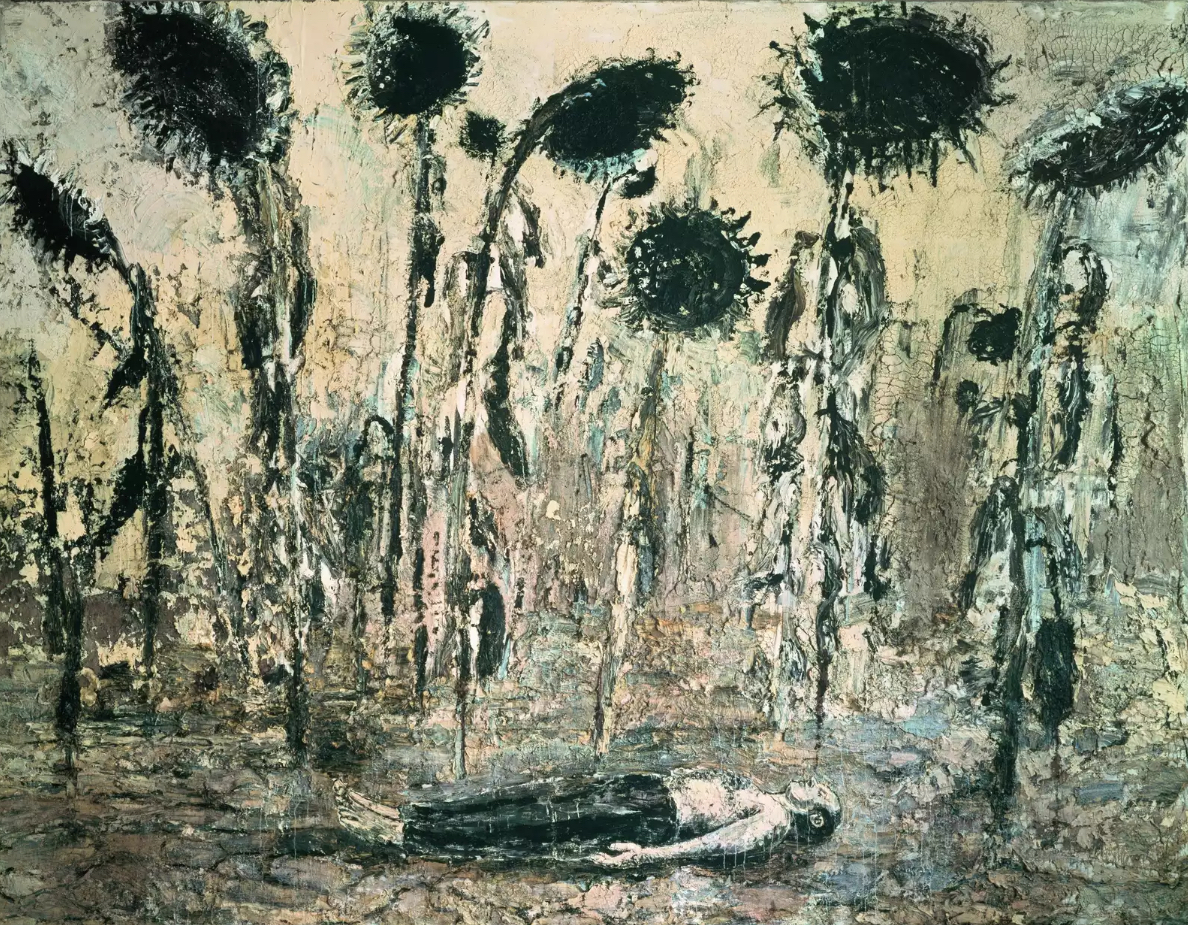
Sag mir wo die Blumen sind
Pete Seeger wrote Where Have All the Flowers Gone, an anti war protest, in 1955. It was made famous by Marlene Dietrich, a German actress famous for her opposition to the Nazi regime. In 2025, the Van Gogh Museum and the Stedelijk Museum Amsterdam held a joint exhibition of works by Anselm Kiefer, a renowned German artist, titled Sag mir wo die Blumen sind, a devastating question with which Gaza confronts the world: