The Other China
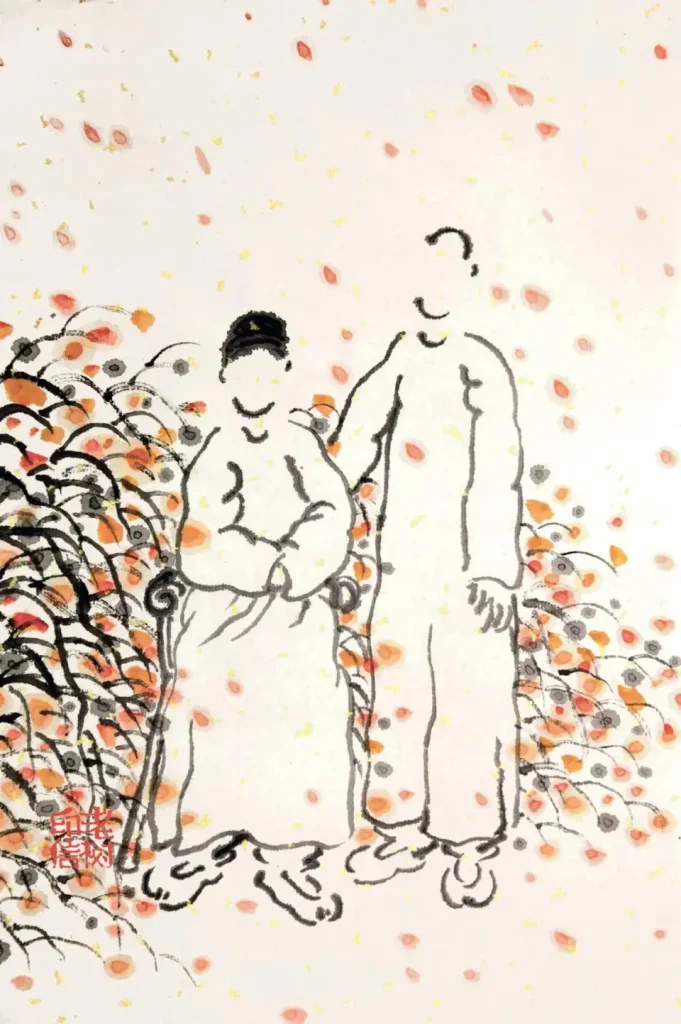
We travelled together for a time — we weathered a storm and stood together at that ferry crossing to watch the sunset. It was our connection. It would be well nigh impossible to repeat a journey during which your teacher shielded you from the wind, lit a lamp for you to see by and offered tea to warm you. They hoped to introduce a measure of beauty into your daily life and, if that’s what they managed to do, then both teacher and student can be thankful.
同過一段路,共過一場雨,在某個渡口並肩看過一次日落,便是一生的情分。山水一程,已是難得;若那一程里,替你遮過風、點過燈、遞過一杯熱茶,幫你把美好與分寸揉進日常的人,都值得一句多謝。
— Lao Shu 老樹
***
Teacher’s Festival 教師節, or ‘teacher’s day’, was originally celebrated in China on 6 June. Called 雙六節 — the ‘Double Sixth’ — is was gazetted by the national government of the Republic of China in 1931 in response to a proposal made by professors at the newly established National Central University in Nanking.
In 1952, the Republic of China, which had by then relocated to Taiwan, changed the date of Teacher’s Festival so that it coincided with the birthday of Confucius 孔子聖誕 and it has been celebrated in Taiwan on 28 September ever since. It so happens that the 28th of September is also the birthday of my own teacher, Pierre Ryckmans (Simon Leys).
On mainland China, the Communist party-state abandoned Teacher’s Festival. Ironically, the Party Chairman Mao Zedong famously claimed that he wanted to be remembered as a teacher. In December 1970, he told the American journalist Edgar Snow how much he detested the intense sycophancy of the time: ‘The so-called “Four Greats” [四個偉大: Great Teacher 偉大的導師、Great Leader 偉大的領袖、Great Generalissimo 偉大的統帥、Great Helmsman 偉大的舵手]—those epithets applied to [me]… what a nuisance. They would all be eliminated sooner or later’.
‘Only the word “teacher” would be retained—that is, simply schoolteacher’, Mao told Snow.
[I] had always been a schoolteacher and still [am] one. [I] was a primary schoolteacher in Changsha even before [I] was a Communist. All the rest of the titles would be declined.
— Edgar Snow, A Conversation with Mao Tse-tung, Life, 30 April 1971
In late 1970, Mao was speaking four and a-half years after he had launched the Cultural Revolution. Starting in the nation’s high schools and universities, the Cultural Revolution immediately devastated the education system and rent relations between teachers and students. Not long after he spoke to Edgar Snow, Mao launched a campaign against Confucius himself, a figure celebrated for nearly three centuries as the nation’s ‘Teacher Exemplar for a Myriad Generations’ 萬世師表.
After Mao’s death, the Party honoured his will and when his mummified corpse was put on display in the heart of Tiananmen Square in Beijing it was in a grand villa called The Memorial Hall of the Great Leader and Great Teacher Chairman Mao Zedong 偉大的領袖和導師毛澤東主席紀念堂.
***
Ignoring both the Double Sixth and Confucius’s Birthday, the People’s Republic of China finally established its own Teacher’s Festival, on 10 September 1981, exactly five years and one day after Mao Zedong’s death on 9 September 1976.
As a teacher and leader, Mao Zedong is revered by the Xi Jinping party-state. Even as the prodigious levels of investment in education made since Mao’s death, Xi Jinping’s government has jailed teachers, purged professors and attacked independent scholarship in a myriad of ways. Mao and his radical colleagues would readily recognise the political calculation behind this ongoing state of repression. (See, for example, Homo Xinensis Militant; Homo Xinensis Ascendant; and Xu Zhangrun 許章潤, And Teachers, Then? They Just Do Their Thing!.)
***
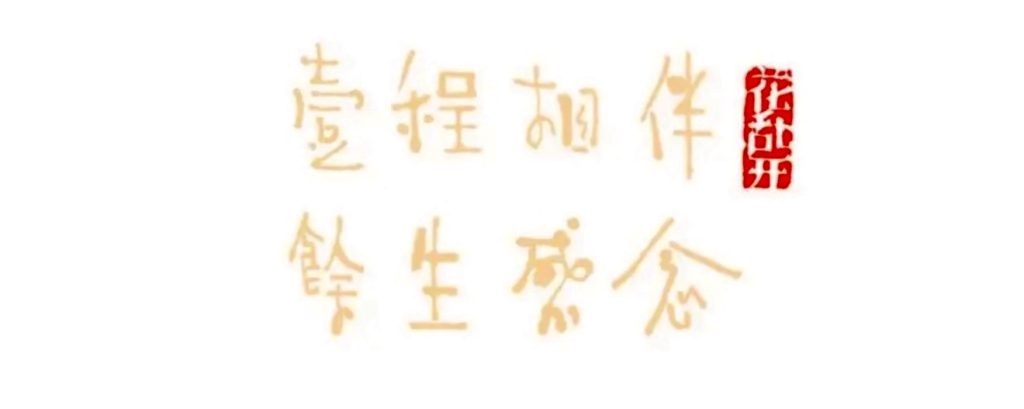
The Chinese rubric of this chapter in The Other China is in Lao Shu’s calligraphic hand. It reads: 壹程相伴 餘生感念: ‘We shared part of my journey and I remain forever grateful’.
— Geremie R. Barmé
Editor, China Heritage
10 September 2026
Teacher’s Day
教師節
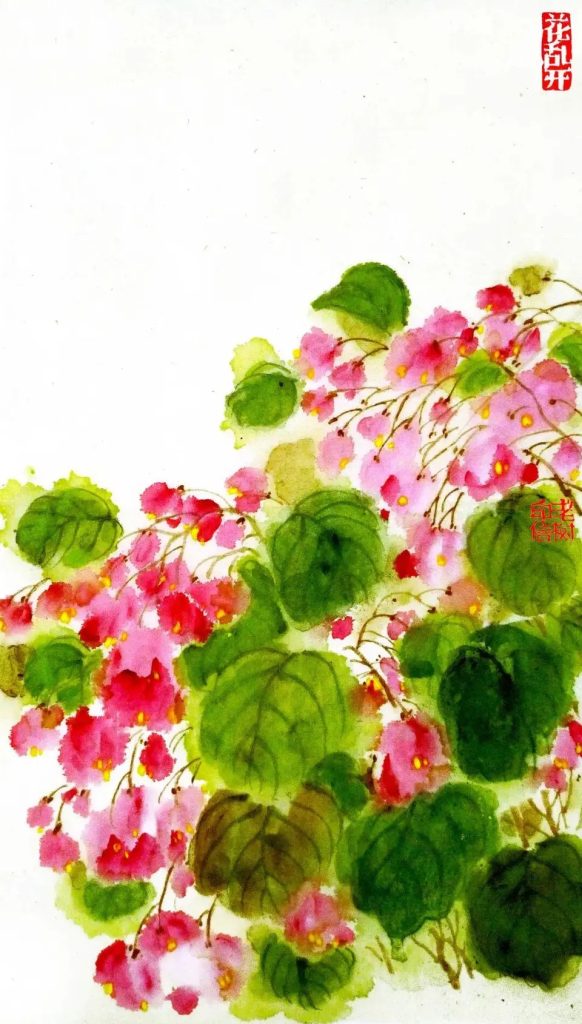
秋風起兮,天氣涼。
問花信兮,秋海棠。
種花人兮,樓上客。
樓上人兮,嘆無常。
Autumn winds whip up, the weather turns cold.
Seeking answers from flowers: the begonia speak.
Those who planted blossoms: guests upstairs now.
In their pavilion, they sigh about impermanence.
— 宜感慨秋天,《老樹日曆》,2026年9月9日
***
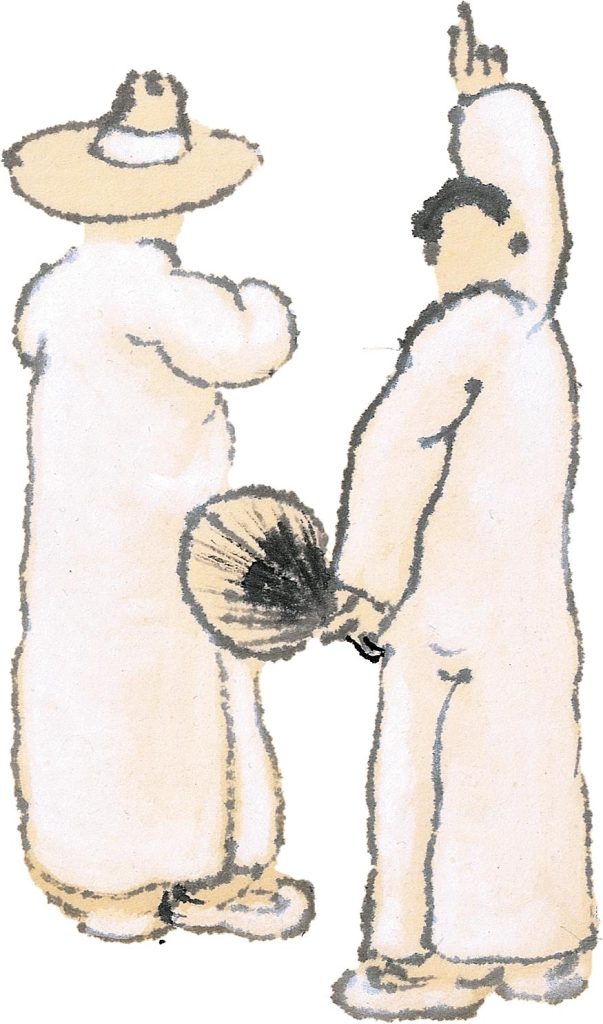
一句提點,消解了執念
一份善意,溫暖了前路
恰逢九月感念之期
敬傳道解惑的師長
敬相知相伴的益友
謝謝您,陪我一程
影響我餘生
A pointer from you and my obsessiveness would give way,
with gentle sincerity you made the onward path easier.
September now and it’s the season for gratitude:
I’m thankful for the wisdom of my teachers,
grateful, too, for the company of good friends.
My time with you all has left me forever indebted.
***
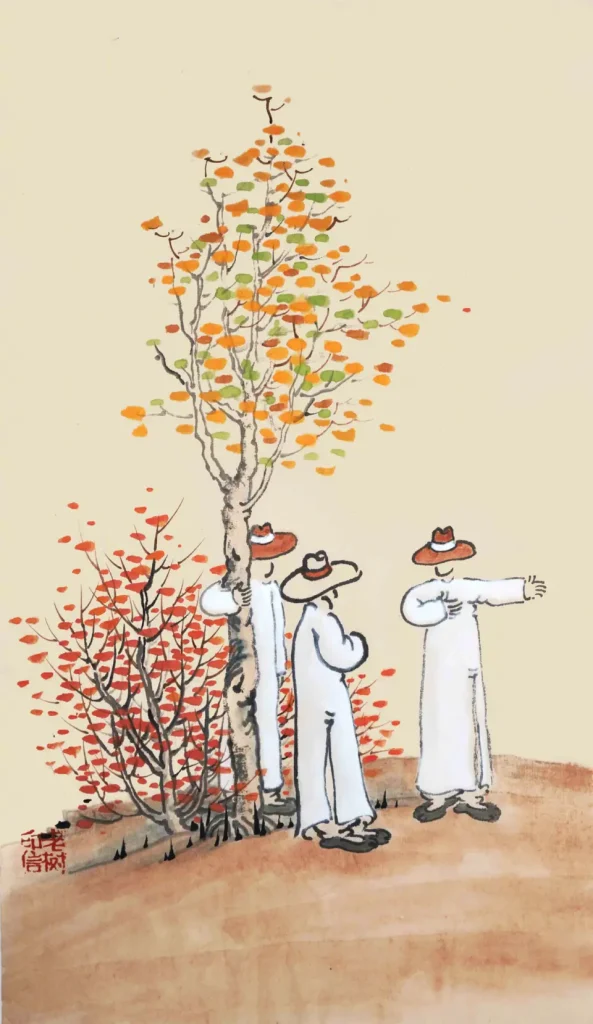
檢視半生行跡,酸甜苦辣辛咸。
幸有師友相助,才能一路向前。
眼前紅塵萬丈,心中一尺丘山。
回首恍若一夢,欲說卻已忘言。
You examine how you’ve got to where you are:
every flavour and taste that you could imagine.
Thankful for mentors and friends who have helped
for only with them have you been able to advance.
Confronted by the dizzying Dusty World
deep inside there’s always that solid core.
Looking back, things feel like a fuzzy dream,
you try to describe it but words simply escape you.
“三人行,必有我師焉。”講台之上是師,渡人解惑是師,陪伴成長是師。
一句提點,消解了執念;
一份善意,溫暖了前路;
一次躬身示範,教會我們坦蕩與善良。
教誨當然刻骨,但更多救贖,都藏在平凡瞬間。正是這些細碎的光亮,一片片拼起來,成了我們行走世間的底氣。
‘Put me in the company of any two people at random — they will invariably have something to teach me.’ Be it at a lectern, someone who helps you on your way or those who accompany you on part of life’s journey — they are all one’s teachers.
An insightful comment and obsessiveness gives way;
with gentle sincerity the onward path becomes easier;
an act of polite grace teaches us equanimity and decency.
Of course, the lessons are demanding, but most are forgiving, things hidden in the mundane realities of the everyday. Those sparks of light when gathered together form the ground that emboldens your path through life.
[Note: The translation of 三人行,必有我師焉, a line in The Analects, 《論語·述而》, is that of Simon Leys.]
***
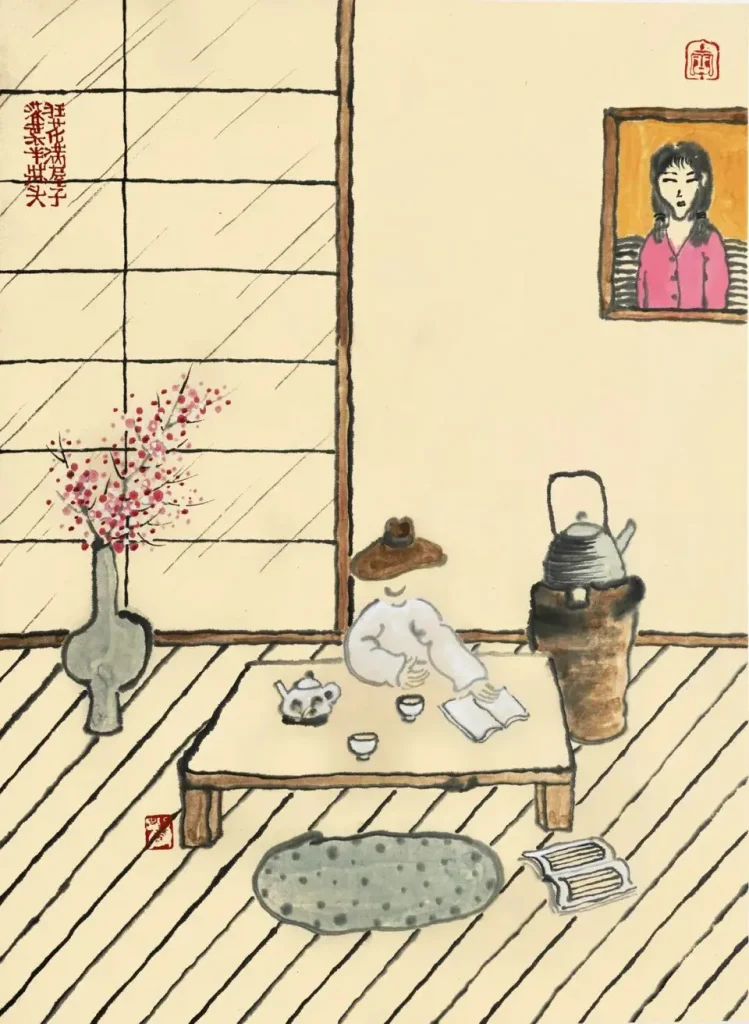
總有大風吹起,引我走到天涯。
總有一樹花開,讓我以夢為家。
總有一個朋友,為我沏杯好茶。
總有一鍋肘子,等待我去啃它。
There are always blustering winds
blowing me to the edge of the world.
There’s always that one blossoming tree
offering me a home made of dreams.
There’s always that one dear friend
ready to make me a decent cup of tea.
And, there’s always a pot of ham hocks
just waiting for me to start eating.
***
Source:
- 老樹,“謝謝您,陪我一程,影響我的餘生”,《老樹畫畫》網易網,2026年9月1日。Translated by Geremie R. Barmé
***
***
Lao Shu’s Summer
Edited and Translated by Geremie R. Barmé
- Lao Shu Goes on a Work Trip, 26 June 2026
- Lao Shu on the Consolation of Cats, 28 June 2026
- Lao Shu in Lotus Land, 30 June 2026
- Lao Shu’s Summer, 2026, 12 July 2026
- Lao Shu’s Floating Life, 23 July 2026
- Lao Shu — ‘What, Me Worry?’, 7 August 2026
- Lao Shu is Knackered, 16 August 2026
- Lao Shu Lets the Weeks Go By, 22 August 2026
- Lao Shu’s Indian Summer, 29 August 2026
- Lao Shu at Summer’s End, 31 August 2026
- Lao Shu’s Autumnal Wistfulness, 1 September 2026
- Lao Shu’s Cornucopia, 3 September 2026