Seeds of Fire Celebrating Four Decades
李白陸
In ‘Take Xi Jinping at his word’, the essay by Greg Sheridan, Foreign Affairs editor of The Australian, reproduced below, Pierre Ryckmans, Kevin Rudd and I are brought together for the first time since August 2009.
That previous occasion had been a triple commemoration of the lives of Liu Ts’un-yan 柳存仁, David Hawkes and Alastair Morrison, all of whom had recently died. Following the gathering at the Great Hall of the Australian National University in Canberra I wrote the following in China Heritage Quarterly, the predecessor to the present journal:
During the month of August 2009 two prominent scholars of China passed away, and we also lost a friend with a life-long involvement in China. Both David Hawkes and Liu Ts’un-yan 柳存仁 were mentors and paragons for those involved with China Heritage Quarterly. We acknowledge their lasting legacy, we mourn their passing and we celebrate their inspiring contributions to the life of the mind. Through their writing, teaching and conversation they gave uplift of the heart, and to their many students, friends and readers they have left a rich and profound bequest.
Some commentators have mistakenly questioned the connection of these outstanding scholars of traditional Chinese culture to the contemporary world. Those mired in the narrow purview provided by a Chinese Studies fixated on the immediate, the evanescent and the narrowly utilitarian, are too often blind to the broad expanse of ‘China-centred learning’, or a Sinology that can variously be described as ‘old’, or ‘new’. It is hard for those for whom the imminent rules paramount to cast their gaze beyond the now and appreciate that those who have contributed so much to our knowledge and understanding of the Chinese past were also vitally attentive to and engaged with its present.
On that occasion, Pierre read a eulogy for Professor Liu, and Kevin, who had only recently learned about the gathering from me, contributed a short encomium — he was unable to join us in person due to the pressing duties of prime minister and I was given the task of reading out his last-minute message.
The connection between Pierre, Kevin and me had its origins some four decades earlier starting with Pierre accepting an invitation from Professor Liu to take up a teaching position at ANU in 1970. For our parts, both Kevin and I had benefitted from Liu’s pedagogy and learning. But, as Greg Sheridan points out below, there was a closer bond between Pierre, Kevin and me. It was Pierre, our teacher, mentor, supervisor and abiding intellectual inspiration.
***
Nín-hǎo-a? / How are you? It is the most simple Chinese greeting; now a sentence recognised around the globe. I learned it on an early autumn morning in March 1972 sitting in a small lecture room in the Asian Studies Building at the Australian National University (ANU) in Canberra. It was a Monday, the first day of my first term as an undergraduate student. There were about fifteen of us in the class and we had been ushered into the room by a polite, bearded man in his late thirties. Our teacher was tall with a slight stoop, an air of diffidence and a gravelly voice. He greeted us in Chinese, introduced himself as Lǐ Kèmàn 李克曼 and proceeded to read the text of Lesson 1, ‘Greeting Friends’, in John DeFrancis’ Beginning Chinese 初級漢語課本.
I was a reluctant member of the class. I’d left Sydney to pursue a joint major in Buddhist Studies and Classical Chinese in Canberra, but had been frustrated to learn that Classical majors had to suffer through three years of instruction in modern Chinese. I had no interest in learning the modern language and, despite the rebellious atmosphere of the time, the highfalutin rhetoric of Maoist China had been something of a running playground joke back when I studied at Randwick Boys’ High School. And now, here was our teacher: a lanky white fellow, hardly authentic. On top of that, we were confronted by the strange sounds and tones of modern spoken Chinese, along with a confusing romanisation system spelling unpronounceable words starting with ‘q’s’, ‘x’s’ and ‘z’s’. At least, we were told, we didn’t have to learn the simplified, Communist version of Chinese characters until later in our second year.
Pierre Ryckmans was my mentor and teacher at The Australian National University from 1972 to 1974 and again from 1983 to 1989. The building of the Australian Centre on China in the World, a research centre that I founded with then prime minister Kevin Rudd (also a student of Pierre’s) in April 2010, is within sight of the old Asian Studies Faculty (now the College of Law), where so many students benefitted from Pierre’s graceful pedagogy (see Opening a Building).
— this material is drawn from In Memoriam — Pierre Ryckmans (Simon Leys)
***
Kevin Rudd and I first encountered each other in mid July 1976. Back in Australia for a short period of R&R punctuating my studies in the People’s Republic of China, following a talk that I gave to students and teachers at ANU I was approached by a well-presented and button-down chap who introduced himself as Kevin Rudd. Later, when I was back at ANU pursuing an intensive one-year course in Japanese in 1980, Kevin approached me for some guidance in relation to his honours thesis. Supervised by Pierre, he had chosen the topic of ‘Human Rights in China: the Case of Wei Jingsheng’. Some years later, Wei and Pierre would feature in my own work.
As I have noted elsewhere in Seeds of Fire at Forty, our celebration of the publication of Seeds of Fire: Chinese Voices of Conscience in 1986, Pierre’s work was something of a catalyst for that book, as well as its title, and Wei Jingsheng ended up being one of its subjects.
[Note: For my review-essay of Simon Leys: Navigator Between Worlds by Philippe Paquet, see One Decent Man, The New York Review of Books, 28 June 2018.]
***
Shortly after that commemoration of Professor Liu at the Great Hall of ANU in August 2009, Kevin invited me to lunch at The Lodge, the prime minister’s residence. Even before then, we had discussed the increasingly tempestuous Australia-China relationship and I had a hand in drafting Kevin’s April 2008 address to students and teachers at Peking University during his first trip to China as PM (for the details, see Contentious Friendship).
But, it was during the meal at the PM’s official home, and in a series of other conversations, that we formulated a plan to found The Australian Centre of China in the World (CIW), a research centre that would be underpinned by New Sinology, an approach to the study of and engagement with China that I had formulated in 2005.
On 28 August 2026, it was in the building that we created for the centre that Kevin presented the CIW Annual Lecture, some fifteen years after I had launched the annual lecture series in a speech titled Australia and China in the World: Whose Literacy?
That might not have been a full circle moment as such, but surely the following essay by Greg Sheridan can count as one?
***
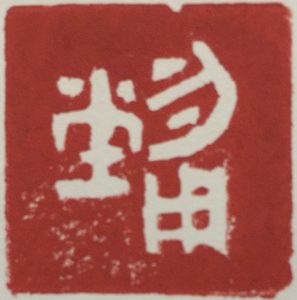
The rubric of this chapter in Seeds of Fire at Forty — 李白陸 — combines the Chinese surnames of Pierre Ryckmans (李克曼), Geremie Barmé (白杰明) and Kevin Rudd (陸克文). The chapter is also listed in the series Watching China Watching and Celebrating New Sinology.
— Geremie R. Barmé
Editor, China Heritage
6 September 2026
***
Take Xi Jinping at his word:
communist true believer, admires Mao and Stalin
Greg Sheridan
Foreign Editor, The Australian
The People’s Republic of China is the chief strategic, military and political danger to Australia. Yet Australians know less about the Chinese government today than at any time since the first years of communist rule in the early 1950s. One straw in the wind: recent polls show our population is less likely to see China as a threat than many other Asian populations are.
How can this be?
This week Beijing ruthlessly threw its weight around at the Pacific Islands Forum in Palau, keeping several leaders away, railing against Taiwan’s presence and limiting PIF’s protest against Beijing’s intimidatory, ballistic missile firing near Tuvalu.
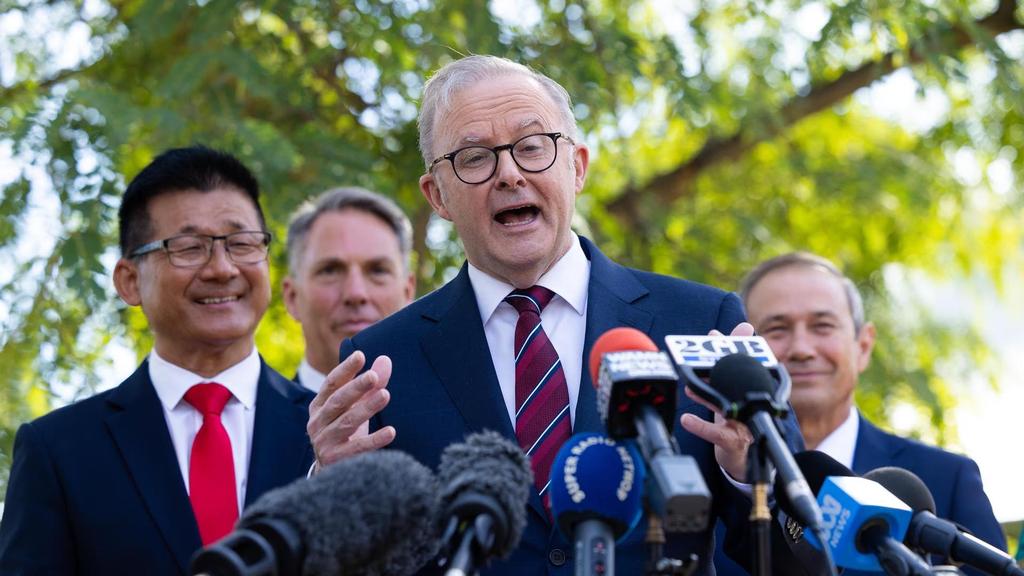
We had the rare, welcome spectacle of Anthony Albanese publicly criticising China. An infinitely bigger story unfolded in Beijing, all but unremarked. Xi Jinping purged two of China’s most senior generals – Zhang Youxia and Liu Zhenli. This is astonishing. Zhang was the most senior Chinese in uniform, second only in military power to Xi himself. His dismissal from the Central Military Commission leaves it with only two members, Xi and one soldier.
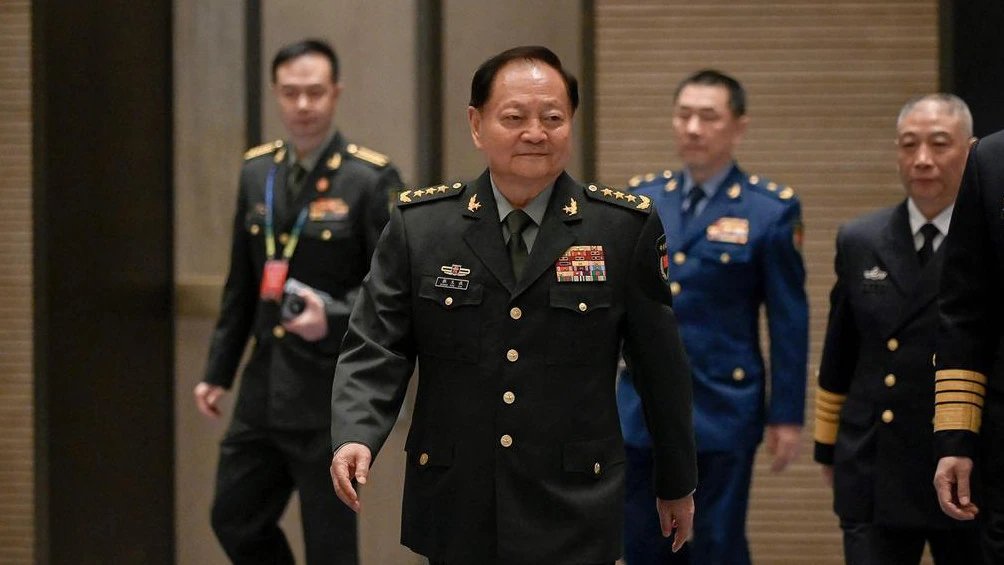
Zhang was a politburo member. His sacking marks the first time since Mao Zedong and all his madness that three politburo members were purged within one five-year term. It reeks of brittleness and instability. Zhang and Liu are accused of “corruption”, like almost all the hundreds of officials condemned under Xi, who has purged dozens of generals in the past four years.
Corruption is now an all-purpose offence, as ideological deviationism was in the old Cold War days. It’s dangerous for Australians to understand so little about Chinese government. Why this ignorance? Partly it’s Beijing’s design. There are only 30-odd foreign correspondents left in China, to cover 1.4 billion people.
More fundamentally, the way we conceive of China omits the single most important dynamic in its state apparatus. Mike Pezzullo, former head of the Home Affairs Department, interprets the military sackings as likely reflecting Xi’s wish to find generals who will furnish him a war-winning plan to take Taiwan by force.
Mike Green of the US Studies Centre, who was the senior Asia official under George
W. Bush, thinks some sacked generals were possibly those urging caution on Xi over Taiwan. Both Pezzullo and Green readily admit other possibilities.
Analysts miss the secret in plain sight, because it’s too ugly and too recondite. That is the internal culture of the Chinese Communist Party, which is addicted to purges as a central method of operation.
There are different ways of conceiving of China. Henry Kissinger was a structural realist who wanted to fit China into a concert of great powers. So-called realists tend to underplay ideology, values and the agency of individual leaders.
Others such as Paul Keating can never bring themselves to criticise China at all. They are perhaps overwhelmed by the scale and goodies China offers. There’s a name for this recent trend – Chinamaxxing. Actually it’s an old trend. When I was a correspondent in Beijing in 1985, industrialist Peter Abeles visited and judged that China would become a more purely capitalist society than any in the West. Abeles was formidable, but that was utterly fatuous – China derangement.
Others overwhelmed by China’s scale, such as Hugh White, think Beijing must eventually dominate the region, so we should make our peace. Still others attribute everything in modern China to the continuity and inscrutability of Chinese traditional culture.
My own view of China was heavily influenced by three men, the great Belgian-Australian Sinologist Pierre Ryckmans (who often wrote as Simon Leys) and two whose university theses he supervised, Geremie Barmé and Kevin Rudd. Both Barmé and Rudd dedicated their major works to Ryckmans.
All three emphasised interrogating the distinctive culture of communism, which flourishes in Xi’s mind and throughout the CCP.
Ryckmans began as a scholar of art. He visited China, fell in love with its culture and became perhaps the greatest Sinologist of the 20th century. He operated with unique genius at that “bloody crossroads” where culture and politics meet.
A profound Christian humanist, Ryckmans wept over the assault on traditional Chinese culture mounted by communist vandalism. One of his earliest books, Chinese Shadows, written in the 1970s, is a prolonged scream of pain at the communist desecration of Chinese culture. He wrote of “a regime for which beauty in all forms appears to be the sure mark of feudal vice or bourgeois corruption”.
He lived for a time in Hong Kong and interviewed streams of refugees from the mainland. He read everything the Beijing government said about itself. He also read east European anti-communist dissidents and unexpectedly learnt there much about communism that applied to China. And of course he was a great scholar of Chinese literature, language and history, later producing a magnificent translation of the Analects of Confucius.
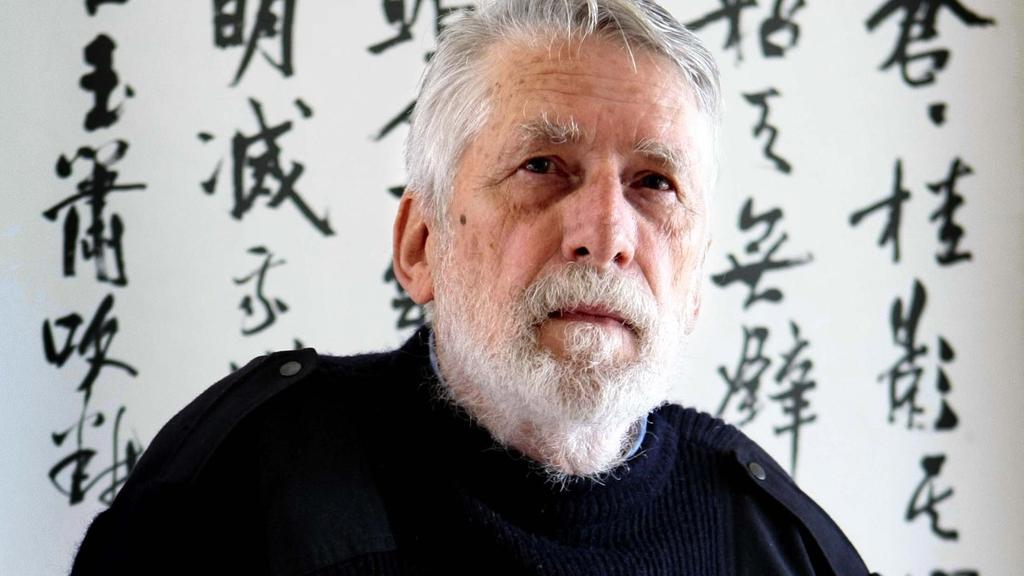
I interviewed and talked with Ryckmans as often as I could and read his books. He may be the most erudite man, and the most profound thinker, I ever knew.
He brilliantly decoded communist blather and outright lies. His successor as a Sinologist is the also brilliant Barmé. Like Ryckmans for many years a professor at the Australian National University, Barmé now runs the splendid China Heritage website.
Barmé has often told me how profoundly influenced the CCP was by the Communist Party of the Soviet Union, and especially by Joseph Stalin, one of the most brutal dictators the world has known. Barmé classifies China’s regime today as “Stalino-Maoist-nationalism”.
This communist culture is strong and tenacious, less Marxist than it was but a fully formed, living, deeply held, communist totalitarian belief system. In a profound essay called We Need to Talk About Totalitarianism, Again (which Barmé published in a series titled Xi Jinping’s Empire of Tedium), Barmé wrote: “Today as China and Russia in their disparate ways challenge and white-ant the post-World War II world order, their political lives, imaginaries and motivations continue to reflect a totalitarian temper with century-old roots.”
Barmé tells me that the purge, the continual, endless purge, is central to a certain type of communist political management. The so-called dialectic of the purge was the way both Stalin and Mao managed communist politics. Everyone except the infallible and glorious leader is constantly off balance, never knowing when or even how they might slip up in a fatal way.
[China Heritage Note: on the ‘dialectics of purges’, see Xi Jinping’s China & Stalin’s Artificial Dialectic. See also ‘1984’, a two-part chapter in Xi Jinping’s Empire of Tedium: Simon Leys on George Orwell in 1984 and ‘Profoundly indignant. Longstandingly indignant. Dignifiedly indignant.’.]
Rudd, as I’ve remarked before, has written a truly monumental work, On Xi Jinping, certainly the most instructive Australian book on contemporary China. He quotes Xi trenchantly and repeatedly defending Stalin, Lenin and Mao. For example, Xi wrote:
“To dismiss Lenin and Stalin … is to engage in historic nihilism.”
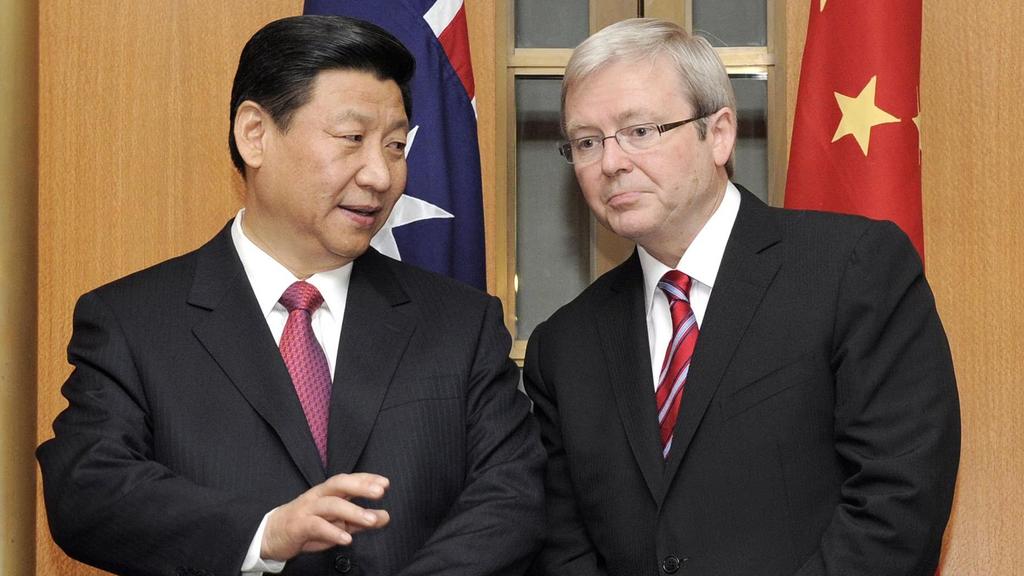
Among many acute insights into Xi, Rudd writes: “The objective facts of Chinese and world history are actually far less relevant to understanding Xi’s world view than his own subjective analysis and the official histories of the CCP that he relies on.” Xi is a believing communist ideologue.
China under Xi, Rudd argues, believes its Marxism is universal and it offers, almost idealistically, an alternative authoritarian development model.
I first met Rudd in Beijing in 1985 when the Australian ambassador of the day tasked him with briefing me on human rights. These three men – Ryckmans, Barmé and Rudd – all loved China and were aghast at some of what the CCP has done to Chinese people (which is not, assuredly, to attribute to them identical views, still less to claim fraudulently that any would endorse everything I’ve written about China).
The other great source of knowledge about contemporary China is the Chinese diaspora, but many of its cleverest people are intimidated into silence by the power of the Chinese state.
Nonetheless many, like Ryckmans, Barmé and Rudd, understand the most fundamental truth of modern China. You cannot understand anything about it unless you study the CCP and its distinctive communist culture. Not a pretty subject, to be sure, but it ought to be compulsory. For guess what – communist China is, after all, communist.
***
Source:
- Greg Sheridan, Take Xi Jinping at his word: communist true believer, admires Mao and Stalin, The Australian, 5 September 2026
***