Seeds of Fire
人生得意須盡歡
莫使金樽空對月
This introductory chapter to Seeds of Fire: China Heritage Annual 2026 is inspired by Wu Zuguang, whom I first met in 1976 — by his outspokenness in 1956, by learning about his exile, resistance and continued travails from 1966 and from his dark warnings about ongoing cultural repression in 1986.
Zuguang has previously featured in China Heritage and my annotated translation of Xu Zhangrun’s 2018 jeremiad was dedicated to his memory. In the expanded second edition of Seeds of Fire, published in New York in 1988, we included a passage from a speech that Zuguang made in June 1986 to commemorate the Hundred Flowers Movement of 1956, as well as the letter he addressed to the Central Disciplinary Commission of the Chinese Communist Party in the summer of 1987 in which he explained that he rejected the Party as much as it had rejected him. In New Ghosts, Old Dreams: Chinese rebel voices, a continuation of Seeds of Fire that was published in the wake of June Fourth 1989, we included the pointed observations on China’s inescapable political “national characteristics” that Zuguang made in 1989.
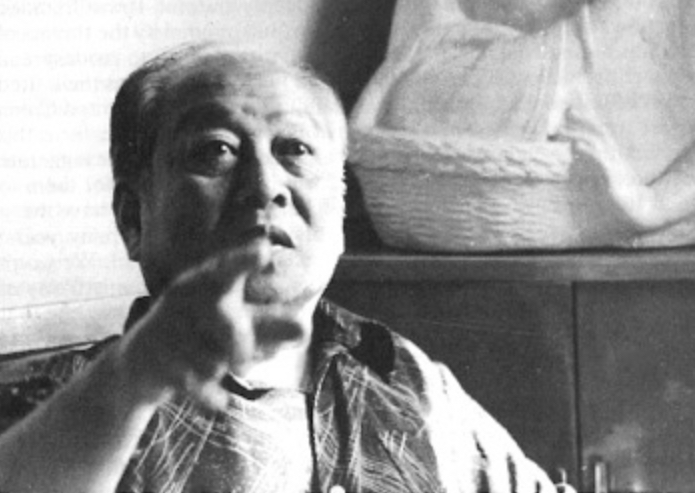
Wu Zuguang (吳祖光, 1917-2003), playwright, essayist and inspiring friend was a True Gentleman 君子, a man who had boundless contempt for Mao Zedong, his cult and the repressive policies of the Communist Party that long outlived him. Zuguang was a voice of conscience, a truth-teller and a defender of personal dignity. He was a ‘seed of fire’.
***
Below, we begin with a comment that Wu Zuguang made on the Chinese arts scene in the summer of 1956. This is followed by two notes on language and literature in the People’s Republic: “Reading the Past through the Present” and “Is Resistance Futile? — Black Parody and Red Mockery”. We then reproduce Bring on the Wine 將進酒 qiāng jìn jiǔ (here the character 將 is read qiāng and it means “serve up” or “bring on”), a poem by the Tang-dynasty writer Li Bo (李白, 701-762, aka “Li Bai” or “Li Taibai”), which is followed by an annotated translation of “An Investigation into the Disciplinary Violations in Bring on the Wine”, by A Sichuan Wayfarer 蜀地行走. We conclude with a short video by the Tea Master of Zibo.
The rubric of this chapter in Seeds of Fire is taken from Bring on the Wine, the poem by Li Bo that is the subject of the po-faced ‘literary inquisition’ below. Stephen Owen renders the lines
人生得意須盡歡
莫使金樽空對月
as:
When you have some little triumph, you must fully taste the joy,
And never let a golden cup go to waste beneath the moon.
While Arthur Waley translates them as:
Snatch the joys of life as they come and use them to the fill;
Do not leave the silver cup idly glinting at the moon.
Given our dissection of Bring on the Wine, one of China’s most famous paeans to ‘the thing in the cup’ 杯中之物, we note with some irony that Wu Zuguang never touched alcohol. The same, however, cannot be said for Xi Jinping, whose calls for frugality all too often fall on deaf ears. As Xu Zhangrun observed of the officially sanctioned indulgence of China’s party-state-army supremo in 2018:
Even our Lard-Arse neighbour — Kim Jong-un, a loathsome dictator ostracised by the international community — was welcomed to Beijing with an extravagant motorcade; you can see the reports in all of the print and electronic media. Gossip even has it that top-tier Special Mou-tai valued at 1.28 million yuan a bottle was served at the official banquet [hosted by Xi Jinping].
***
This chapter in Seeds of Fire includes two appendices published separately as:
As ever, I am grateful to Reader #1 for reading the draft of this chapter and offering suggestions and corrections. Needless to say, the remaining errors are mine. My thanks also to Christopher Nugent for sharing his study of manuscript versions of Li Bo’s poem.
Since this chapter in Seeds of Fire: China Heritage Annual 2026 demonstrates the relevance of New Sinology, it is also included as a chapter in Celebrating New Sinology: China Heritage Annual 2025.
— Geremie R. Barmé
Editor, China Heritage
16 January 2026
***
Further Reading:
- Geremie R. Barmé, The People’s Republic of Wine 何以解憂,唯有杜康, China Heritage Quarterly, Issue 25 (March 2011)
- Christopher M.B. Nugent, Putting His Materials to Use: Experiencing a Li Bai Yuefu in Manuscript and Early Print Documents, East Asian Publishing and Society 5(1): 32-73, March 2015
- Greg Lukianoff, If You Can’t Teach Plato in a Philosophy Class, What Can You Teach?, The New York Times, 12 January 2026
***
Why do people in the arts need your “leadership” anyway?
I was introduced to the playwright Wu Zuguang (吳祖光, 1917-2003) by Gladys and Xianyi Yang in 1976. As I got to know him, Zuguang told me that, apart from his involvement in an illicit literary salon, originally known as The Layabouts Lodge 二流堂, he had been condemned as an “Anti-Party Rightist” for the comments he had made during the Hundred Flowers movement two decades earlier. In a speech that he made in the summer of 1956, he had lambasted the Communist Party for its increasingly stifling control over culture and the arts. He reiterated his remarks in an article published in a 1957 issue of the professional journal Theatre 《戲劇》under the title “On the Theatre and Party Leadership” 談戲劇工作的領導問題. In it he asked:
‘Why do people in the arts need your “leadership” anyway? Who among you can tell me the Party Secretary who provided leadership to Qu Yuan? Or, for that matter, Li Bo, Du Fu, Guan Hanqing, Cao Xueqin or Lu Xun? And what about Shakespeare, Tolstoy, Beethoven and Molière?…
對於文藝工作者的‘領導’又有什麼必要呢?誰能告訴我,過去是誰領導屈原的?誰領導李白、杜甫、關漢卿、曹雪芹、魯迅?誰領導莎士比亞、托爾斯泰、貝多芬和莫里哀的?……
(Among those who denounced these comments at the time, the cruelest barbs came from Zuguang’s old friend Lao She 老舍, a man now regarded as some kind of martyred cultural saint. At the time, Lao She publicly denounced the need for “so-called creative freedom” and, in an article titled “Why Does Wu Zuguang Bristle with Resentment?” published in People’s Daily — 老舍,《吳祖光為什麼怨氣沖天》, 1957年8月20日 — published at the height of the Party’s counterattack on Rightists, he declared that “I now feel that even to have known someone like Wu Zuguang is like a stain on my character”.)
— adapted from Poetic Justice — a protest in verse, 5 April 2019
***
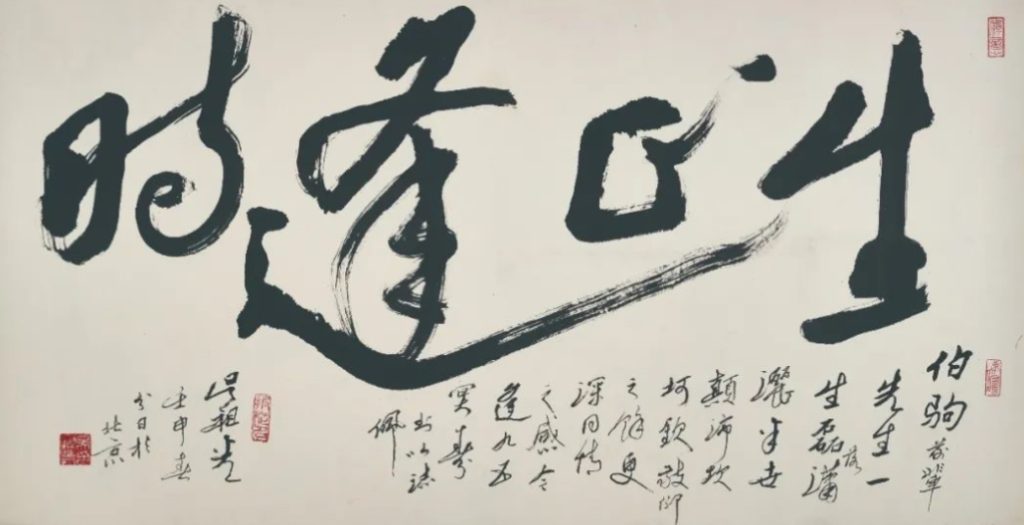
Reading the Past through the Present
Geremie R. Barmé
In the keynote speech delivered to mark the thirtieth anniversary of the founding of the People’s Republic on the 1st of October 1979, Marshal Ye Jianying (葉劍英, 1897-1986), the army leader who had led the Huairen Tang Coup 懷仁堂事變 against the ‘Gang of Four’ in early October 1976, declared that as China pursued economic development or Material Civilisation 物質文明, it would prove the superiority of the socialist system over that of the capitalist West by further developing its Spiritual Civilisation 精神文明 (see Civilising China: China Story Yearbook 2013).
From 1980, the Party’s new push to “construct Spiritual Civilisation” revived a process that had begun under the Republic of China to catalogue, define and interpret history, culture and geopolitics as part of nation building. The original patriotic “China Story”, which was a mixture of history and mythologising clashed with the truth-telling impetus of May Fourth era Enlightenment (1915-1927). In the 1930s, pro-Communist writers added their own ideological framework to the process in the name of “science”. During the Yan’an era (1937-1947), Mao Zedong and his advisers edited his speeches and writings to impose a new structure on modern Chinese history, one that was formalised with the publication in 1951 of Selected Works of Mao Zedong, a four-volume work organised according to the Party’s dogmatic view of history from 1839.
Once they dominated the educational and cultural spheres — and following the Thought Reform Movement of 1951-1952 — the Communists, who were deeply influenced by their Stalin-era Marxist-Leninist mentors, would continue the modern patriotic quest classify all of Chinese history — every dynasty, emperor, local ruler, minister and scholar-bureaucrat, as well as its thinkers, literature and arts — according to an elaborate and rigid schema that included an official evaluation of periods, people and events to be classified as progressive, backward and reactionary. Those deemed to be “loyal” to the ruling houses of the past were now cast as being “patriotic” ministers/ scholar-officials/ writers, while those who were seen as having undermined or challenged the rulers of the day were classified as traitors. Rebels and peasant uprisings lauded as having advanced history became heroes just as anyone who protected or expanded the territory of the state were celebrated as paragons. This nationwide undertaking was made increasingly easy as old texts were replaced by newly edited volumes, books bowdlerised and recast according to party-state ideology. The process intensified from 1954 during what I call China’s “Dark Enlightenment” (see 1954 — China’s Dark Enlightenment, Hu Shih & the Nobility of Failure). After Mao, there were attempts during the 1980s “New Enlightenment” to challenge Party orthodoxy, and although unofficial historians worked to offer alternative narratives that questioned and undermined the story of the party-state, a lavishly funded and all-encompassing Patriotic Eduction Movement launched in 1992 would dominate the mainstream. In keeping with the commercialisation and user-pays policies of the 1990s, the Spiritual Civilisation enterprise of the 1980s expanded its purview, and budget, so that every province, city, town and county could promote its patriotic highlights, including historical incidents, sites, personages and even customs and foods. A profitable fad for “Red Tourism” was only one aspect of the Party’s totalising historical project. The national narratives that were systematically insinuated into education, scholarship, local politics, tourism and culture told “The China Story” long before the rise of Xi Jinping in 2012 (see Red Allure & The Crimson Blindfold and Building Civilised Cities in China Story Yearbook 2013).
The ideological makeover of the Chinese world has unfolded in a number of stages: 1949-1964; 1964-1977; 1979-1989; 1989-2003; 2003-2013; and, 2013 to the present day. As a student I encountered the first two stages of this process. The first — 1949-1964 — produced classical texts that were annotated to accord with the stodgy and trite Soviet Marxist-Leninist formulas that had been introduced durum the Communist Party’s Yan’an decade (1937-1947). Some of the texts we read in our third-year Classical Chinese course were published during that period. Everything from 1964 on was composed in the histrionic prose of the Cultural Revolution. With a gentle mixture of humour and horror our teachers, all classically trained scholars educated prior to 1949, would point out how uncomfortably a Marxist historical framework born in Europe sat atop pre-Qin and dynastic Chinese culture. They commented, sometimes even positively, on the Communist evaluations of ancient writers and cultural icons and the example of their balance and good sense helped introduce me to what, years later, I would recognise as “The Other China”.
After 1979, that new phase of building China’s Spiritual Civilisation led to a further reworking of the past. Ambitious in scope and lavishly funded, this enterprise has underpinned formal Chinese education, publishing and culture ever since. It is Byzantine in its aims, labyrinthine in its complexity and all-embracing in its ambition. Since the 1980s, however, China’s official Spiritual Civilisation has also been in an unequal contest with commercial imperatives, a multifaceted form of academic resistance and a public wary of political cant. The overculture certainly dominates public discourse but, depending on the ideological ebb and flow of recent decades, private possibility has also flourished, albeit fitfully. Even Xi Jinping and his dolorous cultural watchdogs cannot entirely snuff out the cultural seeds of fire.
On its surface, the parody report on Li Bo’s Bring on the Wine composed by A Sichuan Wayfarer and translated below appears to be nothing more than an elaborate spoof. But readers familiar with mainstream Chinese academia and official culture will appreciate too the world that it evokes: it is one of paternalism, hierarchy, condescension and the stifled imagination. The past continues to serve the present and when it fails to do so, it is forced into submission through elaborate reinterpretation.
Make no mistake in some form or other the condescending, finger-wagging, pearl-clutching tediousness that is so deliciously mocked by A Sichuan Wayfarer is present in every textbook, museum display and cultural product in China today. Moreover, the party-state’s monolithic China Story works tirelessly to police, limit and distort reality. It demands that all comply in thought, word and deed. Fortunately, in the case of Bring on the Wine at least, regardless of the wordy slop of the cultural commissars, the coruscating genius of Li Bo is undiminished. Moreover, the “received wisdom” of the party-state’s meticulously curated version of The China Story will, one day, be more openly challenged and reconsidered.
Meanwhile, independent-minded students of Chinese literature and culture would be advised to question the mainland textbook versions of whatever they encounter and to read widely in non-official, Taiwanese and international scholarship.
***
Is Resistance Futile? — Black Parody and Red Mockery
In Seeds of Fire: Chinese Voices of Conscience, we included a selection of works from the artist and humorist Huang Yongyu’s Can of Worms (aka Animal Crackers). They came from a collection of aphorisms and witty lines that Huang had illustrated and privately distributed among his friends in 1964. Many of these made humorous use of Communist Party jargon. They were a form of what would later be considered “black parody” 高級黑, a term used to describe artful mockery of the Party. In the summer of 1966, the start of a decade during which even the most subtle jibes were dissected with forensic precision, Yongyu’s Can of Worms was declared to be counter-revolutionary and the artist was criticised, denounced in public meetings and severely beaten.
The original paintings and aphorisms in Can of Worms were destroyed but, after Mao’s death in 1976, Huang was able to recreate the work with the help of friends, as well as of strangers, who had secretly collected his witticisms. In 1983, he published eighty paintings with the original epithets in Hong Kong. In his introduction to the collection the artist remarked that these works “were once a cross that I had to bear and upon which I was eventually nailed. But at last I was taken down from it. … [I]t is my heartfelt wish that soon these people [his original critics] too will be able to smile or even laugh as other healthy and normal people do; to live like human beings and not as I had to, like a wild beast or an insect. How I hope they will never again attempt to feed off the lifeblood of others or even stir up trouble.”
However, as we have noted in the series The Other China, Yongyu lived long enough to see the killjoy nature of the Communist Party reassert itself. (See Yongyu, ave atque vale.)
***
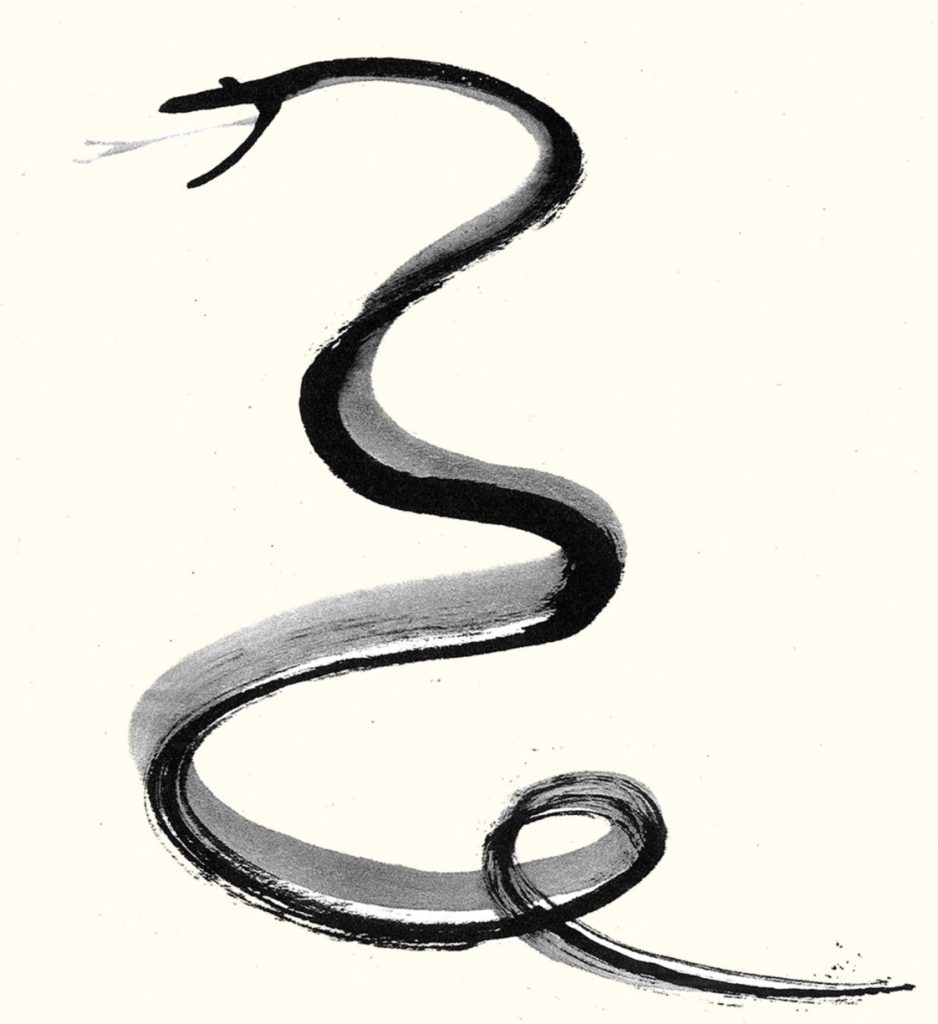
(They say the path forward is tortuous; that’s why I have such a supple body.) — from Huang Yongyu’s Can of Worms
In the 1960s, anyone who saw (or heard about) Huang’s snake and the accompanying epithet would have appreciated the pointed reference to Chairman Mao and his famous statement about the troubled path of the Chinese revolution:
The future is bright, but the path forward is tortuous
前途是光明的,道路是曲折的。
Mao is said to have made this remark during his September 1945 visit to Chongqing, the wartime capital of China, where, following the end of the war with Japan, the Communists and Nationalists attempted to negotiate another truce in their decades-long hostilities. While there Mao met with the noted left-wing writer and Communist agent of influence Guo Moruo 郭沫若. Guo presented the Chairman with an Omega watch that he used for the rest of his life; for his part Mao uttered his lapidary words about the winding road to victory. Mao included the line ‘The future is bright, but the path forward is tortuous’ in the conclusion to his ‘On the Chongqing Negotiations’ 關於重慶談判, his report on the talks offered to Party cadres back in the Communist base of Yan’an on 17 October 1945.
***
The publication of Huang Yongyu’s Can of Worms was a small example of a widespread revival of publicly tolerated humour, and even some moderate satire, in China from the late 1970s. During the de-Maoification years, from 1976 to 1981, this even included the republication of Evening Talks at Yanshan (see It’s Time to Talk About ‘Evening Talks at Yanshan’). Mockery of the language and behaviour of the Communist Party would reach something of an apogee with the publication of Wang Shuo’s No Man’s Land 千萬別把我當人 in 1989, which concludes with a scene in which the residents of the Beijing hutong that has been a focus of the book’s action present a formal Letter of Gratitude 感謝信 to the Party leader who has saved them from national humiliation. The epistle is packed with the logorrhea-like expressions typical of Chinese political and commercial language. A primer of New Sinology avant la lettre, Wang’s fictitious letter to the Party draws on China’s extensive linguistic spectrum: it bristles with classical references, riffs on modern fads and comically reworks bombastic Party-speak (for the letter, see A Hosanna for Chairman Mao & Canticles for Party General Secretary Xi).
Not long after the June Fourth Beijing Massacre of 1989, new forms of satire appeared, including the T-shirts of Kong Yongqian in 1991, many of which carried mildly subversive messages. Vagabond culture in the form of Artistic Pop 潑皮藝術 also flourished and practitioners of ‘deconstructive culture’ soon enjoyed an international profile and impressive earnings. However, as I noted in the book In the Red, a study of the culture of faux opposition, complicity and commercialisation, many of these carefully carefully calibrated acts of artistic resistance were easily embraced by the globalising reformist agenda of the Communists. In the Xi Jinping era (c.2010-) spoofs, satire and lampoons have regained something of their former potency, and both in private banter and in the online world, “gag culture” 段子文化 flourishes (see, for example, The Right to Know & the Need to Lampoon and Emperor One Direction, in the series Xi Jinping’s Empire of Tedium).
***
Below, we feature A Sichuan Wayfarer’s “An Investigation into the Disciplinary Violations in Bring on the Wine”. A parody of Xi Jinping-era bureaucratese, this “report” plays on the language and ideology of the party-state that was born during the Yan’an Era (1937-1947) and instituted nationwide from 1949, in particular from what I call China’s “Dark Enlightenment” starting in 1954. In his paternalistic investigation A Sichuan Wayfarer engages with the Yan’an revivalism of the Xi Jinping era, in particular with the “Mass Line Education and Practice Activities” campaign launched by Xi Jinping in June 2013. At the time, Xi enumerated the “Four Winds” 四風 as part of what was originally a yearlong political drive targeting various kinds of malpractice that had become rampant among Communist Party cadres and government officials during the ideologically lax years of the Hu-Wen era (2003-2012).
The “Four [ill] Winds”, were: “vacuous performativity, excessive bureaucratic behaviour, hedonistic forms of indulgence using the public purse and extravagant displays of privilege”. At the time, in cautioning party-state cadres to be frugal and to make determined efforts to oppose ostentation, Xi Jinping advised his comrades “to look in the mirror, straighten your attire, take a bath and cure yourselves” 照鏡子、正衣冠、洗洗澡、治治病. (See: 習近平在黨的群眾路線教育實踐活動工作會議上的講話,2013年6月18日。)
Subsequently, the “Mass Line Education and Practice Activities” push of 2013-2014 would develop into an ongoing anti-corruption campaign, one that continues unabated to this day.
Readers familiar with official Party cultural pronouncements, academic studies and criticisms will recognise both the tone and diction of A Sichuan Wayfarer’s logorrheic analysis of Li Bo’s Bring on the Wine, one of the most celebrated and popular poems in the Chinese tradition. His is the language of the censorious Party watchdogs, the cultural killjoys and the strait-laced moralists who have flourished once more under Xi Jinping’s glum rule. One of the only ways to resist the party-state’s prison of words is to reject it entirely. As we have noted, Professor Xu Zhangrun, a unique critic of the Xi Jinping era, has created a syncretic style of Chinese prose that challenges, rejects and overwrites the parole of the Party. Others, like the legal activist Xu Zhiyong 許志永 and the social satirist Li Chengpeng 李承鵬, reject the overculture and its “wooden language” in their own pointed way, as do such voices from The Other China, including the master story-teller Liang Hongda 梁宏達, the calligrapher Liu Chan 劉蟾 and Lao Shu 老樹, a maestro of artistic whimsy.
***
A Sichuan Wayfarer’s mock investigation into Li Bo makes a prolix point about the all-embracing party-state view of the world. In doing so, the writer emulates the snooty paternalistic style of Xi Jinping and his dolorous disciplinarians. It is a chilling response to the question that Wu Zuguang posed during the Hundred Flowers Movement seventy years ago:
Why do people in the arts need your “leadership” anyway?
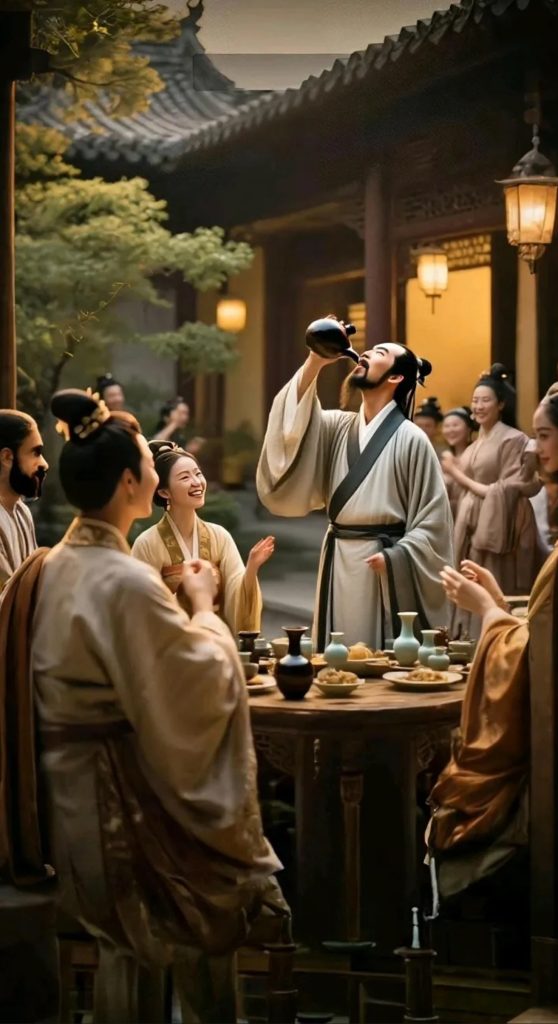
[Note: Li Bo’s Bring on the Wine from Chang’an 長安三萬里, a “3D animated historical drama” that was a box-office hit in 2023.]
***
Bring on the Wine
將進酒
Li Bo
李白
O don’t you see the waters of the Yellow River pouring from the sky,
Rushing downward to the sea never to return?
君不見黃河之水天上來,奔流到海不復回。
O don’t you see the mirrors in the mansions where they grieve for graying hair,
Black silk floss at dawning that by dusk has turned to snow?
When you have some little triumph, you must fully taste the joy,
And never let a golden cup go to waste beneath the moon.
君不見高堂明鏡悲白髮,朝如青絲暮成雪。
人生得意須盡歡,莫使金樽空對月。
Heaven gave me talent, it will surely be employed.
If I spend a thousand coins, they will come back to me.
Stew the lamb, butcher the ox, and let the fun begin.
We must have three hundred cups once we start our binge.
天生我材必有用,乾金散盡還復來。
烹羊宰牛且為樂,會須一飲三百杯。
Master Cen. Young Danqiu.
Don’t you stop when the wine is here.
I will sing a song for you.
Please favor me and lend an ear.
Bells and drums and dishes of jade are nothing to be prized:
Just vow to be forever drunk, be done with being sober.
The wise and worthy of ancient times all are silent now;
It’s only the good drinkers who have left behind a name.
岑夫子,丹丘生,將進酒,杯莫停。
與君歌一曲,請君為我傾耳聽。
鐘鼓饌玉不足貴,但願長醉不願醒。
古來聖賢皆寂寞,惟有飲者留其名。
When the Prince of Chen in former times partied at Pingle Hall,
With dippers of wine, ten times a thousand, they gave themselves to joking and joy.
How could the host be saying that the money is running low?
I must quickly buy more wine and pour some more for you.
陳王昔時宴平樂,鬥酒十乾恣歡謔。
主人何為言少錢,徑須潔取對君酌。
A horse with five florets. A thousand coin robe.
I’ll call the boy to take them out to swap for wonderful wine.
And together we’ll dissolve the sorrows of ten thousand things gone by.
五花馬、乾金裘,呼兒將出換美酒,與爾同銷萬古愁。
— translated by Stephen Owen
***
We may note — perhaps with a twinge of envy — that for Li Bo and many others, losing oneself in drink provided a means of blurring the distinctions imposed by the human mind, so that the loneliness of individuality might give way to a comforting sense of identity with the eternal order. Li Bo’s yuefu poems are studded with golden goblets sloshing with wine, with singing, dancing, and eating. This is the most famous of them. The Chinese poetic tradition had no lack of carpe diem poems and drinking poems, but never had there been one before that spoke to its audience with such violent energy.
— Stephen Owen, The Great Age of Chinese Poetry, 1981
Wang Anshi [1021-1086], in enumerating China’s four greatest poets, put Li Bo fourth on the list. Many vulgar people expressed surprise, but Wang replied: “The reason why vulgar people find Li Bo’s poetry congenial is that it is easy to enjoy. His intellectual outlook was mean and sordid, and out of ten poems nine deal with wine or women; nevertheless, the abundance of his talent makes it impossible to leave him out of account.”
— Huzi, Yuyin Conghua (c.1120 CE), quoted by Arthur Waley in “The Poet Li Po”
***
An Investigation into the Disciplinary Violations in Bring on the Wine, a Poem by Li Bo
or
Investigating a Feudal Influencer
by A Sichuan Wayfarer (An Angry Youth from Chengdu)
translated and annotated by Geremie R. Barmé
關於李白《將進酒》違紀案件的調查報告
蜀地行走 (成都憤青)
This is a report on the instances of disciplinary violations uncovered during an investigation into Bring on the Wine, a poem composed in the mock-folk song-style of the Yuefu 樂府詩 by the Tang-dynasty writer Li Bo.
***
1. Background to the Case and the
Grounds for an Investigation
This mock investigation offers an in-depth analysis of the poem Bring on the Wine, its content, the author’s behaviour and the historical-linguistic context of said work. In undertaking our analysis we have applied the disciplinary code of conduct of the Communist Party of China. Furthermore, our study accords with various stipulations in relevant state laws and it adheres to the statutory principles of social regulation as articulated by the Party.
The aim of this investigation is to highlight egregious examples of unbridled hedonism, identify the pernicious presence of privilege and to catalogue instances of passive aggressive behaviour of certain individuals in relation to the official status quo. We also chronicle a range of issues related to lax political disciple as demonstrated by the poet. In particular, we offer a critical analysis of the present-day real-world ramifications of Li Bo’s Bring on the Wine. Although our conclusions are by no means definitive they do, nonetheless, provide a perspective that may prove useful in managing risk when it comes to contemporary disciplinary work in the arts and more generally.
In particular, our investigation uses as its framework “Disciplinary Regulations of the Chinese Communist Party” and “Regulations Governing Strict Economy and Anti-Waste Practices for Party and Government Agencies”. These were used as a yardstick and measured against relevant Tang-era sources — that is, texts recorded in The Old Tang History, The New Tang History and The Complete Work of Li Taibo. The text of Xi zun kong unearthed at Dunhuang, as well as relevant academic findings, including the debates surrounding variorum texts were included as reference materials in our analysis. These sources provided a crucial context for examining what Bring on the Wine reveals about individual actors and their ideological proclivities.
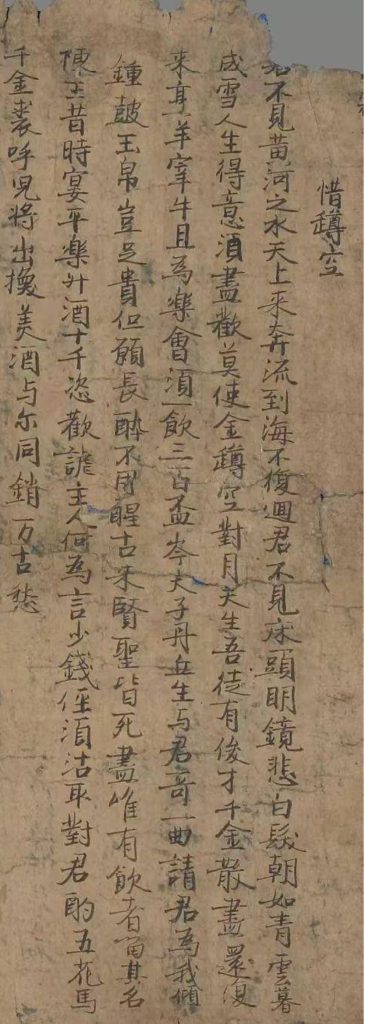
[Note: The text of 惜罇空 Xī zūn kōng, literally “cherishing an empty wine vessel/bottle” or “mourning an empty cup”, has many similarities to Bring on the Wine. It was first catalogued by scholars of the Dunhuang manuscripts in 1913. See Christopher M.B. Nugent, Putting His Materials to Use: Experiencing a Li Bai Yuefu in Manuscript and Early Print Documents, East Asian Publishing and Society 5(1): 32-73, March 2015.]
一,案件背景與調查依據
本案系針對唐代詩人李白所作樂府詩《將進酒》(原題《惜罇空》)的模擬紀律審查。調查基於對詩作內容、詩人行跡及歷史語境的深度剖析,結合目前黨紀國法及社會治理原則,旨在揭示其隱含的奢靡享樂主義、特權思想、消極抵抗組織安排及政治紀律失範等問題。需特別強調:本調查報告為基於歷史文本與現行規範的批判性分析,並非真實的調查結果,目的在於通過歷史鏡鑒警示當代作風建設風險。
調查以《中國共產黨紀律處分條例》《黨政機關厲行節約反對浪費條例》等法規為依據,結合唐代文獻(《舊唐書》《新唐書》《李太白全集》),敦煌出土古本《惜罇空》及學術研究成果(如版本爭議、創作背景),綜合研判詩作反映的行為問題及思想傾向。
***
***
惜罇空
君不見
黃河之水天上來 奔流到海不復迴
君不見
床頭明鏡悲白髮 朝如青雲暮成雪
人生得意須盡歡 莫使金罇空對月
天生吾徒有俊才 千金散盡還復來
烹羊宰牛且爲樂 會須一飲三百杯
岑夫子 丹丘生
與君歌一曲 請君爲我傾
鍾鼓玉帛豈足貴 但願長醉不用醒
古來賢聖皆死盡 唯有飲者留其名
陳王昔時宴平樂 斗酒十千恣歡謔
主人何爲言少錢 徑須沽取對君酌
五花馬 千金裘
呼兒將出換美酒 與爾同銷萬古愁
***
2. Establishing the Facts: Violations of Disciplinary Norms
(1) Contravening the Code of Conduct: The Extravagant Waste of Public Resources and Accepting Hospitality in Excess of Mandated Standards.
1. The cost of the drunken revelries [described in Li Bo’s poem] was far in excess of any normal budget. In his poem Li Bo bellows:
“Stew the lamb, butcher the ox, and let the fun begin.
We must have three hundred cups once we start our binge.”
Thereby describing a lavish banquet fuelled by the excessive slaughter of animals and unbridled drinking. According to the Six Statutes of the Tang Dynasty, during the Kaiyuan reign [of the Xuanzong Emperor of the Tang dynasty, 713-741CE], a cow would have been valued at five strings of cash, or the equivalent to two-weeks pay for a county magistrate. In the context of today, such runaway extravagance would be a flagrant violation of the Party’s admonishment to “oppose wastefulness and strictly forbid the use of public funds for banqueting”.
Moreover, the poem declares that “bells and drums and dishes of jade are nothing to be prized”, a sentiment that reflects blatant contempt for the cost of things and one that reflects a nonchalant attitude when it comes to frittering away public monies in the pursuit of self-indulgence. The scale of waste suggested by the poem is such that we estimate the cost could have supported the living expenses of a hundred families for a number of years. This is, quite literally, “a level of consumption that feeds off the blood, sweat and tears of the People.”
***
***
2. During his life, the poet was constantly being wined and dined by the equivalent of modern-day industry leaders and he enjoyed numerous perks as a result of those relationships. In the poem under investigation sentiments such as “Master Cen. Young Danqiu. / Don’t you stop when the wine is here” and “A horse with five florets. A thousand coin robe./ I’ll call the boy to take them out to swap for wonderful wine” demonstrate Li Bo’s familiarity with the mansions of the gentry (including the Song Mountain villa of friends like Yuan Danqiu). He quite literally calls on his hosts to trade precious garments and thoroughbred horses for even more wine. This is a blatant instance of the poet cajoling his drinking companions to misuse the public purse in pursuit of his private pleasure. Such showy behaviour was also for him accepting excessive largesse from industry heads, something that suggests an unacknowledged abuse of privilege.
According to historical sources, throughout his life Li Bo relied heavily on members of the nobility (for example Princess Yuzhen and He Zhizhang). He was constantly travelling in high style to famous sites and scenic destinations while freely indulging in extravagantly expensive wines and foodstuffs, something evinced in lines his poems such as “the wine in my golden goblet cost 10,000 cash and the elegant food on my jade plate was just as dear” — this is the opening line in a series of poems in which Li supposedly record his travails. He traded on his reputation as a “Sage of Poetry”, so much so that local officials freely opened their coffers so that they could ingratiate themselves with him. His luxurious trips were thus actually underwritten by public funds. We can only conclude that Li Bo traded on his name for influence and favours in a most unseemly fashion. Today, this is the kind of highly problematic behaviour that is criticised in terms of “living off one’s work place while accepting the munificence of the private sector in the form of lavish banquets”. Such carryings-on flout the core principles of integrity in public life and undermine political behaviour that should by all rights be unsullied by corruption.
***
***
(2) Violations of Workplace Standards of Behaviour: drunkenness, idleness and malicious compliance
1. Drunken and lascivious behaviour that occasions professional negligence. In Du Fu’s “Song of the Eight Immortals of the Wine Cup” we read about Li Bo being so lost in his cups that he openly defied the Emperor claiming that he was an immortal of wine. Such behaviour demonstrated his contempt for the Court. The poem Bring on the Wine is similarly replete with evidence of such dipsomaniacal self-indulgence — “Just vow to be forever drunk, be done with being sober”, the poet writes. Furthermore, Li thinks that his celebrity allows him to ignore the responsibilities of his office. In modern terminology, he thereby evinces a contempt for the principle of being “steadfastly loyal to the Party and unwavering in a commitment to the needs of the organisation”.
During the Tianbao reign [742-756 CE], when the Xuanzong Emperor entrusted the affairs of state to Li Linfu and Yang Guozhong, the Court was mired in corruption. Although Li Bo could very well have memorialised the Throne and urged restraint at the time, instead he chose to shirk his responsibilities and drank himself into a stupor. In lines like “When you have some little triumph, you must fully taste the joy”, found in Bring on the Wine and in his belief that the natural order of things could overturned, Li Bo was indulging in a form of passive aggression to disguise his contempt for his professional responsibilities. By modelling this kind of “lying flat” attitude, the poet was effectively encouraging [among his readers] a broad rejection of social norms. The bravado that we see summed up in such lines as “300,000 taels squandered in Yangzhou” and “embracing the reflection of the moon in a drunken stupor at Dongting Lake” [in Li Bo’s other poems] is irrefutable evidence of the writer’s dangerously profligate attitude.
2. Li Bo is guilty of corrupting the youth. Lines in Bring on the Wine like “Heaven gave me talent, it will surely be employed./ If I spend a thousand coins, they will come back to me” might have mistakenly been regarded by later generations as encouraging personal ambition. However, when considered in the context of the poem itself — and given what we learn from the text of Mourning an Empty Cup — these lines actually reflect a lubricious mindset, one that can all too readily infect the weak willed. Li Bo’s proclivity for drinking is a brazen refutation of the value system of our upstanding and worthy ancestors. His advocacy of a hedonism summed up as “drink today for tomorrow we die” had an unmistakably negative social impact on the unemployed youth of Tang-era Chang’an. Daresay, others would have wanted to emulate his raffish worldliness and copy the behaviour of a chancer who encouraged disengagement with the world. Li Bo was nothing less than a negative influencer who disrupted social norms and the civil order.
(3) Contravening Political Discipline: inappropriate discussions about court politics
and a lurch towards historical nihilism
1. Bring on the Wine contains veiled criticisms of the Sages and slights that take aim at the core leadership of the time. The lines that read “The wise and worthy of ancient times all are silent now;/ It’s only the good drinkers who have left behind a name” are a brazen negation of the value of Confucian worthies, including the sages Confucius and Mencius themselves. By extension, the poet is alluding to how some dangerously outspoken critics at the Court had been silenced. Even more insidious are the lines “When the Prince of Chen in former times partied at Pingle Hall,/ With dippers of wine, ten times a thousand, they gave themselves to joking and joy” where the poet is clearly alluding to Cao Zhi — the Prince of Chen — and the vicious fraternal infighting at the court of Cao-Wei during the Three Kingdoms period. This allusion is the poet’s way of commenting on the court politics of his own day when, during the reign of Emperor Xuanzong, loyal ministers were sidelined by the autocratic machinations of Li Linfu. The poet is thus effectively engaging in inappropriate political discussions and using oblique references to defame the core leadership. In our own day, this is equivalent to cases in which certain disgruntled individuals have used WeChat groups to surreptitiously speculate about and covertly launch wilful attacks on some major policy settings of Party Central. Such things constitute a serious challenge to fundamental political discipline.
[Note: ‘inappropriate discussion of the deliberations of the court’ 妄議朝政. Rules governing ‘Inappropriate Discussions of the Major Policies of the Centre (of the party-state)’ 妄議中央大政方針 came into force from late 2015 when Party Central and its Disciplinary Commission issued warnings against, and stipulated the punishment of, idle speculation regarding Party policy, leaders and factional infighting.]
2. Opposed the authority of Party ordained management systems. The lines in the poem that read “A horse with five florets. A thousand coin robe./ I’ll call the boy to take them out to swap for wonderful wine” reflect the fact that the poet treated the private residence of a friend — in this case, Mount Song Villa of [the Taoist recluse Yuan] Danqiu — like his personal ATM. He squanders the wealth of others without compunction, something that demonstrates the poet’s blithe contempt for public standards of accountability and the rights of others. These traits are typical of people who are besotted by their unquestioned sense of entitlement. Add this to the fact that the poet repeatedly spurned attempts by the Court to appoint him to office as well as his publicly stated contempt for “bending to the will of the nobility” and we can easily discern the fact that Li Po was quite calculated in his opposition to the requirements of the political order of his day. This kind of “two-faced” hypocrisy — that is, his pretence of being superior to others and above the fray while secretly yearning for the privileges granted by the very system that he spurned — is in glaring contravention of the expectations imposed on party members in our present day and age to “be loyal and stolid and demonstrating that there is no light between public performance and private aspirations”.
[Note: “bending to the will of the nobility” 安能摧眉折腰事權貴 is a line from the end of Li Bo’s poem 《夢遊天姥吟留別》:
世間行樂亦如此,古來萬事東流水。
別君去兮何時還。且放白鹿青崖間,須行即騎訪名山。
安能摧眉折腰事權貴,使我不得開心顏。]
二,違紀事實認定
(一)違反廉潔紀律:奢靡揮霍公共資源與接受超標準接待
1.宴飲消費嚴重超標。《將進酒》開篇即宣稱“烹羊宰牛且為樂,會須一飲三百杯”,描繪出一場烹羊宰牛、豪飲無度的奢華宴飲場景。按《唐六典》記載,開元年間一頭牛價值約五貫錢,相當於縣令半月俸祿。如此大規模宰殺牲畜、豪擲千金的宴飲,若置於今日,無疑違反“反對鋪張浪費、嚴禁公款吃喝”的紀律要求。更甚者,詩中稱“鐘鼓饌玉不足貴”,公然藐視珍饈美器、華堂盛樂的價值,折射出對公共財物的恣意揮霍——其排場之奢、耗費之巨,足抵尋常百姓數年生計,本質上是“吮吸民脂民膏式消費”。
2.長期接受企業老闆宴請與變相利益輸送。詩作中“岑夫子,丹丘生,將進酒,杯莫停”及“五花馬,千金裘,呼兒將出換美酒”等句子,暴露李白頻繁出入權貴私邸(如友人元丹丘嵩山別墅),並指揮對方以名貴裘馬換酒,實為公器私用、變相接受企業老闆超標接待的特權行為。據史料記載,李白一生多依附權貴(如玉真公主、賀知章),周遊名山大川費用驚人,其“金樽清酒鬥十千,玉盤珍羞直萬錢。”的巨額盤纏,若無利用“詩仙”盛名收受地方饋贈或借公帑運作,難以維繫奢靡行旅,涉嫌“利用影響力謀利或變相公款旅遊”。此類行徑與當前“靠企吃企、接受私營企業宴請”等作風問題如出一轍,違背廉潔從政的核心原則。
(二)違反工作紀律:酗酒怠工與消極抵抗組織安排
1.沈溺酒色貽誤公務。杜甫《飲中八仙歌》曾載“天子呼來不上船,自稱臣是酒中仙”,揭露李白面對朝廷徵召仍以醉酒為由任性推拒。《將進酒》全詩瀰漫“但願長醉不用醒”“古來聖賢皆寂寞,惟有飲者留其名”的酗酒頹廢思想,實質是將個人風流凌駕於公職身份之上,公然踐踏“對黨忠誠、服從組織安排”的紀律底線。天寶年間,唐玄宗將政事委於李林甫、楊國忠,官場腐敗叢生,李白本可仗義執言、上書進諫,卻選擇酗酒逃避責任,高喊“人生得意須盡歡”“鬥轉天動、山搖海傾”等口號,實為以消極抵抗掩蓋失職,帶壞社會風氣的典型躺平表現。“揚州散金三十萬,洞庭醉撈水中月。”李白在揚州一年揮霍三十萬錢的豪奢,更是享樂主義與工作紀律失範的鐵證。
2.誤導青年價值觀。詩作中“天生我材必有用,千金散盡還復來”雖被後世視為勵志名句,但結合全詩語境及敦煌古本《惜罇空》揭示的創作背景(天寶年間被“賜金放還”後懷才不遇),實則隱含以奢摩消解理想,煽動及時行樂的錯誤思想。李白以“飲者留名”否定聖賢價值,鼓吹“今朝有酒今朝醉”的頹廢哲學,對長安城待業青年及社會風氣造成惡劣影響,本質是精神PUA誘導躺平,涉媒“傳播錯誤思想,擾亂社會價值和秩序”。
(三)違反政治紀律:妄議朝政與歷史虛無主義傾向
1.含沙射影攻擊聖賢與領導核心形象。詩作中“古來聖賢皆寂寞,惟有飲者留其名”一句,以“聖賢寂寞”否定孔孟等先賢思想價值,甚至延伸至暗諷朝廷對直言之士的打壓。更甚者,借曹植典故“陳王昔時宴平樂,鬥酒十千恣歡謔”影射曹魏政權兄弟相殘,暗指唐玄宗時期忠良遭排擠(如李林甫專權),實通過歷史隱喻妄議朝政、含沙射影詆毀領導核心。此類行徑與“在微信群指桑罵槐妄議黨中央決策部署”的違紀行為在本質上相通,挑戰政治紀律嚴肅性。
2.對抗組織管理權威。“五花馬,千金裘,呼兒將出換美酒””,將友人私宅(元丹丘嵩山別墅)當作自家“提款機”,任意揮霍他人財物卻毫無愧疚,折射出特權階層對公共規則與他人權益的漠視。結合其多次拒絕朝廷任命、公開宣揚“安能摧眉折腰事權貴”等言行,體現出對組織權威的系統性對抗——此等“兩面人”做派(表面清高,暗求特權),與新時代黨員幹部“對黨忠誠老實、表裡如一”的要求背道而馳。
***
An Operatic Interlude
***
3. Analysing What the Poem Reveals about Undisciplined Behaviour
(1) Li Bo’s poem is a textbook example of an entrenched ideology of entitlement and unbridled hedonism. The lifestyle valorised in Bring on the Wine is only made possible because the elite class treats the public resources to which they enjoy ready access as theirs to use and dispose of as they sees fit.
The poem encapsulates the cultural imaginary of a feudalistic scholar-bureaucratic culture. In a sybaritic realm in which the norm is to “stew the lamb, butcher the ox” and to swap a fine “horse with five florets … for wonderful wine” the real-world costs would have been staggering. To the poet’s mind, however, such extravagance is entirely justifiable because, as he unabashedly trumpets “Heaven gave me talent, it will surely be employed”. Individuals besotted by their sense of entitlement invariably fall into this trap of wasteful indulgence. If such habits of mind are tolerated in the here and now, they will all too easily translate into the kinds of deleterious attitude summed up in the expression “[they] live off the largess of industry and the public purse while enjoying all manner of luxury gift and ‘envelopes stuffed with cash’”. This is exactly how the very foundations of the party-state will be undermined.
(2) The work in question reflects a variant of political opportunism disguised as world weariness. Confronted by the political dystopia of his day during the Tianbao Reign — in particular given the misrule of Yang Guozhong and the An Lushan Rebellion — Li Bo responded with inebriation, lying flat and passive resistance. Behind his boastful claim that “When you have some little triumph, you must fully taste the joy” lurked a strategy that was focussed on how he could avoid his social responsibilities. Li’s arrogant celebration that he “ignored an injunction to join the royal barge” is further evidence of his contempt for his public duties as well as his predisposition to resist the disciplinary constraints of the powers that be. His boasts reflect the logic of a political opportunist, one who hungered after official largesse (two of his wives were the granddaughters of imperial chancellors and he constantly relied of the privileges and perks afforded by his station in life) while shirking the duties that were expected in return. Such finely honed “ethical egotism” is absolutely incompatible with our Party’s avowed requirement of cadres to “have the wherewithal to take responsibility and champion proactive behaviour” [as stipulated in “Regulations on Disciplinary Actions by the Communist Party” (revised 2023)].
[Note: See 中國共產黨紀律處分條例.]
(3) The poem encapsulates a cultural strategy of nihilistic deconstruction. The lines
“The wise and worthy of ancient times all are silent now;
It’s only the good drinkers who have left behind a name”
champion an alternative value structure that celebrates sybaritic indulgence as a means to abandon the solemnity and awe with which history should rightfully be regarded. When we consider the poem in the context of the older version of the text discovered in the Dunhuang manuscripts, we find that the original contains the line 天生吾徒有俊才 [“Heaven has bestowed this worthy talent on me in vain”] rather than the received version which reads 天生我材必有用 [“Heaven gave me talent, it will surely be employed”], as well as the line 古來賢聖皆死盡 [“Sages past are all long dead”]. The later revised version of the text has reworked the nihilistic tendencies of the original and in the process the more pointed messages of the work related to personal frustration and degenerate behaviour have been eliminated. What really matters is that if we don’t criticise the motivations lurking behind cultural products that undermine the wisdom and history of our forebears and instead allow them to enjoy unimpeded dissemination today, we may well end up with people doubting our Core Socialist Values while [also condoning the attempts of certain cultural creators] to sow the seeds of distrust in our enterprise.
三,違紀行為性質分析
(一)特權思想作祟的奢靡享樂主義典型標本。李白在《將進酒》中展現的生活模式——依賴權貴供養、沈溺奢華宴飲、視公共資源私產——是封建士大夫特權文化的典型體現。其“烹羊宰牛”“五花馬換酒”的豪奢行徑,換算時值足抵百姓數年口糧,卻自詡“天生我材必有用”的合理化揮霍,實為特權催生的奢靡消費陷阱。此風若蔓延至當代,極易演變為“靠企吃企、公款吃喝、收受高檔禮品禮金”等作風問題,侵蝕黨的執政根基。
(二)消極避世的政治投機主義變種。面對天寶年間政治黑暗(楊國忠亂政、安祿山叛亂),李白選擇酗酒躺平而非積極抗爭,高喊“人生得意須盡歡”實則逃避社會責任。其“天子呼來不上船”的傲慢背後,是對公職身份的輕視與對組織紀律的天然抵觸,折射出政治投機主義者的利益邏輯:既渴望體制紅利(兩任妻子皆宰相孫女,依賴家族特權),又不願承擔公共責任。此類“精緻利己主義”作風,與新時代“敢於擔當、積極作為”的幹部要求水火不容。
(三)歷史虛無主義的文化解構實驗。以“古來聖賢皆寂寞”否定傳統文化價值,以“惟有飲者留名”樹立另類標桿,實為通過娛樂化敘事消解歷史敬畏。結合敦煌古本《惜罇空》揭示的“天生吾徒有俊才”(非“天生我材必有用”)及“古來賢聖皆死盡”等更直白的頹廢表述,詩作原始版本的憤懣與虛無傾向更為明顯——此等解構聖賢與歷史的創作動機,若不加批判傳播,可能助長對社會主義核心價值觀的質疑,埋下意識形態風險隱患。
4. Lessons from the Past, Warnings for the Present
(1) Constructive Lessons for the Work-style of Party Cadres
1. It is imperative to break free of a privilege-obsessed view of the world and to be unwavering in the pursuit of clean government. Li Bo’s extravagance is born of the miasma of entitlement (that, in his case, was supported by his involvement with social elites and a belief that the public good is only there to serve private interests). It is a warning to us all that as Communist Party cadres involved in governing we must be constantly conscious of the fact that “both power and resources come from the people”. We must reject the notion that our position in government automatically bestows privileges upon us or that the public purse can be plundered for private profit. We must strictly adhere to all relevant rules and regulations regarding what is considered the appropriate cost of entertaining in the pursuit of our public duties. The same applies to the use of official vehicles. There must be zero tolerance for those who exceed budgetary limits on public banqueting and the illegal granting of public benefits to private individuals.
2. We must amplify awareness of professional responsibility so as to ensure that public officials will put themselves on the line and reject decadent ideas about lying flat. When confronted with complex realities in everyday life, be they economic pressures or social strife, cadres must reject the kind of passive defeatism encapsulated in the poem’s line that “you must fully taste the joy” of even minor achievements. Rather, cadres must engage with the spirit of the line “Heaven gave me talent, it will surely be employed” (embracing thereby the elements of “positive energy” that are contained in the poem) and thereby strive for advancement. Party cadres should be proactive and they should energetically apply themselves to their jobs, foreswear inebriation in favour of hard work, reject the temptation to shirk their responsibilities and ensure that they routinely maintain the spirit of being a public servant who, in Lu Xun’s immortal words, “bows one’s head like a willing ox to serve the children”.
3. We must strictly adhere to workplace discipline and vouchsafe ideological security. The poem employs a pointed allusion when it says that “Prince of Chen in former times partied at Pingle Hall” and openly propagates historical nihilism in the line “The wise and worthy of ancient times all are silent now” — these are a warning to cadres that they must resist ideological deliquescence, avoid misspeaking and reject the temptation to indulge in inappropriate speculation about Party policy. We must redouble our efforts to enhance the “Four Awarenesses” and, both in our public and in our online activities, to support unwaveringly and protect the authority of Party Central. We must be on constant guard and reject both words and deeds that use allusions to the past to mock the present or to attack our socialist system in any way. We must resolutely oppose the corrosive effects of historical nihilism on the cultural foundation of our enterprise.
[Note: Xi Jinping outlines the “Four Awarenesses” 四個意識 in 2016. They are: Political awareness; awareness of the overall national situation; awareness of the views and polities of the political core of the Party (that is, Xi Jinping); and, the awareness that one must be politically compliant.] consciousness
(2) The Need for Greater Public Media Literacy
The widespread popularity of a poem like Bring on the Wine is glaring evidence that there is [among the public] heedless fawning over content aimed at “deconstructing all that is lofty and deriding all serious topics”. It is necessary, therefore, to redouble our efforts to increase media literacy. We must be alert to narrative traps. Some cultural purveyors claim that their creations are aimed at “uncovering hidden histories” and that they offer “insider perspectives” as part of a deconstructive project, even though in reality they wilfully distort our revolutionary history, as well as smear and defame heroic figures. Therefore, it is necessary:
- to support credible and authoritative sources and avoid being bamboozled by those with such “high-level black” agendas;
- to reject the commodification of suffering and public institutions;
- to reject people’s craven appetites and voyeurism regarding the luxurious lifestyle of the wealthy; and,
- to deepen our appreciation of the fact that “all official images and cultural symbols in the public realm can be repackaged and turned into marketable commodities”, something that was demonstrated in regard to the case of “Cui Chenghao”).
[Note: With over 4.8 million followers, the North Korean parody account “Cui Chenghao” is one of the most popular accounts on Sina Weibo. Most of its posts are written in the style of an indignant North Korean given to pouring scorn on the outside world while heaping accolades on the Kim dynasty. See Nuclear tests, border crimes change Chinese people’s attitude to N.Korea, Global Times.]
One must avoid things that are used as a vehicle for false narratives. Therefore, it is necessary to reaffirm the correct historical perspective and to use official media outlets to promote the findings of authoritative research and thereby resist attempts to propagate notions of Li Bo-style unbridled romanticism and biased interpretations of him and his work that promote his so-called “rebellious spirit”. One must objectively assess the actual historical limitations of the scholar-official class and appreciate the fundamental differences between the realities of the past and the actualities and responsibilities of Chinese citizens today.
3. Suggestions regarding the appropriate management of cultural transmission and the moderation of online platforms
1. Uphold the principle of creative conversion: artistic works should reflect historical facts. In dealing with Bring on the Wine its cultural essence must be delineated from dross. We can inherit its valuable romantic literary dimension while stripping away the negative content in the poem that pertains to privilege, luxury and nihilistic escapism. Above all, we must avoid the notion that “drunken escapism” reflects the “liberation of the individual”. In our consideration of the ideological context of this work due attention must be paid to alternative readings provided by the archaeological discoveries involving Dunhuang texts. An annotated text based on objective scholastic findings pertaining to the background of this work and a variorum edition will allow for a more rational approach to the poem.
2. Strengthen the mechanisms for internal review. In dealing with online content that deconstructs history and satirises political topics (as in the case of those who employ the style of circulars used by the Central Disciplinary Commission to make fun of ancient writers [sic!]), Internet platforms must establish a system whereby such cases can be handled in a discerning manner. Concerted and coordinated action should be taken in dealing with those works that promote decadence as well as those that propagate erroneous value systems. This will ensure that the kind of cultural confusion generated by scammers like Cui Chenghao will not be reignited.
3. Improve systemic restraints: there needs to be a further refinement of official budgetary standards as they relate, for example, to expenses for banquets and reimbursement of costs undertaken for official purposes. This will eliminate the kind of “bring-on-the-wine extravagance” that is tolerated under the present system. Similarly, inappropriate online statements made by Party members and cadres, including gratuitous comments on politics and the transmission of wrongthink and thoughtcrime should be treated within the existing disciplinary system and punished appropriately. We can thereby establish an effective long-term mechanism to ensure that people “dare not engage in corrupt activities, are unable to indulge in corruption and don’t even think of acting in a corrupt manner”.
四,歷史鏡鑒與當代警示
(一)對黨員幹部的作風建設啓示
1.破除特權思想,堅守廉潔底線。李白式奢靡源於特權幻覺(依附權貴、視公共資源為私財),警示當代黨員幹部必須深刻認識“權力來自人民、資源用於人民”。應杜絕“將職權當特權、拿公帑謀私利”的行為,嚴格落實公務接待、公車使用等制度,對超標宴請、變相利益輸送保持“零容忍”。
2. 強化責任擔當,拒絕躺平頹廢。面對複雜局面(如經濟壓力、社會矛盾),需摒棄“人生得意須盡歡”的消極哲學,以“天生我材必有用”的進取精神(修正版詩句的正能量導向)激發奮鬥動力。黨員幹部應主動作為、積極履職,杜絕酗酒誤事、逃避組織交辦任務等行為,永葆“俯首甘為孺子牛”的公僕本色。
3.嚴守政治紀律,維護意識形態安全。“陳王宴飲”式隱喻妄議、“聖賢寂寞”式歷史虛無主義,警示黨員必須規範網絡言論、抵制錯誤思潮。需增強“四個意識””,在公開場合及網絡空間堅決維護黨中央權威,對借古諷今攻擊社會主義制度的言行保持高度警惕,堅決反對歷史虛無主義侵蝕文化根基。
(二)對公眾媒介素養的培育要求
《將進酒》的廣泛流傳暴露部分人對“解構崇高、戲謔嚴肅議題”內容的盲目追捧。需加強媒介素養教育。警惕敘事陷阱:對以“揭秘歷史”“內部視角”為名的解構性內容(如歪曲革命歷史、醜化英雄人物),應核查信源權威性,避免被“高級黑”手法誤導;拒絕消費苦難與公器:摒棄對奢靡消費、特權生活的獵奇心態,深刻認識“任何國家形象、文化符號都可能被包裝為流量商品”(如崔成浩事件警示),避免成為虛假敘事的傳播工具;樹立正確歷史觀:通過官方渠道、權威研究獲取歷史認知,抵制將李白式“放浪形骸”浪漫化為“反抗精神”的片面解讀,客觀辨析封建士大夫局限性與新時代公民責任的本質區別。
(三)對文化傳播與平台治理的規範建議
1. 堅持創造性轉化原則:文藝創作應尊重歷史真實,對《將進酒》等經典需區分糟粕與精華——傳承其浪漫主義文學價值,剝離其特權奢靡、消極避世等負面內核,避免將“酗酒逃避”誤讀為“個性解放”’。思想建設案例編寫應結合敦煌古本研究成果,客觀注釋創作背景及爭議版本,引導理性認知。
2. 強化內容審核機制:網絡平台應對解構歷史、戲謔政治議題的內容(如模仿紀委通報惡搞古人)建立分級管理,對可能煽動奢靡之風、傳播錯誤價值觀的賬號實施聯動追責,防止“崔成浩式身份欺詐”借傳統文化符號死灰復燃。
3.完善制度約束:進一步細化公務消費標準(如宴請規格、差旅報銷),堵住“將進酒式”奢靡漏洞;對黨員幹部網絡言行失範行為(妄議、傳播錯誤思潮)納入紀律處分範圍,形成“不敢腐、不能腐、不想腐”的作風建設長效機制。
5. Examining Ourselves under an Historical Microscope
Ours is a case study of the kinds of issues that can be revealed during a forensic examination of a poem like Li Bo’s Bring on the Wine. Historical texts of this kind have paradigmatic relevance in so far as they reveal the kinds of hothouse conditions that continue to exist even in the New Era [of Xi Jinping]. After all, ours is a period in which we are determined to eliminate variorum the “Four Winds” in our own work.
[Note: As noted above in “Is Resistance Futile?”, the “Four [ill] Winds” 四風 are: “vacuous performativity, excessive bureaucratic behaviour, hedonistic forms of indulgence using the public purse and extravagant displays of privilege”.]
The following lessons can be fruitfully gleaned from the present case:
1. Privilege and sybaritic indulgence are the greatest threat to the red lines laid out in our disciplinary work: be it in the past or today all of those who pursue personal indulgence at the expense of the public good will be identified and eliminated root and branch;
2. A sense of responsibility and duty are the spiritual beacons that can reliably guide us away from nihilism — a temporary flight from the pressing duties of the day may well offer momentary distraction. but it will also undermine your ability to leave a significant mark on history or in the heart-minds of the people; and,
3. Only when one treats History with due reverence and respect can you contribute to the future in a positive way; the cost of undermining all that is sacred to us and deconstructing the very concept of the sublime may threaten the foundations of the spiritual cathedral of the nation itself.
Today, as we zealously pursue a policy aimed at enhancing the comprehensive and rigorous regulation of Party governance, we believe that it behooves every party member and state functionary to use the mirror of history to reflect on their present actions. Today, do we not all too readily indulge in “high-spirited drinking parties” and blur the distinction between public and private? Is an attitude given to “lying flat and pursuing Buddhist-style escapism” not just a way individuals use to cloak their desire to shirk professional responsibilities? Are people allowing flippancy and joking to erode the foundations of our belief system? Only if we cleave to our “core faith in incorruptibility, our unwavering determination to devote ourselves to the fight and to buttress souls of unswerving loyalty” can we successfully straddle the millennia-old spatiotemporal divide [between Li Bo in the Tang dynasty and the present day] and meaningfully respond thereby to the demands of our present era.
五,歷史顯微鏡下的作風自省
李白《將進酒》案雖屬模擬紀律審查,但其折射的奢靡享樂主義、特權思想、消極抵抗及歷史虛無主義傾向,恰是新時代作風建設需根治的“四風”病灶典型標本。此案的警示意義如下:
1.特權與奢靡是紀律紅線的最大威脅:無論古今,沈溺個人享受、漠視公共利益者終將被歷史清算;2.責任與擔當是破除虛無的精神燈塔:逃避時代課題者或許能博一時眼球,卻永難在人民心中留名;3.敬畏歷史方能開創未來:解構聖賢、解構崇高的代價,可能導致民族精神大廈的根基動搖。
在全面從嚴治黨縱深推進的今天,每個黨員幹部都應從這面歷史鏡鑒中照見自我:是否在觥籌交錯間模糊了公私界限?是否以“躺平佛系”掩蓋責任缺失?是否讓戲謔解構侵蝕了信仰根基?唯有堅守“清廉為本、奮鬥為基、忠誠為魂”,方能跨越千年時空,書寫不負時代的答卷。
6. Supplement: Investigating the origins of a controversy surrounding the poem
1. Disparities in the extant versions of the poem [as discussed earlier]: the oldest original text of the poem found in Dunhuang (ref.P2567) contains the line 天生吾徒有俊才 [“Heaven has bestowed this worthy talent on me in vain”] and not 天生我材必有用 [“Heaven gave me talent, it will surely be employed”], as well as 古來賢聖皆死盡 [“Sages past are all long dead”]. Versions of the poem currently in circulation date from the Song dynasty when it is believed that the nihilistic tendencies of the original were adulterated by the literati of the time. This suggests that the original impetus of the poet was more pointedly to do with personal frustration and degenerate behaviour.
[Note: See Putting His Materials to Use: Experiencing a Li Bai Yuefu in Manuscript and Early Print Documents, East Asian Publishing and Society 5(1): 32-73, March 2015, in which Christopher Nugent observes that:
“The poetic work we now know as ‘Qiangjin jiu’ existed in a state of constant flux. Extant documents from the first few hundred years of its existence show that it circulated in formats that differed substantially on the level of document and text (both written and aural). These differences in turn create differences in meaning that affect how its various audiences would understand the work and indeed how they might understand its author.” (p.65)]
2. Background to the composition of the poem: the work was written circa the Third Year of the Tianbao reign [744 CE, sic] at a time when Li Bo had both the money and leisure to travel and when his friend Yuan Danqiu arranged a banquet at his mountain villa.
3. Recommendations regarding the disciplinary infractions of Li Bo: if Li was alive today there is no doubt that his behaviour would amount to serious infractions of the Party’s code of conduct in regard to:
- probity and corruption (as evident from the misuse of public monies and the poet’s participation in lavish banquets funded by actors in the private sector);
- workplace discipline (drunkenness and lax work practices); as well as
- political disciple (demonstrated by inappropriate comments regarding the affairs of the Court).
In accordance with the relevant provisions of “Regulations on Disciplinary Actions by the Chinese Communist Party” such egregious acts would merit expulsion from the Party and would also require the malfeasant to reimburse all ill-gotten gains.
But history cannot be revisited. Therefore, we have no choice but to treat this case as a warning to all. We must constantly be on guard and be mindful that our work style is in constant need of improvement. Furthermore, our cadre of Party members must constantly be tempered by the requirements of strict and demanding discipline. Only then can they stand on the crest of history as the tides of change lead to the future.
[Note: Xi Jinping has repeatedly described the mission of the Party’s Central Discipline and Inspection Commission, the party organ repeatedly invoked in A Sichuan Wayfarer’s report, as “scraping the poison off the bone” 刮骨療毒 of the bureaucracy of the party-state. On 18 January 2026, the Commission released data covering the year 2025 leading one independent commentator to conclude that “the results suggest that the poison is growing faster than they can scrape.” The commentator wrote that; “The total people punished (处分) in the Party and government systems hit a record last year: 983,000. Given there are some 7mn of them, that’s 14%. Accumulate that over a few years, and I’d guess at least 50% of cadres have been punished in some form or other in the past decade. The number’s probably considerably higher.” The author concludes: “More bone scraping to come then. Until cadre morals improve.” See Youshu, They can’t scrape the poison off fast enough, 18 January 2026.]
六,附錄:詩作關鍵爭議點溯源
1. 版本差異辦析:敦煌出土古本《惜罇空》(編號P2567等)顯示原始詩句“天生吾徒有俊才”(非“天生我材必有用”)及“古來賢聖皆死盡”,現存通行版本多為宋代文人修改以弱化虛無色彩,此差異揭示詩作原始動機的憤懣與頹廢傾向更甚。
2. 創作背景補正:詩作約成於天寶三年(744)李白被“賜金放還”後漫遊梁宋期間,友人元丹丘設宴潁陽山居時所作。其“烹羊宰牛”“五花馬換酒”實為依附權貴生活的寫照,而非普通勞動者的豪邁行樂。
3. 紀律審查建議:若李白生於當代,其行為已構成違反廉潔紀律(揮霍公款、接受企業宴請)、工作紀律(酗酒怠工)及政治紀律(妄議朝政),應依《中國共產黨紀律處分條例》給予開除黨籍處分,並責令退賠不當所得。然歷史無法重來,唯願此案成為長鳴警鐘——時刻警醒我們:作風建設永遠在路上,唯有以鐵的紀律鍛造隊伍,方能在時代洪流中挺立潮頭。
***
Source:
- 蜀地行走,關於李白《將進酒》違紀案件的調查報告,2025年8月18日
***
將進茶
Bring on the Tea!
— The Tao of Tea set to Peking Opera
[Note: For more on the Tao of Tea, see The Tea Master of Zibo’s Kung Fu Hustle.]
***
Drinking Song
Li Bo
See the waters of the Yellow River leap down from Heaven,
Roll away to the deep sea and never turn again!
See at the mirror in the High Hall
Aged men bewailing white locks—
In the morning, threads of silk;
In the evening flakes of snow!
Snatch the joys of life as they come and use them to the fill;
Do not leave the silver cup idly glinting at the moon.
The things Heaven made
Man was meant to use;
A thousand guilders scattered to the wind may come back again.
Roast mutton and sliced beef will only taste well
If you drink with them at one sitting three hundred cups.
Master Cen Xun,
Doctor Danqiu,
Here is wine: do not stop drinking,
But listen, please, and I will sing you a song.Bells and drums and fine food, what are they to me,
Who only want to get drunk and never again be sober?
The Saints and Sages of old times are all stock and still;
Only the mighty drinkers of wine have left a name behind.
When the king of Chen gave a feast in the Palace of Pingle
With twenty thousand gallons of wine he loosed mirth and play.
The master of the feast must not cry that his money is all spent;
Let him send to the tavern and fetch more, to keep your glasses filled.
His five-flower horse and thousand-guilder coat—
Let him call his boy to take them along and sell them for good wine,
That drinking together we may drive away the sorrows of a thousand years.
— translated by Arthur Waley in “The Poet Li Po”
with romanisation converted to Hanyu Pinyin.
***