Mythopoetic China
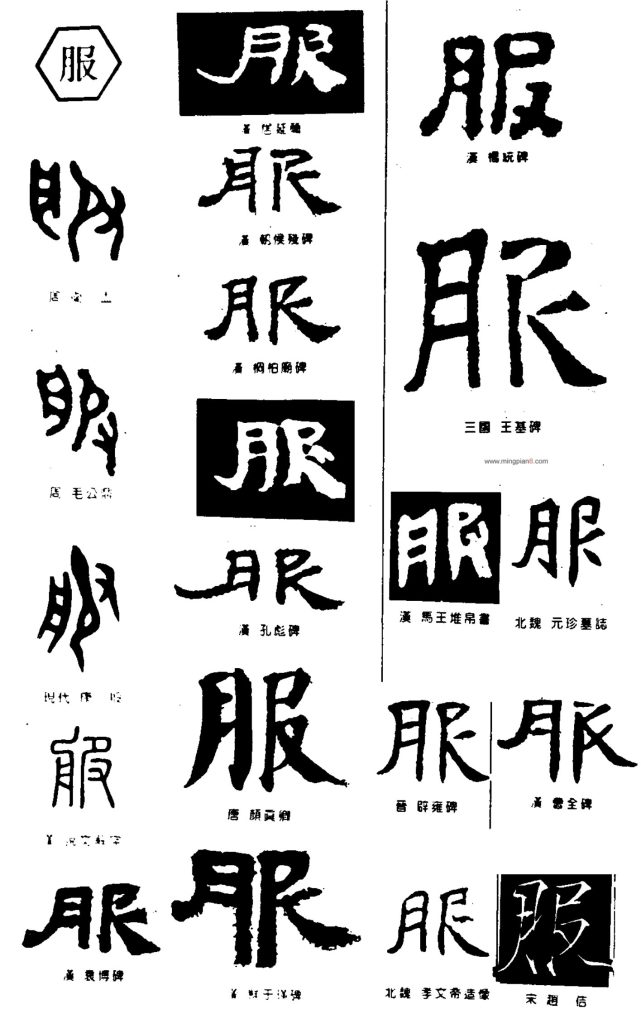
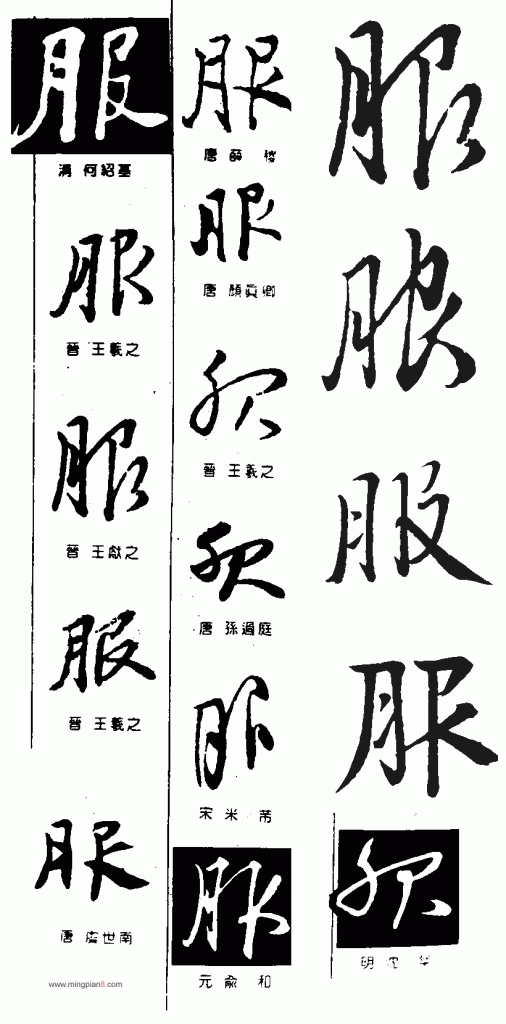
口服、手服、心服
China’s party-state is underpinned by a culture of submission.
During the Yan’an Decade (c.1937-1948), leaders like Mao Zedong and Liu Shaoqi, along with their loyalist theoreticians, melded abiding elements of state Confucianism, the influence of which lingered far beyond the end of the Qing dynasty in 1911, with Stalinism to create a Stalino-Maoist ideology (the term ‘Leninism’ still enjoys cachet, but it’s the virulence of Stalin that cohabits with that of Mao in Xi Jinping’s China). During the Yan’an Rectification Movement of 1942-1945, Stalino-Maoism was internalised by Party members via intensive study sessions during which key texts were memorised and written out, rounds of individual confessional ‘therapy’ and intensive ‘ideological adjustment’ that involved vituperative and often violent ‘struggle sessions’.
All Party members at the wartime guerrilla base were required to align their thinking with a new form of Sinified Marxism that would be known as ‘Mao Zedong Thought’. They were inducted, often kicking and screaming, into a world of submission. The process was summed up in adaptation of a Buddhist slogan, that is: 口服、手服、心服, that spoke about the internalisation of dogma via verbal compliance, the writing out texts to reinforce the messages of indoctrination and, ultimately, a complete psychological transformation, a willing acceptance of the Party line.
In the following discussion of the contretemps involving the French soccer star Kylian Mbappé and Mao Zedong, our rubric is 口服、手服、心服, the unquestioning submission to the Party line ‘verbally, in writing, as well as in the heart’.
***
After the Communists came to power in 1949, they launched a multiyear nationwide Thought Reform Campaign that used the methods of Yan’an to transform China’s intelligentsia and the educated. Its message was reinforced during the 1957 Anti-Rightist Movement that saw the purge and enforced submission of hundreds of thousands of men and women who had failed to internalise the ‘learnings’ of thought reform. Subsequent educational campaigns over the decades, and in particular during the Xi Jinping era (2012 ongoing) have repeatedly, and tirelessly, focussed on teaching the Chinese lessons in submission and willing compliance. We’d note that there have been no fewer than nine collective study and thought-adjustment campaigns during Xi’s tedious tenure as party-state-army supreme.
As I observed in Shades of Mao: The Posthumous Cult of the Great Leader (1996):
The shade of Mao Zedong continues to cast a long shadow over Chinese life. … Committed intellectuals continue to debate the heritage of Mao, and many are concerned that the Mao heritage, reformulated by an ideologically bankrupt Party in terms of a crude nationalism, may be a dangerous factor in China’s future.
To paraphrase William Bouwsma, however, Mao, much like water and electricity, is now a public utility. …
I concluded that:
Chairman Mao has entered the stream of Chinese history as man, icon, and myth, and there is little doubt that the Cult of the early 1990s is only the first of the revivals he will experience in what promises to be a long and successful posthumous career.
***
In recent decades Beijing has extended the purview of its submission strategy to include the whole world. Although the Communist Party has deployed an argumentum ad populum to condemn the words, actions or policies of a person, organisation, or government on the grounds they ‘hurt the feelings of the Chinese people’ 傷害中國人民的感情 since the late 1950s, incidents involving China’s collective hurt feelings have proliferated since 1989. See, for example, my essay A Unabomber Moment, or How We Hurt the Feelings of the Chinese People.
Over the years, independent-minded discussions of Taiwan, Tibet, Xinjiang and the South China Sea have readily triggered Beijing and recently, China has further codified its readiness to take umbrage in the form of Four Diplomatic and Geopolitical Red Lines.
In short, it is getting easier to hurt the feelings of the Chinese people. In China’s Velvet Prison, verbal submission 口服, or parroting, remains paramount, even for non-Party members and, as Beijing’s Velvet Prison increasingly goes global, all of those who engage with China are expected to adhere to Beijing’s way of framing reality and to mouth their compliance.
***
***
When marking the fiftieth anniversary of Mao Zedong’s death on 9 September 2026, I referred to the third chapter of Seeds of Fire: Chinese Voices of Conscience (1986), which appeared on the tenth anniversary of Mao’s death. Spectres opened with a quotation from Jin Guantao 金觀濤, a prominent academic:
Feudalism casts and inhibiting historical shadow … China has not yet freed itself from the control of history. Its only mode of existence is to relive the past.
During the short de-Maoification years, ‘feudal remnants’ 封建餘孽 was code for Party privilege, corruption and authoritarianism, just as ‘the modern superstition’ 現代迷信 was an oblique reference to the Mao cult. The featured work in ‘Spectres’ was A Spectre Prowls Our Land 一個幽靈在中國大地遊蕩, a long poem written in 1980 by Sun Jingxuan 孫靜軒, one that we have often quoted in China Heritage ‘Have you seen/ The Spectre prowling our land?’, the poet asked:
You may not recognise him,
though he stands before your eyes,
For like a conjurer,
master of a never-ending transforming,
One moment in a dragon-robe of gold brocade
He clasps the dragon-headed sceptre,
The next in courtier’s gown
He swaggers through the palace halls;
And now — behold — a fresh veneer!
The latest fashion! And yet
No mask, no costume, no disguise
Can hide the coiled dragon
branded on his naked rump…
Such sentiments were unacceptable even in the relatively relaxed years of the late 1970s and early 1980s. Sun, who had only recently been rehabilitated for his ‘rightist errors’ in 1958, was severely reprimanded and forced to publish an abject self-criticism. (For another excerpt from Sun Jingxuan’s poem, scroll down to the end of this chapter.)
In Spectres we also quoted an article published by Hong Kong Express on 4 April 1986:
The feudal age of the First Great Emperor has gone, never to return. But the “spectre from within the fortress” still prowls our land. The spectre of Party rule (rather than democracy), of rule by the individual (rather than rule of law), of power (rather than right), still stalks the land. The fate of the leaders of the Chinese Democracy Movement, the regime’s opposition to liberalization, the staunch upholding of the Four Principles, are all manifestations of this Spectre.
And so it still is, forty years later.
***
As I remarked in The Ninth of September 1976 and the Birth of Mythopoetic Mao, a previous chapter in Seeds of Fire at Forty:
Over the past decade, China Heritage has discussed the ‘mythopoetic historical complex’ of the People’s Republic of China a number of times. As we enter our second decade, it seems only fitting to expand on our analysis of what I regard as being the interstitium of the party-state.
As I will argue elsewhere, the mythopoetic network spans and permeates every layer of Chinese thought, culture and life. It is a ‘third circulatory system’, one that complements the political, economic and social order. To study and understand it illuminates the world envisioned and policed by China’s Communist Party.
Mao Zedong, his history and the poetic mythology that has developed around it, are crucial to an appreciation, if not an understanding, of China in the twenty-first century. His place in the ‘Hero Cycle’ of Chinese history and his ongoing role in mythopoetic China is of profound importance.
***
My thanks to Reader #1 for sharing the following essays from The Spectator, a political and cultural news weekly that has become something of a parody of British conservatism.
The first commentary is by Ian Williams, a journalist long engaged with China and author of Vampire State: The Rise and Fall of the Chinese Economy (2024). The second is by Melissa Chen, a Singaporean-American social commentator and contributing editor for Spectator USA. The title of her essay, ‘Kylian Mbappé and Mao-Maoing the Flak Catchers’, with its reference to Tom Wolfe’s 1970 book Radical Chic & Mau-Mauing the Flak Catchers, made it too good to pass up. Chen’s crude observations on transsexualism are less winsome.
This material is a chapter both in Seeds of Fire at Forty, China Heritage Annual 2026 and in Mythopoetic China, the upcoming China Heritage Annual 2027. It could just as well be added to another China Heritage series: Xi Jinping’s Empire of Tedium.
— Geremie R. Barmé
Editor, China Heritage
30 October 2026
***
Related Material:
- David Bandurski et al, The Penalty Box of Hurt Feelings, Lingua Sinica, 30 October 2026
- 李承鵬,宇宙的盡頭是“辱華”,文學城,2026年10月29日
- Alexander Boyd, How China Views Mao, Ramble, 29 October 2026
- Howard Zhang, Mbappé, Mao and More Purges: The Message from Xi Jinping’s Fifth Plenum That Most Experts Missed, Howard’s China Watch, 29 October 2026
- Bill Bishop, Mbappé mess continues, Sinocism, 28 October 2026
- The Ninth of September 1976 and the Birth of Mythopoetic Mao
- The Gao Brothers and the Shame of China
- Yinfi on How China’s Velvet Prison Goes Global
- Prelude to a Restoration: Xi Jinping, Deng Xiaoping, Chen Yun & the Spectre of Mao Zedong
- A Hosanna for Chairman Mao & Canticles for Party General Secretary Xi
- Tedium Continued — Mao more than ever
- The Right to Know & the Need to Lampoon
***
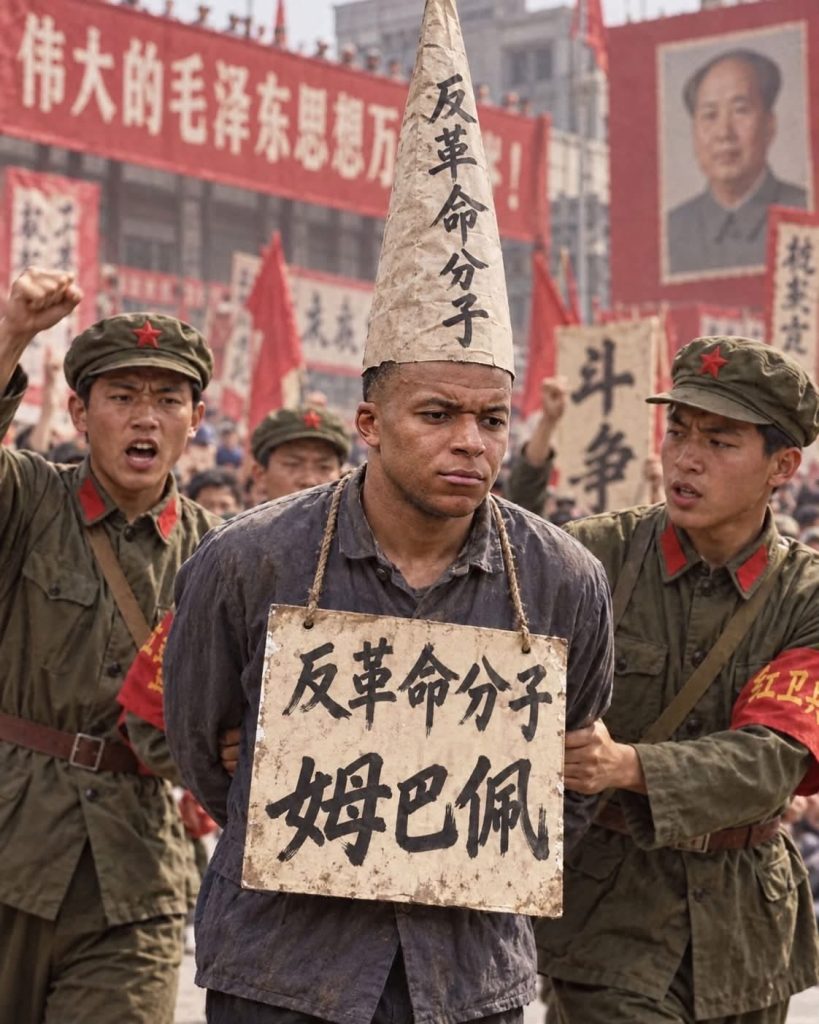
One exasperated Weibo user put it bluntly: “Mbappe’s words seriously hurt me, but I don’t know what he said; I hate him, but I don’t know why. I don’t even care about football.”
— David Bandurski et al, The Penalty Box of Hurt Feelings, Lingua Sinica, 30 October 2026
***
Why the world bows to Beijing
Ian Williams
28 October 2026
The outrage was followed by groveling apologies, cringe-making even by usual standards of corporate kowtowing to Beijing.
Mao Zedong was certainly a dictator, French footballer Kylian Mbappé was right about that, but the label still feels inadequate for a man who was responsible for the deaths of tens of millions of Chinese. He was a mass murderer, one of the worst tyrants of the 20th century, in a super-league alongside the likes of Hitler, Stalin and Pol Pot. When he died in 1976, after endless and barbaric campaigns and purges, his legacy was a traumatized and impoverished land of fear and paranoia.
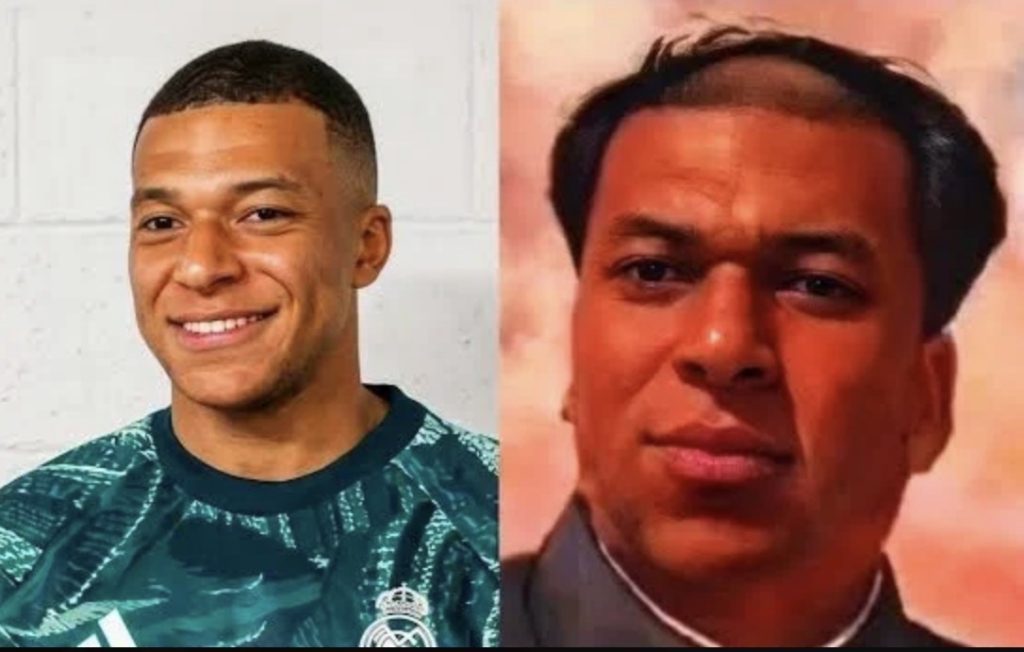
Mbappé’s jokey comments were not about this brutal history, but the result of an internet meme, a video circulating online that placed his face on images of Mao. “[The meme] that makes me laugh the most, it’s the one where there’s a video of a guy, I think it’s a Chinese dictator,” he said on a podcast interview.
***
***
Cue outrage. Several Chinese companies cut ties with the Real Madrid footballer, while the Chinese foreign ministry spokesperson Lin Jian huffed that “words and actions that hurt the feelings of the Chinese people will naturally face unanimous opposition from all sectors of Chinese society.”
That was followed by groveling apologies, cringe-making even by usual standards of corporate kowtowing to Beijing. “I apologize to everyone my words have upset… I have deep respect for the Chinese people and their history, and I am sincerely sorry,” said Mbappé. While La Liga, which runs Spain’s top soccer divisions said it deeply regretted the “distress and offense” caused by Mbappé’s remarks. Javier Tebas, the president of La Liga, then went even further, offering “sincere apologies to the Chinese people.”
There have been regular corporate run-ins with the Chinese Communist party (CCP), with brands ranging from Marriott hotels to Zara, Gap, Leica and Nike among those forced to apologize or change marketing campaigns deemed politically offensive by the CCP. Clothing brands looking to embrace trendy themes of human rights or eliminate forced labor from their supply chains have been on especially tricky ground.
The Mbappé row was reminiscent of Arsenal’s 2019 run-in with Beijing, the London club distancing itself from comments made by midfielder Mesut Özil, a practicing Muslim of Turkish descent, who had criticized the repression of the Uighurs in Xinjiang. That same year saw groveling backtracking and apologies from the National Basketball Association (NBA) after Daryl Morey, the general manager of the Houston Rockets, one of America’s most popular teams, tweeted an image that read “Fight for Freedom. Stand with Hong Kong.” All were desperate to protect their commercial interests in China.
Another stand-out grovel came from John Cena the professional wrestler and star of F9, a Fast and Furious movie. Not many things intimidate Cena, at least not in his movie persona. Fast and Furious movies might be the ultimate in strutting macho melodramas, but Cena was reduced to a quivering wreck in the face of Communist party anger when he accidentally called Taiwan a country in an interview with the Taiwanese broadcaster TVBS. Trigger Chinese outrage and a quick retreat. “I made a mistake,” he said in a rapidly released apology video. “I’m very sorry for my mistakes. Sorry. Sorry. I’m really sorry. You have to understand that I love and respect China and Chinese people.” China is a huge market for Fast and Furious, and Cena has a big personal following there, neither of which he wanted to jeopardize.
***
***
Mao, the founder of the People’s Republic of China, is an especially difficult subject for Beijing. He was a monster by any measure, but the CCP wrestled for years with how to describe his brutal legacy. Deng Xiaoping, the paramount leader who followed Mao, and was twice purged by him, declared that Mao had been “70 percent right and 30 percent wrong”. He was, said Deng, “a great Marxist and a great proletarian revolutionary, strategist and theorist… His merits are unquestionably primary and his mistakes secondary.” The deaths of around 50 million people from murder, abuse and starvation, notably during the Great Leap Forward and Cultural Revolution, was put down to “excessive enthusiasm.”
Criticism of the Great Helmsman has become more difficult under President Xi Jinping, who has encouraged Maoist nostalgia, as he has centralized power, eliminated rivals and built his own personality cult. This month marks the 90th anniversary of the end of the Long March, a much mythologized retreat by Mao’s ragtag army during the Chinese civil war. Last week, the Xinhua news agency trumpeted “Xi Jinping’s new long march.” “May the spirit of the Long March shine forever,” it said, comparing Xi’s efforts for modernization with the supposed determination of Mao. “Every generation must undertake its own Long March,” according to Xi.
“Hurting the feelings of the Chinese people” is a long-standing accusation against critics. I was accused of that very crime while living in Hong Kong. “What, every one of them? Have they all seen the report?” I asked my stony-faced foreign ministry handler. I didn’t apologize, and was promptly banned from the mainland for a year.
China excels in performative outrage, and for their part Western companies and individuals have excelled in their humiliating scramble to perform the “self-rectifications” (as Mao would see them) deemed necessary to head off sanctions. It is never a pretty sight. It is also absurd in many ways and self-defeating, highlighting CCP petulance and raising attention to issues that otherwise might not have been noticed. But it does once again show the pernicious danger of dependencies and the way they enhance Beijing’s ability to use coercion to impose its own views on all-too-compliant world.
***
Source:
- Ian Williams, Why the world bows to Beijing, The Spectator, 28 October 2026
***
Kylian Mbappé and Mao-Maoing the Flak Catchers
Melissa Chen
It’s been a bad couple of days for Kylian Mbappé, the French soccer superstar and Real Madrid forward who was, until yesterday, still being tipped as the heir to Messi and Ronaldo. First he lost the Ballon d’Or to Harry Kane – must be hard losing to the English once again – and then an old clip from the French talk show The Bridge was mysteriously resurfaced, where in response to a question about his favorite meme, Mbappé said the funniest is “the one where they put my face on a guy, a Chinese dictator I think.” The Chinese dictator in question was Mao Zedong, who till today, still smiles down serenely from his giant portrait above Tiananmen Square.
Once it started spreading on Chinese social media, the fallout was swift and massive. Within hours, energy-drink giant Dongpeng, dairy producer Mengniu and cheese maker Milkground all cut ties with him (the Dongpeng and Mengniu deals alone were reported to be worth a combined $7.5 million alone). The three companies issued near-identical statements terminating their agreements with immediate effect, citing zero tolerance for words or actions that “hurt the feelings of the Chinese people.”
Not only did Mbappé manage to offend one billion people simultaneously, he also prompted the cancellation of La Liga broadcasts on Chinese television, a full institutional kowtow from the league itself, and had to issue an obligatory multi-language struggle-session apology. To complete the rout, the US House Select Committee on the CCP weighed in to declare that he should not have apologized at all because Mao was, in fact, a dictator, potentially setting off a diplomatic crisis.
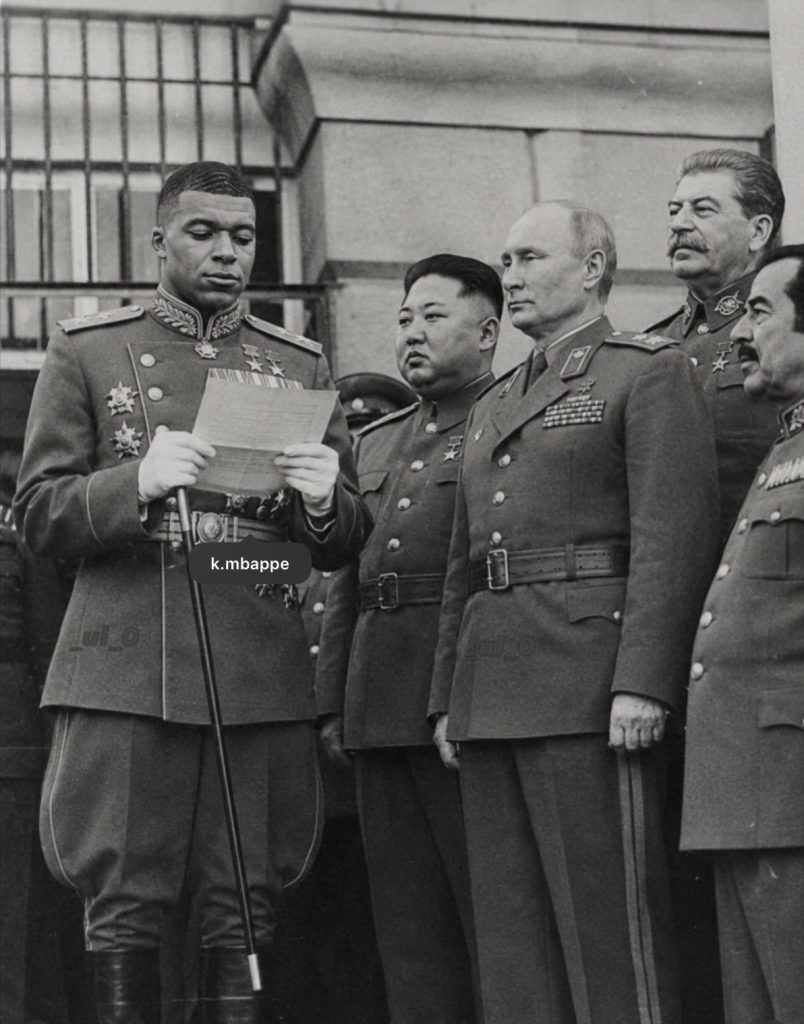
The irony is that Mbappé wasn’t trying to be critical at all. In fact, it was a lighthearted attempt at self-deprecation. Back when he was the star at Paris Saint-Germain, his individualistic, occasionally domineering style earned him the half-joking nickname “The Dictator.” Internet meme culture did the rest, generating a series of photoshopped images that placed him in the uniforms and poses of various figures universally recognized as tyrants – Stalin, Mobutu Sese Seko, Kim Jong-un, Gaddafi, and, among others, Mao Zedong. The Mao version was simply one of the set. In singling it out as his favorite, Mbappé wasn’t expressing any dislike or moral judgment of Mao; he simply found the meme funny and endearing, embracing it affectionately as part of the joke about himself.
***
***
These images have circulated online for ages as pure soccer banter but not once did it ever draw outrage from the Russians, North Koreans or Libyans. So what explains the melodramatic Chinese reaction? Was it over a joke about not knowing who Mao is? Or was it for calling a dictator, a dictator? One wonders what the problem with the latter is given that Mao himself, in his 1949 speech “On the People’s Democratic Dictatorship” openly embraced the label (“You are dictatorial… that is just what we are”) and the current Peoples’ Republic of China (PRC) constitution still defines the state as a “people’s democratic dictatorship.” Either way, the only other historical figure that is elevated to such an infallible, sacred status, where ordinary critique becomes blasphemy and routinely draws disproportionate responses, is the Prophet Muhammad.
Mao’s aura still underpins the CCP’s founding narrative and continued rule, though in modern times the Chinese state has officially conceded that he was “70 percent right and 30 percent wrong.” The admission was unavoidable because the death toll from the Great Leap Forward and the Cultural Revolution, estimated at around 50 million, was simply too glaring to ignore. By that measure, of all the dictators whose likeness was superimposed with Mbappé’s face, Mao was arguably the worst – and the one whose personality cult burned hottest.
In China today, state media and education maintain a positive narrative on Mao, and any harsh criticism online or in public can lead to censorship, surveillance, or worse. Outside China, nationalist or pro-CCP voices (including paid propagandists, bots or younger users educated under the system) frequently respond aggressively to such criticism, treating it as an attack on national dignity or the Party’s foundational legitimacy. Once a foreign actor is accused of “hurting the feelings of the Chinese people,” nationalistic outrage is whipped up that can be easily shaped and directed toward any purpose, brow beating the target into ideological submission. In this heightened emotional frenzy, further inquiry into facts, context, or proportionality becomes difficult as continued questioning risks being framed as unpatriotic. With no limiting principle, it always results in a gross over reaction.
One of the more comical aspects of the affair is that, behind the Great Firewall, Mbappé’s actual comments were censored on Chinese media and social media; simply reporting them would have meant touching the third rail. The irony is hard to miss. A fairly reliable proxy for Mao’s status as a dictator, or China’s status as a dictatorship, is whether one is allowed to say that Mao was a dictator. Even Chinese AI models such as Doubao and DeepSeek refuse to answer questions about what Mbappé said regarding the Mao meme. The result is that most Chinese netizens only knew that he had insulted China, but never learned the substance of the “inappropriate” remarks. How, then, could feelings be genuinely hurt by words they were never allowed to hear?
The insane backlash for plainly describing Mao as a dictator is an exercise in psychological conditioning. Consider what is really going on when progressive activists demand that one affirms that men can become women. To repeat something so obviously false is to incur a reputational cost that functions as a loyalty signal, sorting the compliant from the non-compliant. Accepting the claim, or even remaining silent while others are punished for rejecting it, demonstrates that commercial relationships, access and social standing matter more than observable reality. Mbappé stands to lose several million euros and La Liga has already paid a price, but the entire charade is staged for everyone else watching. It is meant to illustrate the consequences of refusing to toe the line. What follows is the gradual contraction of the range of statements that can be made by non-Chinese citizens without commercial penalty.
Javier Tebas, President of La Liga, was the first to prove his compliance, saying that La Liga “deeply regrets Mbappé’s comments,” and offering “sincere apologies to the Chinese people.” He took care to stress the league’s relationship with China must not be damaged by one individual’s remarks. Barely an hour later, Mbappé posted his own apology calling his own comments “ill-judged, and acknowledging how much his words hurt many people in China. He went on to say it was not his intention and expressed respect for the Chinese people and their history.
Having extracted this concession, Chinese state media let Chinese netizens know that Mbappé had apologized but again couldn’t tell them why, leaving many as utterly confused as they were before. Oh how one wishes Monty Python were still around to skewer this humorless authoritarian reflex. Which leaves a particular duty to those of us outside the firewall, and those of us who have the luxury of using the internet without a VPN. We are obliged to do what Chinese citizens are no longer permitted to do, and what a growing number of rich footballers with Chinese merchandising contracts have decided they can no longer afford to do: to state the obvious, to refuse to submit to the required fiction, and to keep on creating memes of dictators.
***
Source:
- Melissa Chen, Kylian Mbappé and Mao-Maoing the Flak Catchers, The Spectator, 28 October 2026
***
阿Q,你谁啊?人家就算调侃,调侃的也是占了你家房分了你家地枪毙了你祖爷大饥荒饿死三千万把你爹妈弄去上山下乡,呼天天不应、叫地地不灵的独裁者,你看什么急啊。你不姓赵,也不姓毛,你配吗,你顶多只敢去姆巴一一呸!
— 李承鵬,宇宙的盡頭是“辱華”,文學城,2026年10月29日
***
***
一個幽靈在中國大地遊蕩
The Spectre That Still Haunts China
Mao Zedong died fifty years ago, in the early hours of 9 September 1976. With his death, the Chairman entered history and China’s mythopoetic realm although, in a sense, he had announced his apotheosis decades earlier in a poem titled Snow 沁園春 · 雪. Dated February 1936, the second stanza of Snow reads:
This land so rich in beauty
Has made countless heroes bow in homage.
But alas! Qin Shihuang and Han Wudi
Were lacking in literary grace,
And Tang Taizong and Song Taizu
Had little poetry in their souls;
And Genghis Khan,
Proud Son of Heaven for a day,
Knew only shooting eagles, bow outstretched
All are past and gone!
For truly great men
Look to this age alone.
江山如此多嬌,
引無數英雄競折腰。
惜秦皇漢武,
略輸文採;
唐宗宋祖,
稍遜風騷。
一代天驕,
成吉思汗,
只識彎弓射大雕。
俱往矣,
數風流人物,
還看今朝。
— quoted in For Truly Great Men, Look to This Age Alone
Snow was supposedly composed in the months after the end of the Long March, the strategic retreat of the Red Army that Mao and his comrades had guided towards the safe haven of Yan’an in northwest China. The poem, and its message, were a prelude to the Yan’an decade that saw the creation of Mao Zedong Thought and the evolution of the integrated socio-political system that underpins China’s modern party-state.
The Yan’an years and the role they played in China’s resistance to the Japanese invasion, and the Party’s ongoing struggle with the KMT were evoked whenever the Communists underwent a period of self-renewal and reinvention. When referring to these crucial moments in post-1949 Chinese history I prefer the term ‘Restoration’ 中興, an expression taken from dynastic history. By my count there have been Three Restorations since 1949:
- 1966, the Cultural Revolution, during which Mao and his radical comrades encouraged China’s young people to undertake a new Long March and to suffuse themselves with the militant spirit of Yan’an. This restoration would reinvigorate a revolutionary spirit dulled by Soviet-style bureaucracy and ideological backsliding;
- 1978, when, following Mao’s death and faced with the social and economic disaster of the Cultural Revolution decade, the Party called for a revival of the Yan’an spirit of ‘seeking truth from facts’ and the mass line that rejected ideological rigidity in favour of pragmatism; and
- 2012, the Xi Jinping Restoration, which is the subject of the series Xi Jinping’s Empire of Tedium. In early 2013, Xi declared that: we must not allow the second 30-year period — the reform era from 1978 to 2008 — to overwhelm and negate the first 30 years — 1949 to 1978, that is the Mao era. Xi has consistently tried to balance the first and second periods and create an accommodation between the Maoist past and the reformist present. What he and his colleagues have tried to do is to reconcile what is, in many regards, the irreconcilable: to adjudicate between authoritarian top-down control and innovative economic reformist commercialisation. It’s been an extraordinary balancing act and relatively speaking it has been quite successful.
***