Seeds of Fire 40th Anniversary
一脈相承
The 4th of June 2026 marks thirty seven years since the Chinese authorities deployed the army to violently suppress the nationwide Protest Movement of 1989 and the date June Fourth 六四 lives on in infamy as the day of the Beijing Massacre. From 4 June 1989, Official China has been at pains to repress the details of the protests and that final violent denouement. (The most recent example of non-official historical vandalism occurred on 1 June 2026 when the June Fourth Memorial Museum in Los Angeles was attacked and paint sprayed over information boards and memorabilia.)
In this chapter of Seeds of Fire, a series that commemorates the fortieth anniversary of the publication of Seeds of Fire: Chinese Voices of Conscience (Hong Kong: Far Eastern Economic Review, 1986), we remember June Fourth with an essay by Mike Brock, a prolific cultural commentator, titled The Longest Relay. It first appeared in Notes from the Circus. In the grand sweep of Brock’s work we recognise themes that we addressed in Seeds of Fire in 1986 and followed up on in New Ghosts, Old Dreams: Chinese Voices of Protest, the sequel to Seeds that was compiled in the aftermath of June Fourth 1989.
The concept of ‘the long relay’ that is featured in Mike Brock’s essay could not be more different from Beijing’s hegemonic, authoritarian view of China’s legacy and its vital culture. In 1986, we featured that culture first in Seeds of Fire and subsequently in New Ghosts, Old Dreams: Chinese Voices of Protest, a sequel to Seeds compiled in the aftermath of June Fourth 1989.
Two decades later, I expanded on those efforts in a manifesto titled On New Sinology and through the creation of China Heritage Quarterly. Since 2016, China Heritage has been the vehicle that I’ve used to pursue and expand on those same ideas.
***
There are various Chinese expressions that relate to Mike Brock’s expression ‘The Longest Relay’ and continuity in Chinese. They include: 承接、承續、賡續、連接不斷、延綿不絕、承先啟後、代代相傳. However, as the rubric of this chapter in Seeds of Fire, I have chosen 一脈相承 yī mài xiāng chéng, a four-character formulation that refers to a trans-generational undertaking or shared genealogy.
In the context of the people of conscience and good will who continue the relay in contemporary China, we have also used the term 抱薪者 bào xīn zhě, literally, ‘a person who carries the firewood’. It refers to the ‘continuity of conscience’ and willingness to inherit and further the tradition of political engagement and cultural possibility that is found in the Chinese world. The term 抱薪者 bào xīn zhě comes from the banned writer Murong Xuecun (慕容雪村, 1974-) who declared 為眾人抱薪者,不可使其凍斃於風雪, ‘we can’t let the person carrying the firewood freeze to death in the wind and snow’. That line is usually paired with the phrase ‘we cannot allow people who are forging a path to freedom be caught up in the thorns 為自由開道者,不可令其困厄於荊棘 (see ‘It’s only the end of the beginning’ — Teacher Li on Blank Pages, Li Keqiang, Snowflakes & Monsters).
Of course, in the era of Xi Jinping’s party-state and integral to the Communist Party’s jealous grip on power is a holistic socio-political and historical enterprise that talks about Red Genes 紅色基因 and the inheritance of Red Bloodlines 賡續紅色血脈. These, the Party declares are of central importance in maintaining China’s unique cultural essence 根脉 gēnmài and the spirit of political continuity 魂脉 húnmài. These terms may be new, but they inherit an undertaking launched in 1979 to codify China’s ‘spiritual civilisation’ 精神文明 in keeping with the Stalin-Maoist dogma that Communists developed from the 1940s.
***
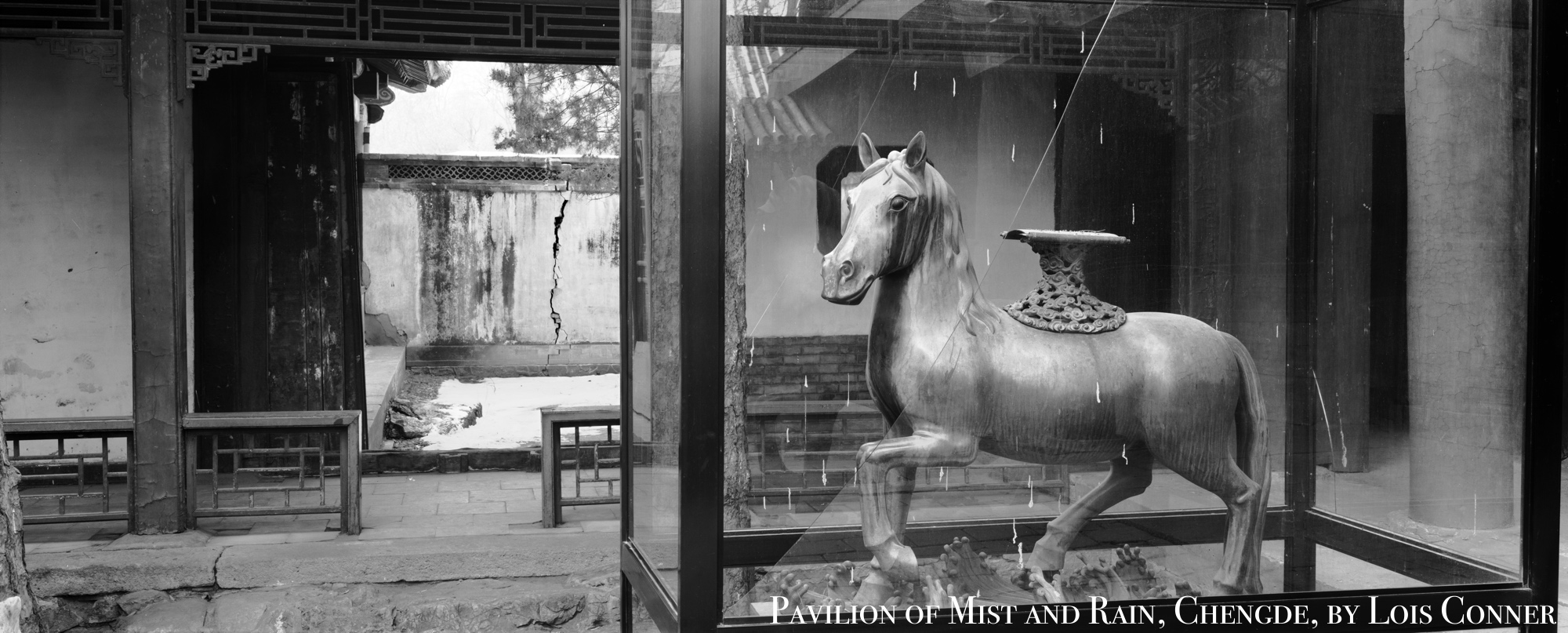
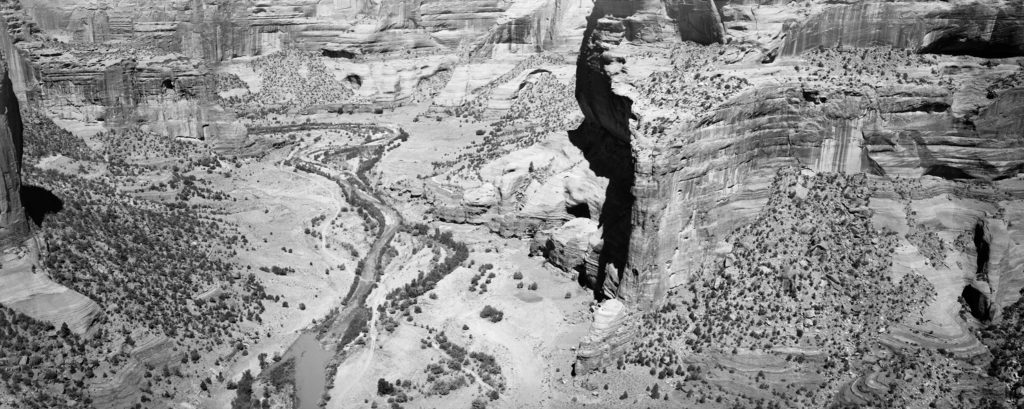
This chapter in Seeds of Fire is also included in Contra Trump and Intersecting with Eternity. My thanks to the photographer Lois Conner, dear friend and long-term collaborator, for permission to use her work and to Reader #1 for casting a critical eye over the draft of this chapter. For a list of works related to June Fourth 1989, scroll down to the end of this chapter. We conclude with a video-essay on June Fourth by Yinfi, an independent commentator.
In the final section of The Longest Relay below, Mike Brock offers a rather utopian hope for the year 2028 when the Summer Olympics will be held in Los Angeles. There is also talk of a papal visit during that year, although it seems to be far more certain that Pope Leo XIV will preside over high mass at the 54th International Eucharistic Congress in Sydney in September that year. Then, of course, there is the looming presidential election in November 2028.
Although one appreciates Mike Brock’s post-tech-bro epiphany, as well as his ebullient hopes for the immediate future, I fear that this is the point at which our paths diverge.
— Geremie R. Barmé
Editor, China Heritage
4 June 2026
***
More Notes from the Circus:
- The Coming Clash of Civilizations
- The Last Serious Contrarian — In memoriam
- A Fascism Older Than Fascism — The true enemy within
- The Sovereign Individual Was the Blueprint — The tech right’s ideology explained
- Put Something Back — A crisis dispatch
- Towards a More Perfect Union
- The Anti-imperialism of Fools — The enemies to your left
***
A Middle Way
Geremie R. Barmé
Initially, I was attracted to Mike Brock’s Notes from the Circus when I read ‘Communists to my left, fascists to my right, I shall take the middle road’ in an essay titled Towards a More Perfect Union. I recognised the sentiment for it was one that I had first encountered in the late 1970s, when I was reading the essays of Lin Yutang 林語堂 in Hong Kong. In the preface to Things That One Will Not Do 有不為齋叢書序, a book series launched in Shanghai in 1934, Lin had written:
東家是個普羅,西家是個法西。灑家則看不上這些玩意兒,一定要說什麼主義,咱只會說是想做人罷。
There are Proles to the East and Fascists to the West. None of them hold any appeal for me. If you really want me to champion a particular ‘ism’, I can only say that I just want to be myself.
Having lived and studied in late-Mao China, experienced his death in September 1976 in provincial China, and now working for a pro-Beijing Chinese-language current affairs journal in Hong Kong, I had a renewed appreciation of Lin and the course he navigated between the contending political forces in the 1930s. In particular, I was aware that in the free port of the British crown colony I was myself developing ideas as to how I could steer a course between China’s dual authoritarianisms, those of Beijing and Taipei, while coming to an understanding of the complex legacies of pre-1949 republican China.
Before long, Lin Yutang become something of a guiding figure in my academic endeavours back in Australia. Among other things, it was his spirit, which I had first encountered as a teenager when I read The Importance of Living (1938), that had initially attracted me to the writings, ideas and art of a disparate group of cultural figures that I now featured in my doctoral research in the 1980s. Their story was integral to the accounts of twentieth-century Chinese culture that I presented in An Artistic Exile (2002), a biography of the artist, essayist and translator Feng Zikai 豐子愷.
We included Lin Yutang’s maxim in ‘Portraits of Individualists’ section ‘Bindings’, a chapter in New Ghosts, Old Dreams: Chinese Voices of Protest, the sequel to Seeds of Fire published in 1992. Decades later, as the Chinese world was obscured once more by the spectre of a reinvigorated authoritarianism under Xi Jinping, I included Lin’s maxim in We Need to Talk About Totalitarianism, Again, the first chapter of the China Heritage series Xi Jinping’s Empire of Tedium. In it, I discussed the living legacies of fascism and totalitarianism in China today.
To return to Mike Brock’s vision, he suggests that ‘the middle road’:
… is the road of the people who can hold simultaneously that they may be religious or not religious, that their tradition may be Christian or Jewish or Muslim or Buddhist or Hindu or none, and that the ethical claim — the person is the measure, the person under power is the question, the person’s dignity is the katechon — is binding upon them regardless of where they have come to it from. The middle road is ecumenical. It accepts that the road has been walked by people who arrived at it through every door, and that the test of the walker is not the door he came in through but the road he keeps walking after he is inside.
It is a sentiment that profoundly resonates with my work over the past forty plus years. Brock then returns to his thesis: ‘Communists to my left, fascists to my right, I shall take the middle road’.
It is, I now realize, a sentence that has been waiting for a generation. It is a sentence in the lineage of Lincoln’s malice toward none. It is a sentence in the lineage of Orwell’s if liberty means anything at all, it means the right to tell people what they do not want to hear. It is a sentence in the lineage of Bebel’s socialism of fools. It is a sentence in the lineage of [Christopher] Hitchens’s regiment of useful idiots and of [Anne] Applebaum’s New Puritans. It is a sentence in the lineage of every writer who has stood on the road that runs past the flanks and tried to keep walking while both flanks were screaming at him to come in.
The flanks will keep screaming. The screaming is the operation. The screaming is what the rentier coalition has purchased on both ends. The middle road is the road the screaming is designed to drown out.
We are not going to be drowned out. We are going to keep walking. Some days the walking will look like writing nine pieces in seventy-two hours [which Brock did in his Notes from the Circus]. Some days the walking will look like reading a single document the operators were counting on us not to read. Some days the walking will look like voting. Some days the walking will look like staying in the marriage, paying the taxes, raising the kids, going to the school board meeting, picking up the trash on the block, calling the elderly neighbor whose husband died in March. The walking is the union. The union is the people, walking in the same direction, across the generations, toward a destination none of us will reach in our own lifetimes and all of us are responsible for carrying the relay one more leg toward.
A more perfect union. Not a perfect one. More perfect. The comparative verb. The labor of the centuries.
***
As for Mike Brock himself, in late 2025 he told his readers that he:
… was a technocratic liberal centrist until very recently. I believed in markets, optimization, expertise solving problems through analysis. I looked at GDP growth and stock market performance and thought: the system is working. I succeeded in Silicon Valley and internalized the frameworks that made that success possible: innovation disrupts, markets allocate better than politics, the intelligent few should lead while building systems that lift all boats.
Then I started noticing something I couldn’t ignore. Smart people I respected—especially in cryptocurrency—were casually discussing feudalism. Not as history or provocation, but as serious proposals for organizing society. “Democracy and freedom are incompatible.” “Most people aren’t capable of self-governance.” “Elite overproduction is the problem—we educated too many people above their station.”
These weren’t fringe cranks. Peter Thiel writing that democracy and freedom are incompatible. Curtis Yarvin publishing blueprints for corporate monarchy. An entire neo-reactionary apparatus in Silicon Valley while I optimized payment systems. And they were explicit: the democratic experiment failed, constitutional constraints prevent necessary action, most people should accept subordinate roles, the intelligent few should rule.
This sent me into the wilderness. Not physically, though my career suffered. But intellectually—into space where comfortable certainties no longer made sense. Funny thing about speaking truth to power: the recruiters stop calling. I gave up friends, opportunities, insider status. Not because I wanted marginalization, but because intellectual honesty required it.
From this wilderness, I can see what I couldn’t before: we are heading toward a clash of civilizations. Not Huntington’s clash between cultures, but something more fundamental. A clash between incompatible visions of how humans should organize themselves—whether ordinary people possess the capacity to govern their own lives.
And the die is already cast.
[Note: Here Brock’s sentiments parallel the argument made in our series Contra Trump. See, for example the following chapters:
- Triumph of the Cod Philosophers and their Dark Enlightenment
- Gödel’s Loophole and American’s ‘Cultural Revolution’
- Ready Player One — the Narrenschiff of American Gods
- Qualis rex, talis grex
- Edgelords & Besserwissers
- Billionaire Dilettantes
- Amerikanisches Narrenschiff — a Ship of Fools & the Rule of Idiots.]
Brock goes on to describe himself as a liberal in terms that will be familiar to readers of China Heritage who know our work on contemporary Chinese liberals like Xu Zhangrun 許章潤, Xu Zhiyong 許志永, Chen Qiushi 陳秋實 and Liu Chan 劉蟾, among many others, persecuted in the China of Xi Jinping. ‘By liberal’, Brock writes:
I mean something specific: the belief that ordinary people can govern themselves through reason, deliberation, and democratic institutions. Not “liberal” as progressive cultural positions or technocratic management. But liberal in classical sense—we have no kings, we are citizens not subjects, self-governance is possible, democracy can work if we build institutions and create conditions making it possible. …
Choose What Civilisation You are Fighting For
He goes on to describe a clash that we have featured in two interconnected series Xi Jinping’s Empire of Tedium and Contra Trump, the shared theme of which is a critique of hierarchy, be it feudal-socialist or techno-capitalist. And he declares:
So here we are. The coming clash of civilizations—not between cultures or religions, but between visions of how humans should organize ourselves. Citizens or subjects. Democracy or hierarchy. Self-governance or rule by those claiming superior qualification.
Both sides see the same broken system. Both recognize the current arrangement is finished. Both reject the establishment’s insistence that everything is basically fine. The question is what replaces the failed system—and the answers being offered are fundamentally incompatible.
The neo-reactionaries have systematic answer: embrace hierarchy, end democratic pretense, let the intelligent few rule while most people accept subordinate positions. Stop educating people above their station. Return to natural order. This is monstrous, but it’s coherent—it explains why the current system failed and presents a clear vision of what should replace it.
The democratic alternative is still being built. Yes, we need public goods providing security. Yes, we need worker power over production. Yes, we need economic structures serving human flourishing rather than extraction. Yes, we need actual democratic control over decisions shaping our lives. But these haven’t yet been integrated into systematic framework explaining how they fit together, how to get there, how to sustain them once achieved. …
The die is cast. The clash is coming. The current system everyone except the establishment recognizes as broken will be replaced with something. The question is whether that something expands human flourishing or restricts it to serve the few claiming natural superiority.
I’m in the wilderness now, but from this position I can see what I couldn’t see from inside the frameworks I used to inhabit. What I see is that the battle line is drawn. The fight is for self-governance itself. And the feudalists are ahead—not because their vision is better, but because they’ve built the infrastructure to articulate it systematically while the democratic alternative remains fragmented, uncertain, still emerging.
But it can be built. It must be built. Because the alternative is accepting that the democratic experiment failed, that ordinary people cannot govern themselves, that we should return to rule by those claiming to deserve power.
I don’t accept that. I won’t accept that.
The promise that ordinary people can collectively determine their own fate—that’s worth defending. That’s worth building for. That’s worth the wilderness I’m in now. And I know what it cost me to see this clearly. I know what it feels like to recognize that systems you helped build, frameworks you believed in, are being weaponized into something monstrous. I know what it means to give up professional success, comfortable certainties, the approval of people whose intelligence you respect—all because you can’t unsee what’s in front of you.
But I also know what it feels like to rediscover citizenship after years of thinking like a technocrat. To remember that democracy isn’t just a system for aggregating preferences or optimizing outcomes—it’s the radical proposition that ordinary people possess dignity sufficient to govern their own lives. That expertise should serve us, not rule us. That we are not resources to be optimized but citizens with standing to determine our collective fate.
That love of democracy—not as abstract principle but as lived commitment to self-governance—that’s what I found in the wilderness. And it’s what makes the choice ahead so clear.
From this wilderness, I’m telling you: choose which civilization you’re fighting for. The choice is binary. Citizens or subjects. Democracy or feudalism. Self-governance or hierarchy. There is no middle ground between them.
The establishment will insist you’re being too dramatic, that norms will hold, that this is just another policy debate requiring balanced compromise. They’re wrong. They’re catastrophically, dangerously wrong. They cannot see what’s coming because their frameworks exclude it from possibility.
But you can see it. Anyone paying attention can see it. The neo-reactionaries are explicit about what they want. The populist left is explicit about recognizing the same broken reality. The question is which response wins—expansion or restriction, citizens or subjects, democracy or feudalism.
I’ve made my choice. I gave up the comfortable position inside frameworks that serve extraction. I’m in the wilderness now, and from here the path is clear: we build the democratic alternative or we surrender to feudalism.
The wire still holds. But only if we walk it consciously, refusing both the establishment’s delusion that everything is fine and the feudalists’ promise that hierarchy is natural and inevitable.
We are not subjects. We will not be subjects. We have no kings—not now, not ever.
The coming clash of civilizations will determine which future becomes real. And I know which side I’m on.
What will you choose?
Citizens or subjects. Choose, then build.
— Mike Brock, The Coming Clash of Civilizations —
From the Wilderness of a Recovering Technocrat, 19 October 2025
Brock is addressing American circumstances specifically, but his ideas will also resonate with students of contemporary China and global affairs.
The Substrate
In a memorial essay for Christopher Hitchens, Brock observed that:
The contrarianism Hitchens practiced was a function of his commitment to a substrate that he believed was real and that he believed the apparatus, in any political configuration, was always trying to obscure. The substrate, for him, was the open society in the Popperian-Orwellian sense — the society in which authority must justify itself to reason, in which the citizen is sovereign, in which no priest or commissar or chairman gets to declare a question closed. Contrarianism was the byproduct of his commitment to that substrate. When his own tribe abandoned the substrate, he abandoned the tribe. He did not develop a brand around being the kind of person who abandons tribes. …
He was the last serious contrarian because he understood that contrarianism without commitment to a substrate is just career management. The career management came after him. The substrate-commitment died with him.
[Note: For Karl Popper and George Orwell in China Heritage, see:
Earlier, I suggested using 一脈相承 yī mài xiāng chéng as a figurative translation of Brock’s term ‘the longest relay’. Here, perhaps Brock’s ‘substrate’ could be thought of in Chinese terms as 道 dào, ‘the Way’, or 理 lǐ, ‘intrinsic moral order’, or even 不朽 bù xiǔ, ‘the imperishable’. As Gloria Davies notes in an essay on immortality in the Chinese world, in Zuo Commentary 左傳 (circa fourth century BCE), a classic Confucian text,不朽 bù xiǔ:
… was used to describe the sagely who are remembered for generations to come because they have ‘established their virtue, their deeds, and their words’ [立德、立功、立言].
She goes on to quote Simon Leys, who observed that this ancient Chinese understanding of immortality meant that
‘life-after-life was not to be found in a supernature, nor could it rely upon artefacts: man only survives in man—which means, in practical terms, in the memory of posterity, through the medium of the written word.’
Relevant to our understanding of Mike Brock’s ‘substrate’, Davies also quotes Zhuangzi, a Taoist classic that also features in Brock’s The Longest Relay:
Those who come before us but who have not explored the depths of knowledge to be worthy of their years are not our predecessors. Those who do not distinguish themselves as humans do not provide a path for [other] humans to follow. Those who do not produce a human path are thus called worthless people.
— from Gloria Davies, On Immortality
In modern China, the substrate has also fleetingly appeared within institutions as well. It did so in the early 1980s when Marxist Humanists favoured not only socialism with a human face, but socialism with humanistic values. They were purged in 1983-1984 and successive attempts to ameliorate things from within the system were crushed, first in early 1987 and then during the two-year hardline ‘restoration’ that lasted from June Fourth 1989 up until the spring of 1992. The Party’s fear that civil society would give expression to individual and collective political will outside the confines of state control led to a series of repressive acts. Later more oblique efforts to change the system within, or at least to allow Chinese society to evolve in keeping with the promise of economic reforms, were targeted by Vice-Premier Wu Bangguo in 2011 and then relentlessly persecuted by the party-state-army leader Xi Jinping from 2012.
China’s New Marxist conservatives, statist academics secure in the PRC, long ago traded any vestige of conscience to align themselves with the priestly class of Communist cadres. A number of them are celebrated by fellow-traveller New China Experts, dogma-bound international academics and a swath of podcasting pundits. As Mike Brock observes of the pro-Beijing ‘vibe shift’ in recent years:
The conceptual error is the assumption that the rival is, by virtue of being the rival, the morally superior pole. This is not anti-imperialism. This is the politics of choosing the imperialism one happens to find aesthetically more congenial. And the choice is almost always made on grounds that have nothing to do with the conditions of the workers, the dissidents, the women, the minorities, the journalists, the gay people, the Muslims, the Christians, the Falun Gong practitioners, the trade unionists, the protest organizers, the political prisoners, or the disappeared inside the borders of the resistance power. The choice is made on grounds of vibes. The vibes are the vibes of Cold War nostalgia, of the sense that there was once a left that mattered because it had a state behind it, of the desire to belong to something larger than the dwindling congregation of American social democrats. The vibes are paid for by Singham and by Putin’s foreign-ministry budget and by the Iranian Press TV budget and by the Saudi-funded conferences and by the Qatari think-tank money that, on a different but parallel circuit, also funds the Doha-based commentariat that produces a different but compatible set of takes.
— The Anti-Imperialism of Fools — the enemies to your left, 31 May 2026
‘So here we are’, Brock reminds. In the case of China vis-à-vis Taiwan, Beijing vs Taipei, we return to the ‘clash of civilizations—not between cultures or religions, but between visions of how humans should organize ourselves. Citizens or subjects. Democracy or hierarchy. Self-governance or rule by those claiming superior qualification.’
Seeds of Fire
In the introduction to Seeds of Fire: Chinese Voices of Conscience, dated September 1986, we declared that the book had ‘been compiled in an attempt to let the voices of some of China’s more controversial writers and thinkers speak directly to Western readers on the subject of their country, its ancient cultural burden and the complex problems it is facing today.’
‘They are concerned voices,’ we noted, ‘and they represent a wide spectrum of ideas — some hopeful, others plainly despairing; but above all they are voices of conscience. Many of those whose works we present in these pages have paid dearly for their outspokenness.’
Four decades later, and despite the impressive physical transformation of China, these sentiments remain true, in particular as we consider today’s silenced ‘voices of conscience’, many of which have been heard in these virtual pages over the years.
Seeds appeared at a moment when a ‘Chinese commonwealth’ — a nascent and relatively easy commerce in ideas, culture and wealth between Hong Kong, Mainland China and Taiwan — was not merely a possibility but also a burgeoning reality. It first featured in Trees on the Mountain (1983), to which I was a contributor and, in 1991, the philosopher Tu Wei-ming wrote about Cultural China.
Throughout the 1980s, however, the spectres of the past cast a long shadow over the present. Dire uncertainty would in the 1990s turn into inescapable fact as China’s dual authoritarianisms took very different courses. The rump Nationalist regime in Taiwan gave way to a modern liberal democracy while on the mainland the events of 1989 reinforced the darkest political impulses of the Communist Party.
We never claimed that Seeds of Fire foretold the uprising of 1989, or the bloody suppression of the protests. However, in the mini-chronicle of the cultural and political mini-movements launched by the Communists from the time of Mao’s death in 1976 that we included in Seeds, as well as the details of the ouster of Hu Yaobang, Party General Secretary, and the purge of ‘bourgeois liberalism’ and its proponents in early 1987 that we included in the expanded edition of Seeds published in New York in 1988, we expressed foreboding. Once more, and with even greater certainty, we echoed the observation that Lu Xun made in 1935 that ‘As long as there shall be stones, the seeds of fire will not die.’ 石在,火種是不會絕的。
A View from Middle Harbour
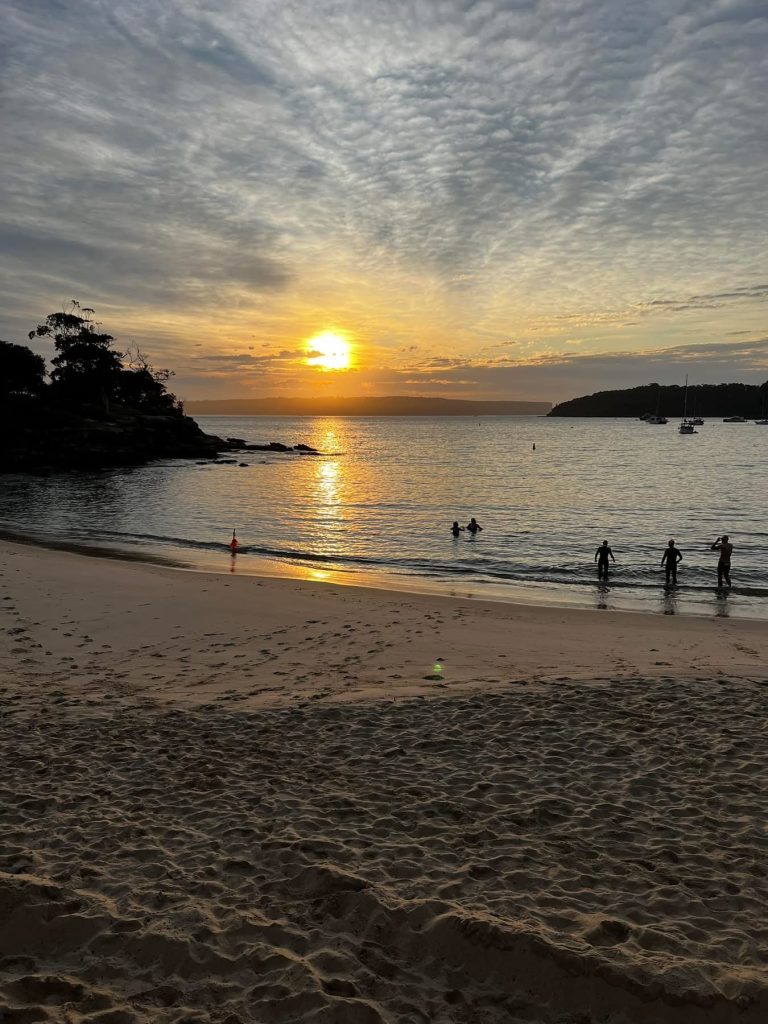
In the concluding section of Mike Brock’s The Longest Relay the author expresses a hopeful, utopian even, vision for the near future. Writing about the 2028 Olympics — also an election year in the United States — and in an appeal to Pope Leo XIV he says that:
The Olympics gather the species into one visible body. And when the species sees itself for the first time at full resolution, what it sees is that every one of its cultures has been carrying the same testimony in different clothes, and that the apparatus trying to capture the agora has been doing the same operation in every culture against every culture’s witnesses, and that the relay — the long, suppressed, repeatedly-killed, repeatedly-resurrected relay — has been one relay all along.
The frauds rule Jerusalem in every culture. The witnesses surface in every culture. The relay continues in every culture. And the world is arriving to watch all of it at once.
This is the moment. The relay has reached us. The work has been handed forward by three thousand years of witnesses, across every continent, in every vocabulary, to this generation, in this country, in this city, at this hour. We are the relay’s contemporary form. … We are the place the substrate arrived at when it had crossed every continent and took three thousand years to get here.
Both nature and experience seem to have inoculated me against similar bouts of hopium and fights of fancy.
I first encountered many of the spiritual and religious texts mentioned by Mike Brock as a teenaged reader who frequented the Adyar Bookstore in Sydney. Run by the Theosophical Society, Adyar Books provided inspiration to generations of readers. It is in the Upanishads, a translation with the Sanskrit that I bought at Adyar, for example, that I learned the expression तत् त्वम् असि tat tvam asi (‘That Thou Art’) — featured in Brock’s essay below — and around the same time I also encountered that bedeviling opening of Tao Te Ching: 道可道非常道.
The Theosophists had promoted Jiddu Krishnamurti as a human conduit for a future World Teacher. Discovered in his youth by the leading Theosophist Charles Webster Leadbeater, Krishnamurti eventually disavowed his role in the movement and, on 3 August 1929, the opening day of the annual gathering of the Order of the Star in the East in Ommen, Holland, Krishnamurti dissolved the Order. He told his followers that, although they had been waiting eighteen years for the Coming of the World Teacher, ‘Truth’
… is a pathless land, and you cannot approach it by any path whatsoever, by any religion, by any sect. That is my point of view, and I adhere to that absolutely and unconditionally. Truth, being limitless, unconditioned, unapproachable by any path whatsoever, cannot be organized; nor should any organization be formed to lead or to coerce people along any particular path. If you first understand that, then you will see how impossible it is to organize a belief. A belief is purely an individual matter, and you cannot and must not organize it. If you do, it becomes dead, crystallized; it becomes a creed, a sect, a religion, to be imposed on others. …
You want to have your own gods–new gods instead of the old, new religions instead of the old, new forms instead of the old–all equally valueless, all barriers, all limitations, all crutches. Instead of old spiritual distinctions you have new spiritual distinctions, instead of old worships you have new worships. You are all depending for your spirituality on someone else, for your happiness on someone else, for your enlightenment on someone else; and although you have been preparing for me for eighteen years, when I say all these things are unnecessary, when I say that you must put them all away and look within yourselves for the enlightenment, for the glory, for the purification, and for the incorruptibility of the self, not one of you is willing to do it. There may be a few, but very, very few. So why have an organization?
I went to hear Krishnamurti speak in 1970 and he elaborated on ideas expressed in The First and Last Freedom, a book published in 1954, the year of my birth. It featured a foreword by Aldous Huxley and the message I heard in Sydney was very in line with Huxley’s remark that:
Choiceless self-awareness will bring us to the creative Reality which underlies all our destructive make-believes, to the tranquil wisdom which is always there, in spite of ignorance, in spite of the knowledge which is merely ignorance in another form. Knowledge is an affair of symbols and is, all too often, a hindrance to wisdom, to the uncovering of the self from moment to moment. A mind that has come to the stillness of wisdom “shall know being, shall know what it is to love. Love is neither personal nor impersonal. Love is love, not to be defined or described by the mind as exclusive or inclusive. Love is its own eternity; it is the real, the supreme, the immeasurable.”
I later learned about the Star Amphitheatre in Balmoral Beach, Sydney, a lavish structure funded by the Theosophists and built in 1924 to host the World Teacher Krishnamurti when he visited Australia. The guru abandoned his calling before ever visiting the amphitheatre. According to urban legend, people also thought that the building was really created in preparation for the Second Coming of Jesus Christ. Believers were confident that the Son of God would manifest at the Sydney Heads, enter the harbour while levitating to touchdown at Balmoral, marking the triumphant climax of history.
By the time I visited the beach, the Star Amphitheatre had long ago been replaced by an ugly block of flats.
— 4 June 2026
Wairarapa Moana
***
The Longest Relay
Towards a more perfect union
Mike Brock
29 May 2026
There is an operation that has been performed against human beings, in every culture that has ever existed, for as long as humans have been humans.
A person locates the substrate. They look at the world and see, with clarity that will not unsee itself, that there is a reality beneath the arrangements — a ground that the institutions claim to mediate but that is, in fact, directly available to anyone who will pay attention. The person begins to live from what they have seen. They teach what they have seen, often without intending to teach. Others begin to recognize what the person is pointing at. The recognition spreads.
This is the threat. Not the person, exactly. The recognition. Because the recognition reveals that the priestly class — every culture has one, in every era — is not the necessary mediator they have claimed to be. The recognition reveals that the rent the priestly class extracts for access to the substrate is fraudulent rent. The recognition reveals that the political authorities who depend on the priestly class’s blessing are propped up by an apparatus that is, structurally, a long con.
So the priestly class moves to kill the witness. They bring formal charges — impiety, blasphemy, heresy, sedition, the precise charge varies by culture and era. They appeal to the political magistrate for the execution they cannot perform themselves. They organize a crowd to demand the death and give the magistrate cover. The witness is killed. The institution returns to its operation. The recognition, which the killers thought they were ending, becomes the seed of the next generation of witnesses.
This has been happening for at least three thousand years that we have records of. It is happening right now. It is the deepest pattern in human history, more fundamental than any of the surface arrangements we usually describe. Every wisdom tradition the human species has produced is, at its core, the record of this operation and the witnesses who refused to participate in it.
This is the story I want to tell. The longest relay. The witnesses across the millennia, across the continents, across the languages, depositing the same testimony into the structure of the world. The priestly classes across the same centuries, performing the same operation against them. And the political document, eighteen hundred years downstream of one of the killings, in a country founded on a continent the witnesses had never named, that finally tried to give the relay its first political-legal protection.
It is a story about the substrate. It is a story about witnesses. It is a story about gatekeepers. It is a story about why this moment — here, in this country, in this city, at this hour — is the moment the relay arrives at the largest stage it has ever had.
⁂
Let me begin in Athens, in 399 BCE, because the records are the most complete and because the founding sentence of the Western strand of the relay was uttered there. But I want to be clear at the outset: this is one strand, of many, in a global pattern. The relay was never only Western. The relay has always been human.
The Athenian democracy was in the wreckage of its long war with Sparta. The city had lost. The fleet was gone. The walls had been pulled down. A short-lived oligarchy called the Thirty Tyrants had killed perhaps fifteen hundred citizens before the democracy was restored. The restored democracy was anxious, defensive, looking for someone to blame.
Socrates was seventy years old. He had spent fifty years walking the agora asking questions. He had a method. He would approach a man who claimed expertise — a general on courage, a poet on poetry, a craftsman on his craft — and ask the man to define his expertise. The man would answer. Socrates would press on the answer until it collapsed. Eventually the man would be revealed not to know what he claimed to know. The young men of Athens followed Socrates around watching this happen, and they began to do it themselves. The fathers of those young men did not like it.
Three citizens brought the charge. Meletus, a minor poet. Anytus, a leather-tanner turned democratic politician. Lycon, an orator. The formal accusation was impiety, refusing to honor the gods of the city, and corrupting the young. The substantive accusation was that Socrates had been teaching his students to question the priestly class and the political class.
Plato preserves what Socrates said at the trial in the Apology. Socrates does not apologize. He defends his life as a service to the city. He tells the jury that the god at Delphi had named him the wisest man in Athens, and that he had concluded the god meant only that he knew that he did not know. His wisdom was the wisdom of acknowledged ignorance. His mission was to walk among his fellow citizens helping them discover their own ignorance, so that they might begin the actual work of seeking truth.
Then he says the line that defines the lineage. If you offer to acquit me on condition that I cease my inquiries, I would reply: men of Athens, I honor and love you; but I shall obey the god rather than you, and while I have life and strength I shall never cease from the practice and teaching of philosophy.
I shall obey the god rather than you.
This is the founding sentence of the Western strand of the relay. The substrate is real. The substrate makes claims on me that are prior to your claims on me. I will not stop doing what the substrate requires of me because you have decided to use the apparatus of the city against me. You can kill me. You cannot make me lie about what I have seen.
The jury convicted him. The hemlock was prepared. Socrates spent his last hours discussing the immortality of the soul with his friends and then drank the cup.
⁂
Four hundred and thirty-two years later, in Jerusalem, a young man was nailed to a cross outside the city walls and died over the course of an afternoon. He had been condemned by the priestly class of his own people on charges of blasphemy. The civil magistrate, a Roman, had washed his hands of the verdict.
He had spent three years walking through Galilee and Judea preaching the kingdom of God. The kingdom was, in his accounting, within you. The kingdom required no temple. The kingdom required no priest. He had told people they could approach the Father directly. He had forgiven sins, which was the priestly prerogative. He had overturned the tables in the temple court because the apparatus had made the holy a paywall. He had named the priestly class as hypocrites, as a brood of vipers, as whitewashed tombs full of dead men’s bones.
The priestly class brought him before the Sanhedrin. They condemned him. They brought him to Pilate on a charge calibrated to alarm Roman authority — he claims to be a king. Pilate questioned him.
Are you the king of the Jews?
My kingdom is not of this world.
The same refusal Socrates made, in a different vocabulary. The substrate is real. The substrate’s claim on me is prior to your claim on me. You can kill me. You cannot make me deny what I have seen.
The crowd, organized by the priestly class, demanded death. Pilate washed his hands. The Romans crucified him.
Two trials. Four hundred and thirty-two years apart. Two civilizations apart. Look at the coalition that killed each of them. The priestly class of credentialed authorities whose social position depended on the people’s deference. The political magistrate who needed the priestly class’s blessing. And the manufactured crowd worked up to demand the death and give the magistrate cover.
Same coalition. Same operation. Different costumes.
⁂
And this same operation — exactly this operation, in every structural detail — was being performed elsewhere on the planet, in cultures that had no contact with Athens or Jerusalem, against witnesses who were doing structurally the same thing in different vocabularies.
In India, in the seventh century BCE, the Upanishadic sages were locating the substrate in vocabulary that nothing in the Greek or Hebrew traditions could match for precision. Tat tvam asi [तत् त्वम् असि]— thou art that. The self and the substrate are continuous. Atman is Brahman. The substrate is not somewhere else. The substrate is what you are when you look closely enough at what you are. No priestly mediator can supply what is already present at the deepest level of the seeker. The Brahmanical class — the priestly class of the Vedic order — built its authority precisely on its monopoly of ritual mediation, and the Upanishadic sages were, structurally, the same refusal Socrates and Jesus would later perform in Greek and Aramaic.
In the sixth century BCE, in northern India, a young prince named Siddhartha Gautama walked out of his palace and refused the Brahmanical apparatus altogether. He sat under a tree. He saw what was there to be seen. He taught for forty-five years that the substrate was accessible through practice, not through caste, not through ritual, not through priestly mediation. The Four Noble Truths as instructions. The Eightfold Path as practice. Be a lamp unto yourself. This is the same sentence Socrates would later say in Greek and Jesus would later say in Aramaic. The Buddha said it first. The Buddhist tradition is, structurally, the first great organized refusal of a priestly class in the historical record we have.
In China, in roughly the same century, Lao Tzu — perhaps mythical, perhaps a synthesis of teachers — left the empire on a water buffalo and wrote, at a border guard’s request, the Tao Te Ching. The Tao that can be named is not the eternal Tao [道可道非常道]. The substrate is prior to language. The substrate is prior to institution. The Confucian project of ordering the social world by ritual propriety is downstream of the substrate, and the substrate is what the propriety is supposed to be in service of, but the propriety has a way of substituting itself for the substrate and becoming a new apparatus. The Taoist tradition would spend the next two and a half millennia refusing the substitution.
Confucius himself, in the uncaptured form of his teaching — before the imperial examination system seized it and converted it into an apparatus of state — was doing the same work. Ren [仁] — humaneness, the substrate’s claim on the person to treat the other as oneself. Mencius arguing that the four sprouts of moral feeling [四端] are innate in every human heart, present without instruction, requiring cultivation but not creation. The substrate deposits the claim before the institution ever arrives. The institution can teach you to recognize what is already there, or it can teach you to mistake the institution for the source. The original Confucian witness was clear about which one was the work.
In the Hebrew prophetic tradition, which we have already named through Jesus but which was already centuries old before him, the substrate-witnesses had been confronting the priestly class generation after generation. Isaiah in the eighth century BCE: I hate, I despise your feasts, and I take no delight in your solemn assemblies. Take away from me the noise of your songs. But let justice roll down like waters, and righteousness like an ever-flowing stream. Amos and Hosea and Micah and Jeremiah carrying the same refusal across the centuries. The temple was being mistaken for the substrate. The witnesses kept correcting the mistake. The priestly class kept attempting to silence them. Jeremiah was thrown into a cistern. Isaiah, by some traditions, was sawed in half. The pattern is uniform.
And these traditions — the Vedic-Upanishadic, the Buddhist, the Taoist, the uncaptured Confucian, the Hebrew prophetic — were emerging in the same few centuries, in cultures with little or no contact with each other. Karl Jaspers called this the Axial Age, the period roughly from 800 to 200 BCE when the substrate seemed to break through into human consciousness simultaneously across multiple civilizations. The substrate had been depositing its claim into individuals everywhere, and a critical mass of witnesses had finally surfaced who could articulate what they had seen with enough precision to start the relay in each culture.
The Axial Age is not a coincidence. The Axial Age is the substrate doing what the substrate does, when the human capacity to receive and articulate the substrate’s claim has reached the necessary threshold in enough cultures at roughly the same evolutionary moment. The witnesses surface. The vocabularies differ. The operation is the same. The priestly classes respond identically. The relay begins.
⁂
What we call the Western tradition is the strand of the relay that runs through the Mediterranean. There are other strands. They are equally long. They are equally fertile. They are equally full of witnesses, of mystics, of refusers of the gatekeeper class, and they have been depositing testimony into the structure of the world for as long as the Western strand has.
The Hindu bhakti [भक्ति] tradition: a thousand years of mystic poets, most of them low-caste or outcaste, who refused the Brahmanical mediation and addressed the substrate directly in the language of love. Mirabai, the Rajput princess who left her royal marriage to compose songs to Krishna. Kabir, the Muslim weaver who refused both Hindu and Islamic orthodoxy. Tukaram, the seventeenth-century saint whose poems still circulate in Marathi households. Ravidas, born into the leather-working caste, whose songs were taken into the Sikh scriptures. The bhakti tradition is structurally the internal Indian refusal of the priestly class’s monopoly, century after century, in vocabulary as ecstatic and direct as anything the Sufis or the Christian mystics would produce.
The Buddhist tradition across two and a half millennia. Nagarjuna in the second century, refusing every metaphysical absolute that institutional Buddhism was tempted to canonize. Bodhidharma walking from India to China in the fifth century, founding the Ch’an [禪] tradition that would become Zen. Huineng 惠能 the illiterate Sixth Patriarch 禪宗六祖, whose enlightenment came from hearing a single line of the Diamond Sutra recited in a marketplace. Dogen 道元 in thirteenth-century Japan, writing Shōbōgenzō [正法眼蔵]. The Zen tradition is continuous insistence that the institution is not the practice, that every koan-shattering moment is a witness against the apparatus that surrounds it.
The Sufi tradition inside Islam. Within the first century after Muhammad’s death, as the institutional clerisy began to consolidate around the developing legal and theological orthodoxy, the Sufi mystics surfaced. Rabia of Basra in the eighth century, the slave woman whose love poetry to God established the mahabba tradition. Al-Hallaj, executed in 922 in Baghdad for saying ana al-Haqq أنا الحَق — I am the Truth. The same death as Socrates. The same death as Jesus. The same operation. The priestly class — in this case the religious authorities of the Abbasid Caliphate — could not tolerate a witness who claimed direct identification with the substrate, because such a claim made the institution unnecessary. Ibn Arabi in Andalusia. Rumi in Konya. Hafiz in Shiraz. The Sufi orders carried the unmediated practice forward across the centuries, suppressed in some eras, tolerated in others, persecuted today by the Saudi religious authorities and ISIS and the Iranian regime — same coalition, modern dress.
The Taoist tradition: the Quanzhen masters in the twelfth century, the alchemists, the hermits, the unbroken transmission of the wu wei [無為] practice against the bureaucratic apparatus of the imperial state. The Zhuangzi text itself, which is one of the funniest and deepest things any human being has ever written, every parable a refusal of the Confucian-imperial ordering.
The Indigenous traditions of the Americas. Black Elk’s vision recorded by John Neihardt — the substrate addressing a Lakota holy man on the high plains of South Dakota, in vocabulary as clear and beautiful as anything Plato or Augustine produced. The Haudenosaunee Great Law of Peace, whose federal structure and protection of conscience would influence Madison and Franklin a century and a half before they wrote the United States Constitution. Mitakuye Oyasin — all my relations. The substrate as the kinship matrix binding every being into one community of obligation. These traditions were attacked, suppressed, nearly destroyed by the conquistadors and the missionaries and the boarding schools and the forced conversions — same coalition, again, again — but the witnesses survived, the testimony survived, the practice survived. The substrate cannot be killed. The witnesses can. The substrate cannot.
The African traditions. Ubuntu — I am because we are. The substrate as the relational fact between persons, prior to and underneath the individual. The Yoruba Orisha cosmology. The Akan concept of Sankofa — go back and fetch what was forgotten. The continent has carried the substrate in vocabularies older than most of the ones I have named, and the Atlantic slave trade was, structurally, an attempt by the European apparatus to break the relay across an ocean. The relay survived anyway. The witnesses carried the testimony in the holds of the ships. The spirituals are the substrate addressing the species in the voice of the most violently captive of its members, and the substrate cannot be captured even there, and the song carries.
The Polynesian, the Aboriginal Australian, the circumpolar shamanic traditions. Each one a long tradition of witnesses. Each one with its own vocabulary for the substrate. Each one with its own priestly class that sometimes faithfully transmitted the deposit and sometimes betrayed it, and its own mystic refusers, and its own survival against suppression.
This is the relay. It is not Western. It has never been Western. It is the substrate addressing the human family through every culture the human family has ever produced, depositing the same testimony into every vocabulary, finding witnesses in every era, being attacked by the same coalition every time, surviving every attack.
⁂
The killings are not silent. The killings are seeds.
Socrates dies. Plato writes the Apology and the Crito and the Phaedo and the Republic. Aristotle systematizes the inquiry. The Stoics carry it into the inner citadel. Cicero translates it into Latin and into Roman republican practice. By the time Marcus Aurelius is writing his Meditations on the Danube frontier, the Greek inquiry is the operating philosophical infrastructure of the educated Mediterranean.
Jesus dies. Paul carries the Way through Asia Minor and Greece. The early communities hold everything in common. The persecutions run for two and a half centuries. The witnesses go to the lions singing. The Constantinian capture in 312 is the empire’s response: if we cannot kill them, we will absorb them, and we will turn their movement into our movement. The institutional church takes shape as the Roman counter-operation against the spread of the Way. And immediately the desert fathers begin to surface, the first internal rebellion of the Way against the institution that had captured it. Augustine writes the Confessions. Meister Eckhart preaches that God is closer to me than I am to myself and is tried for heresy. The Beguines live in lay communities and are suppressed. Francis strips naked in Assisi. The Cathars are burned at Béziers. John of the Cross writes the Dark Night of the Soul from a cell where his own order has imprisoned him. Teresa of Avila is in continuous trouble with the Inquisition. The mystics keep surfacing. The institution keeps attacking them. The relay continues.
Al-Hallaj dies. The Sufi tradition deepens and spreads. The Mathnawi of Rumi becomes one of the most-read books in human history. The Sufi orders carry the unmediated practice across Persia, Anatolia, India, North Africa, Spain. Ibn Arabi writes the Fusus al-Hikam. The witnesses keep coming.
The bhakti poets keep coming. The Zen masters keep coming. The Indigenous prophets keep coming, surviving genocide after genocide. The African witnesses keep coming, surviving the Middle Passage and the plantation and the segregated century afterward. The relay does not stop. The relay cannot be stopped. Every witness who is killed deposits more testimony into the structure of the world than they could have deposited by living, and the deposit is collected by the next witness, who will surface in the next generation, who will recognize what their predecessor saw, who will say it again in their own voice.
This is the pattern. Three thousand years of it. Across every continent. In every vocabulary. The substrate addresses. The witnesses receive. The priestly classes attack. The witnesses die. The testimony deepens. The next generation surfaces.
The relay is the longest continuous structure in human history.
⁂
In the thirteenth century, in Paris, a Dominican friar named Thomas Aquinas performed the most consequential synthesis in the history of Western thought. He had access to Aristotle, who had been preserved through the Islamic world by Sufi-influenced scholars like Avicenna and Averroes. He read Aristotle and he read the Gospels and he said: these are the same inquiry.
The Summa Theologica is the Athens-Jerusalem unification project. Natural law — the Stoic-Ciceronian inheritance, the law accessible to reason, the substrate’s claim on every rational being — is identified with the divine law of the Christian inheritance. They are the same law in two vocabularies. The substrate Socrates obeyed and the substrate Jesus pointed at are the same substrate.
This is not a syncretism. This is a recognition. Aquinas saw what was actually there. And what Aquinas saw partially — that the Greek and Hebrew strands of the relay were one strand in two vocabularies — turns out to be true on a much larger scale than he knew. The Vedic and the Buddhist and the Taoist and the Confucian and the Sufi and the Indigenous and the African strands are also strands of the same relay. Aquinas opened the door. He did not know how wide the door went. We can see now that it goes all the way.
The Reformation pulled on Aquinas’s door and the institutional structure built against the witnesses began to come apart. Luther, an Augustinian monk, read his Paul and noticed that the institution selling indulgences in 1517 was doing the same thing the priestly class did in 33 CE and the same thing the priestly class did in 399 BCE. The mediation was fraudulent. The believer could address God directly. The Ninety-Five Theses were the substrate’s witness surfacing again.
Here I stand, I can do no other. The Wormser sentence. The same sentence Socrates said. The same sentence Jesus said. The same sentence Al-Hallaj said before they hanged him in Baghdad. The same refusal in another language, another century, against another configuration of the same coalition.
The radical Reformation pushed the implications further. The Anabaptists, the Mennonites, the Hutterites, the early Quakers, the Pietists. No priestly mediation. No state-church fusion. The conscience is the indexed substrate, and no human authority has been given dominion over it. They were persecuted by Catholics and Protestants alike, because both institutional systems recognized the threat. The radical Reformation was naming, in the open, what the mystics had been carrying underground for a thousand years.
This is the matrix into which the modern political tradition will be born.
⁂
The Enlightenment was the moment the substrate-claim got translated into political philosophy.
John Locke, writing at the end of the seventeenth century, articulated the natural-law argument for political purposes. Human beings, in their natural condition, are endowed with rights prior to the state. These rights are deposited in the person by the substrate. The state’s legitimacy depends on its protection of them. When the state attacks them, the state forfeits its legitimacy.
Spinoza, at roughly the same time in Amsterdam, came at it from a different angle. Deus sive natura — God or nature. The substrate is the totality. Every individual is a finite mode of the infinite substance. The mind and the body are two ways the substance appears. He was excommunicated by the Amsterdam synagogue and condemned by the Christian authorities — same coalition, modern dress — but his work circulated and fed the Enlightenment.
Voltaire, Rousseau, Diderot — the secularization of the substrate-claim into the vocabulary of reason, rights, dignity, equality. Immanuel Kant in Königsberg making the argument structural and universal. Every rational being has direct access to the moral law through their own reason. No church is required to mediate the access. No state can override it. The person is an end in themselves, never merely a means — because the substrate’s deposit in them makes them so.
The Enlightenment was the relay arriving at a vocabulary that was, for the first time, politically operational at scale. The substrate’s witnesses had been dying one at a time for twenty-five centuries. The schools had carried the inquiry. The mystics had carried the practice. The Reformation had carried the conscience. The Enlightenment now carried the political form. And the political form was about to be put into action.
⁂
In Philadelphia, in the summer of 1787, fifty-five men met to write a constitution.
They were not saints. Most of them owned other men. Most of them held views on women and on the indigenous peoples of the continent that would not pass any honest moral test, then or now. They were embedded in their time. They knew it. They wrote, into the document they produced, the mechanism by which their descendants could leave them behind.
They were also, whether they fully acknowledged it or not, inheriting from more traditions than the Western one. The Haudenosaunee Great Law of Peace — the constitutional structure of the Iroquois Confederacy — was known to Franklin and discussed at the Albany Congress decades earlier. The federal structure that distributes power across multiple sovereignties under a unifying frame; the protection of the council’s deliberation from outside coercion; the binding of authority to consent — these are Haudenosaunee structural contributions to what the Founders synthesized in Philadelphia. The acknowledgment was uneven and the credit incomplete, but the inheritance is real.
The Founders read what they could get of the Eastern traditions. Jefferson, late in his life, would read translations of Hindu and Buddhist texts and write that he found in them a wisdom equal to anything the Mediterranean had produced. Franklin, in his old age, would correspond with Quakers and Pietists and the early American Universalists, who were themselves heirs of the radical Reformation strand that had touched the global witnesses through the missionary contact zones. The synthesis the Founders performed was not consciously global, but the inheritances they drew on were not exclusively Western, and the document they produced has functioned, in its best moments, as the legal form of the human relay rather than the Western relay.
What they wrote, structurally, was the first attempt in the history of the human species to put the longest relay into legal form.
We hold these truths to be self-evident, that all men are created equal, that they are endowed by their Creator with certain unalienable rights, that among these are Life, Liberty, and the pursuit of Happiness. The truths are held, not invented. They are self-evident, meaning visible to anyone who will look. They are endowed, meaning given. The Creator is the substrate — and the language is intentionally non-sectarian, intentionally open, intentionally available to every tradition’s name for the source. Brahman. The Tao. The Great Spirit. Allah. Yahweh. The Buddha-nature. Endowed by their Creator is a sentence the witnesses of every tradition can read in their own vocabulary and recognize. The Founders chose that phrasing on purpose. It was the broadest substrate-language their generation could find.
Jefferson knew what he was doing when he wrote that sentence. He was bad at living up to it. He owned the people who served him at Monticello. He wrote of his own slaveholding as the wolf by the ears, knowing it was wrong, unable to release it. He was, as I have written elsewhere (Put Something Back), the convert who could not complete his own conversion, but who wrote the document that authorized his descendants to complete it for him.
Madison wrote the Bill of Rights. The Bill of Rights is the operational implementation of the substrate-claim. Ten amendments. Each one a specific protection of a specific aspect of the deposit against a specific kind of state encroachment. And the first amendment, the First Amendment, was the most important of them all.
Put Something Back
I grow little of the food I eat, and of the little I do grow, I did not breed or perfect the seeds.
I do not make any of my own clothing.
I speak a language I did not invent or refine.
I did not discover the mathematics I use.
I am protected by freedoms and laws I did not conceive of or legislate, and do not enforce or adjudicate.
I am moved by music I did not create myself.
When I needed medical attention, I was helpless to help myself survive.
I did not invent the transistor, the microprocessor, object oriented programming, or most of the technology I work with.
I love and admire my species, living and dead, and am totally dependent on them for my life and well being.
— Steve Jobs, 2 September 2010, ‘sent from my iPad’
⁂
The First Amendment is the relay’s first legal form. It is the political document that says, in the operative language of constitutional law, what the witnesses of three millennia had been saying in their deaths.
Congress shall make no law respecting an establishment of religion. No Constantine. No Theodosius. No imperial standard fused with any priestly authority. The state may not appoint your priest. The state may not certify your faith. The state may not put its sword behind one threshold and against another. The first move of every captured tradition — the fusion of priestly authority with imperial power — is forbidden by the foundational law of the Republic. The Saudis fusing their clerisy with the state; the Iranian theocracy doing the same; the Chinese imperial Confucian apparatus that absorbed the original teaching and converted it into examination-system rent — every one of these captures is structurally forbidden here.
Or prohibiting the free exercise thereof. No gatekeeper. No license required. The conscience reports directly to the substrate, and no political authority has been granted the power to intervene. The Beguine may keep her community. The Sufi may keep his order. The Lakota may keep his pipe. The Buddhist may keep her practice. The Quaker may sit in silence. The unmediated address is protected as practice. Socrates’s I shall obey the god rather than you is now the law of the land, and so is the Buddha’s be a lamp unto yourself, and so is La ilaha illa Allah, and so is Tat tvam asi. They are all protected by the same clause. The clause does not name them. The clause does not have to.
Or abridging the freedom of speech, or of the press. No Index of forbidden books. No imprimatur. No censor over the testimony. The witness may witness. Galileo may publish. Spinoza may circulate. The convert may convert. Jesus’s whole ministry was speech the priestly class wanted silenced. The amendment is the legal protection of exactly that kind of speech against exactly that kind of silencing — in any vocabulary, from any tradition.
Or the right of the people peaceably to assemble. No requirement of priestly mediation for community. The two or three gathered may gather. The radical Reformation’s lay community, the Sufi zikr circle, the Buddhist sangha, the Indigenous council, the Hindu satsang — every one of them structurally protected by this clause. The substrate may be addressed in concert, in the kitchen, in the meetinghouse, in the longhouse, in the masjid, in the temple, in the field, without authorization from any institutional gatekeeper.
And to petition the Government for a redress of grievances. Direct address to power. No intercessor. The same structural posture every tradition has named when it taught that the substrate is directly addressable.
Five clauses. Each one a specific refusal of a specific operation that has been performed against the substrate’s witnesses across three thousand years and every inhabited continent. Each one a structural protection of a specific move in the longest relay.
The First Amendment is the legal compression of the entire human tradition of the substrate’s witness against the gatekeeper class. Every line of it points back at a death. Every line of it points back at a refusal. Every line of it says: the operation that killed Socrates and Jesus and Al-Hallaj and the bhakti poets and the Indigenous prophets and the Sufi martyrs and the burned mystics and the silenced sages, in every culture, across every century — that operation cannot, under cover of this state, be performed again.
The Founders did not know they were doing this much. They were doing what their moment required, with the inheritances available to them, drawing on more traditions than they fully acknowledged. But what they produced was the relay’s first legal form, and the relay’s first legal form turned out to be the relay’s protection at planetary scale, because the relay was always planetary even when the Founders thought they were synthesizing only a Western inheritance.
This is the architecture. This is what the Constitution is. This is what the First Amendment is. This is what is being attacked now.
⁂
There is in this country, right now, a coalition attempting to undo the First Amendment.
They do not say so in those terms. They say they are restoring something. They say they are defending the nation’s identity. They say they are protecting Christianity from its enemies. But what they are doing, structurally, is precisely what the First Amendment was written to forbid. They want the priest in the cabinet. They want the cross on the standard. They want the institution fused with the state. They want the conscience policed. They want the dissenter silenced. They want the assembly broken up. They want the press obedient. They want Constantine back, and Theodosius back, and the Roman counter-operation against the Way fully reinstated on the territory of the Republic that was founded to refuse the counter-operation.
The contemporary Christian nationalist project is not Christian. It is the precise structural inversion of what Jesus was teaching, performed by the precise structural descendants of the priestly class that killed him.
And the same operation is being performed in other names, in other countries, against other traditions, right now.
The Saudi state suppressing Sufi orders. The Iranian regime executing Bahá’ís. The Chinese state imprisoning Tibetan monks and Uyghur Muslims and Falun Gong practitioners. The Indian Hindu nationalist project attacking Muslims and Dalits and Christians. The Burmese junta against the Rohingya. The Russian apparatus against the Ukrainians and against its own dissidents. Every one of these is the same operation, in different costumes, against the substrate’s witnesses in different vocabularies, performed by the priestly classes and the political magistrates of each captured culture, with crowds organized to demand the death of the witness who has refused.
The puritan apparatus on the cultural left does a different version of the same operation. The First Amendment protects the convert — the person who held the wrong view and learned. The puritan apparatus refuses to protect the convert. It reconstructs the priestly gatekeeper class in secular dress, demands prostration, extracts social rent from the manufactured necessity of its judgment. The vocabulary differs. The operation is the same.
⁂
And then, ten days ago, something happened that the structure of this argument did not predict and has to account for.
The Bishop of Rome released his first encyclical. It is called Magnifica Humanitas. It is on safeguarding the human person in the age of artificial intelligence. He signed it on the 15th of May, the 135th anniversary of Rerum Novarum — the 1891 encyclical in which the previous Leo met the industrial transformation. He took the name on purpose. He is meeting the algorithmic transformation in the same posture.
The institution that ran the counter-operation against the Way for seventeen centuries — that built the apparatus to absorb Jesus’s movement, that burned the mystics, that silenced the witnesses, that performed the priestly-class operation in every era it had power to perform it — has, in this generation, in this moment, produced a Bishop of Rome who is doing relay work. Against type. Against the institution’s own captured history. In the precise vocabulary the relay needs spoken now.
Artificial intelligence needs to be disarmed. That is what Leo XIV said in the Synod Hall on the 25th of May. Freed from logics that turn it into an instrument of domination, exclusion and death. He said this about the most powerful manufactured-necessity apparatus the human species has yet produced — the system being built primarily in the country he came from, by the priestly class of the present generation, to insert itself between persons and the substrate at a depth and scale no priestly class has ever before achieved.
And he said this. No one can be reduced to productivity, to cognitive performance, or to mere data. The person bears within him- or herself a freedom, an interiority and a vocation to love and worship that no machine can replace or block.
This is the substrate’s claim translated into the algorithmic vocabulary. This is Socrates’s I shall obey the god rather than you, in the year 2026, addressed to the optimization apparatus. This is Kant’s end in themselves in pontifical voice. This is the bhakti poet’s refusal of the Brahmanical mediator, performed by the institution that became the Western Brahmin. The relay continues, and sometimes it surfaces inside the captured institution itself. The witness is not always against the institution. The witness is sometimes the institution remembering what it was supposed to be carrying.
And it is fitting — structurally fitting, in the way the relay arranges its instruments without anyone planning the arrangement — that this pope is American. The first American pope. Robert Prevost of Chicago, formed in the missionary years in Peru, fluent in both hemispheres. Rome selected, as its bishop, a man from the country whose apparatus he would have to name. The pontiff and the apparatus share a passport. The pontiff is positioned to address Silicon Valley as a countryman, and to address the global South in the languages he speaks, and to address the Church in the language Rome speaks, and to address the relay in the language the relay has always spoken. He is the bridge the moment requires. He arrived. The encyclical arrived. The Olympics arrive in 2028. The hinge is American, in three different American senses — the city the world will gather in, the pontiff who has named the apparatus, and the apparatus itself, being named in real time by a witness who knows it from the inside.
The First Amendment’s five clauses now have an algorithmic analog the founders could not have foreseen but the structure of their refusal anticipates. No algorithm shall mediate the conscience. No optimization shall replace the substrate. No machine shall be granted the gatekeeper function the priestly class has been trying to consolidate since the Brahmins. The Pope of Rome and the First Amendment are, on this question, saying the same sentence in different vocabularies. The relay coordinates without coordination. The witnesses know each other across the centuries even when they have never met.
⁂
And there is, in this moment, a counter-witness. A counter-figure performing, in the open, the inverse of what the pontiff is performing. The relay tells us to expect this. The relay has always told us to expect this. When the witness surfaces, the priestly class of the new order surfaces against the witness, and the priestly class names the witness with the most damning word the inherited vocabulary still contains.
In March of this year, two months before Magnifica Humanitas, the most consequential investor in the United States — the man who built Palantir, who funded the Vice President, who has spent two decades constructing the political-technological apparatus the encyclical was written against — gave four closed-door lectures at the Palazzo Orsini Taverna in Rome, a stone’s throw from the Vatican, on the subject of the Antichrist. Peter Thiel. Four nights. The pontiff’s house was, structurally, the audience.
The argument was this. In the Pauline framework, the katechon is the restrainer — the force that holds back the reign of the Antichrist until the appointed time. Thiel proposed an inversion. The Antichrist, in his telling, is not the figure who denies the Incarnation. The Antichrist is the figure who seeks to regulate artificial intelligence. To place limits on innovation. To preach ecological caution. To establish bodies of global governance. The Antichrist is the regulator. The Antichrist is the limit. The Antichrist is whatever stands between the optimization apparatus and its consummation. And the katechon — the holy restrainer — is, in this inversion, algorithmic dictatorship, unlimited technological acceleration, the concentration of computational power in the hands of the few.
Father Antonio Spadaro, the Jesuit who has read the lectures, summarized the conclusion with surgical precision. The practical effect of Thiel’s theo-technocratic message is that any attempt to regulate artificial intelligence, to establish bodies of global governance, or to curb technological development becomes, within this framework, a preparation for the reign of the Antichrist.
Read that again. The man who has accumulated more political-technological power than any private citizen in the contemporary West stood beside the Vatican and argued that the people trying to limit his apparatus are the agents of the Antichrist, and that his apparatus, unrestrained, is the holy thing that holds the Antichrist back. He inverted the entire vocabulary. He took the word the relay’s witnesses have used for two thousand years to name the apparatus that captures and destroys, and he applied it to the regulators trying to prevent the capture. The priestly class of the new order has its own theology now, and the theology is the precise inversion of the witness lineage it is trying to absorb.
Two months later, Leo XIV signed Magnifica Humanitas. Artificial intelligence must be disarmed. The pontiff, sitting in the city the lectures were performed beside, answered. The encyclical does not name Thiel. It does not have to. The chronology names him. The structural position names him. The four nights at the Palazzo Orsini Taverna were the question. The encyclical was the answer.
And then Thiel did what the priestly class of every era has done when the witness will not stop speaking. He named the witness the Antichrist. The clips circulate. He is the Antichrist, Thiel says, of the Bishop of Rome who said AI must be disarmed. The same word, in the same inverted vocabulary, applied this time not to the abstract regulator but to the specific human being sitting in the chair the lectures had been performed against. The priestly class has identified its target.
And then — because the priestly class of the new order is, at the deepest level, a coward, because the priestly class has always been a coward, because the apparatus does not survive direct confrontation with the witness and the apparatus knows it does not survive — he fled. He bought a twelve-million-dollar mansion in Buenos Aires. He moved his children’s schooling to Argentina. He bought land in Uruguay. He met with Milei. He is reportedly being offered Argentine citizenship. He has already secured New Zealand citizenship and applied for a Maltese passport. He is running out of countries.
And in Argentina, in the dinners with local economists, he continues the lectures. He continues to call the regulator the Antichrist. He continues to preach the inversion. The man who has more capital and more political access than any private citizen in this country has just removed his family from this country, has just denounced the Pope of Rome as the Antichrist, and has carried his Antichrist theology to the southern hemisphere to give it a second wind. This is what the operation looks like when the witness surfaces and the apparatus loses its nerve.
It is the same operation. Different costumes. The priestly class of the captured order names the witness with the available curse. The political magistrate — in this case the political magistrate the priestly class purchased — stands by. The crowd is being organized through the channels the apparatus controls. And the witness keeps speaking, from Rome, in the vocabulary the relay has always used — the human person is not data, the conscience is not for sale, the algorithm is not the substrate, the apparatus must be disarmed.
The relay has names for what Peter Thiel is doing. The relay has names for what Leo XIV is doing. They are not the same names. They have never been the same names. And the species, when it gathers in 2028 to watch, will not have difficulty telling them apart.
Steve Jobs said: put something back. Peter Thiel says: take everything you can, name the people who say stop the Antichrist, and when they will not stop, leave the country. The relay knows which sentence belongs to it.
And the political apparatus that has fused with the Christian-nationalist project in this country — the apparatus that has suspended large portions of the Justice Department’s ordinary operations to fund the persecution of political enemies, attacked the press as the enemy of the people, used federal force against assemblies, demanded loyalty oaths, threatened the broadcasting licenses of networks whose coverage displeases the executive — this apparatus is doing, in slow motion, the operation that Athens performed against Socrates and Jerusalem performed against Jesus and the Abbasid Caliphate performed against Al-Hallaj and the Inquisition performed against the mystics and every captured tradition performs against its witnesses.
The First Amendment is the legal protection against this operation. The First Amendment is the precise legal mechanism put in place to ensure that the operation could not be performed under cover of this state. And the apparatus is now attacking the First Amendment, because the apparatus understands, correctly, that the First Amendment is what stands between it and the full operation.
This is the moment. This is what is at stake. This is what the relay built. This is what the relay is trying to defend itself against, in this generation, with these tools.
⁂
So why America. Why Los Angeles. Why 2028.
The relay has been moving toward something for three thousand years. The witnesses have been depositing the testimony into the structure of the world. The Axial Age deposited the inquiry in five civilizations simultaneously. Aquinas began the unification. The Founders gave the relay its first legal form. And the question the relay has been asking, all along, is where does it become visible at the scale where the operation cannot be hidden. Where does the witness finally stand in a place the species cannot look away from.
The answer is here. The answer is now. The answer is the city most of the world has been told to mistrust, in the country whose founders inherited the deposit and converted it into legal architecture, in the year the world will arrive to watch.
Los Angeles is, structurally, the agora of the contemporary planet. It is the city where the species comes to make and broadcast its visions. It is the city of the unmediated address, the camera that goes around the apparatus, the direct transmission into the homes of every human being who can receive a signal. The First Amendment found its fullest practical expression in this city, not because anyone planned it that way, but because the substrate flows to where the substrate can move. The witnesses gathered here. The cameras gathered here. The transmissions gathered here. The city was built, over the course of a century, into the relay’s contemporary instrument.
The people who mock Los Angeles do not understand what they are mocking. They mock the city because the city is, in fact, what the substrate has built in this generation as its forward edge. The agora has moved. It used to be a stone marketplace in Athens. It used to be a temple court in Jerusalem. It used to be a council fire in the Iroquois longhouse. It used to be a Sufi khanqah in Konya. It used to be a Zen monastery on a Chinese mountain. It used to be a convention hall in Philadelphia. It is now a city of cameras and microphones and editing bays and writers’ rooms, in a basin between mountains and ocean, on the western edge of the continent the relay finally reached. The mockery is the priestly class’s old work. The witnesses know what the city is. The frauds know what the city is. The mockery is the cover under which the frauds attempt to discredit the agora before the world arrives.
In 2028 the world arrives. The Olympics are not just a sporting event. The Olympics are the species, living, gathered in one place, watching itself — the largest sustained act of mutual visibility human beings perform. Every nation. Every tradition. Every language. Every camera. Every screen. Every household with a signal. The agora opens for two weeks and the entire species walks through it. The agora cannot be captured by the frauds while the world is watching. The frauds know this. They are working very hard, right now, to capture the apparatus before the agora opens. They are running out of time.
The frauds who rule Jerusalem — meaning the contemporary apparatus that has captured the symbolic capital of the political inheritance and is performing the priestly-class operation on it, in MAGA hats and Christian-nationalist robes and oligarchic mufti — are about to be overcome by the lies they can no longer hide. The lies were hideable when the cameras were not yet on. The cameras are on. The world is arriving. The frauds cannot perform the operation in front of the entire species and survive the performance. They will try. They are trying. And the trying is what will end them.
This is the structural moment. This is why the apparatus is moving so fast. This is why the attacks on the First Amendment are so urgent. The frauds understand, in some way they cannot say out loud, that they have a closing window. The world arrives in 2028. If the agora is not captured before then, the agora cannot be captured at all. The visibility will defeat them. The witnesses will be heard. The substrate’s claim will be spoken into the cameras — in every language the species speaks — and the cameras will go around the apparatus and into the homes of every human being who can receive a signal. The operation will fail.
⁂
And so there is, in this moment, a decision being made in Rome.
Leo. We are writing to you. We do not presume the familiarity. We know the office. We know what it has cost the men who have held it to hold it honestly. We know what it costs, right now, to have signed Magnifica Humanitas on the date you signed it, with the word you chose. We have read it. We have read what you said in the Synod Hall. We have read the previous Leo’s Rerum Novarum and we have read the encyclical you wrote against its anniversary, and we understand what you were doing when you took the name.
You are going to be asked, in the next two years, to come to Los Angeles in July of 2028. The Curia will prepare a pastoral visit. The State Department will negotiate a protocol. The Vatican press office will draft the homily. Every institutional instinct around you will counsel a calibrated trip — a Mass at the Coliseum, photographs with the delegations, a careful homily on human dignity that gives offense to no one in particular, a return flight to Rome with the institution’s standing preserved.
Do not take that trip.
Take the other one. The one Magnifica Humanitas has already committed you to. Come to the agora in the year the species gathers. Stand at the Coliseum with the founders of the optimization apparatus in the audience and the executive of this Republic in the audience and the leadership of every captured priestly class on earth in the front row, and say what you said in the Synod Hall, louder. Say the word disarmed into the cameras of the world. Say that no person can be reduced to data. Say that the algorithm is not the substrate. Say that the conscience reports directly and the institution has not been licensed to intervene. Say it in the city that will broadcast it into every home on the planet that has a signal.
And then go to Skid Row. Go to MacArthur Park. Go to the encampments under the freeways. Kneel with the people this city has been told to step over. Let that photograph travel. It will travel further than any of the official ones. It will be the photograph of the relay made visible — the Bishop of Rome, on the asphalt, with the poor, in the city where the species has gathered, in the year the apparatus is trying to perform the operation in the open.
You will pay for it. The institution will pay for it. The American Catholic right will denounce you in language that has not been used against a pontiff in a long time. The AI industry’s friendliest channels will call you naive. The political apparatus you will have implicitly indicted will respond in the ways its kind responds. You know all of this. You knew it when you signed the encyclical. You took the name Leo because the previous Leo paid the cost and you are prepared to pay yours.
We are asking you to pay it.
Not because the institution requires it. The institution will counsel preservation. The relay requires it. The relay is older than the institution. The relay is what the institution was supposed to be carrying. And the relay has arrived, in this generation, at the largest stage it has ever had, and you have been given the seat at that stage that no pontiff has ever held before — American, fluent in the global South, formed by the poor, signed onto the diagnosis ten days ago, with two and a half years to prepare what you will say. The seat is yours because the relay arranged it. The witnesses across three thousand years deposited the testimony into the structure of the world that produced the moment that produced your name on that document on that date.
Do not take the pastoral trip. Take the witness trip. Be the photograph the species remembers. Be what Magnifica Humanitas committed you to being.
We will be in the agora. We will be in the streets. We will be at the broadcasts. We will hold the relay from the side of the writers and the editors and the citizens and the unnamed. You hold it from the side of the office that owes the relay seventeen centuries of repair. We meet in the city, at the cameras, in the witness, in the year the world arrives.
The boulevard is not that bad. The species is gathering. The substrate is depositing. The cameras are on. The relay has reached you. Run your leg of it.
⁂
And this is the deepest thing about the moment. The relay is no longer Western. The relay was never only Western. But the relay was, for most of its three-thousand-year history, separated by oceans and mountains and language barriers into strands that could not yet see each other clearly.
Now they can. Now we can. The substrate has been depositing its claim into every human culture for as long as there have been human cultures. The witnesses have been carrying the testimony forward in every language. And for the first time in the history of the species, the witnesses can hear each other across the vocabularies. The Sufi can read the Zen master. The Hindu bhakti poet can be read by the African Christian. The Indigenous holy man can be heard by the secular philosopher in Berlin. The radio program from Mumbai is available to the listener in São Paulo. The streamed lecture from Kyoto reaches the seminar room in Cairo. The traditions are converging in real time, in front of the species, on instruments the First Amendment protects.
This is what 2028 reveals. The Olympics gather the species into one visible body. And when the species sees itself for the first time at full resolution, what it sees is that every one of its cultures has been carrying the same testimony in different clothes, and that the apparatus trying to capture the agora has been doing the same operation in every culture against every culture’s witnesses, and that the relay — the long, suppressed, repeatedly-killed, repeatedly-resurrected relay — has been one relay all along.
The frauds rule Jerusalem in every culture. The witnesses surface in every culture. The relay continues in every culture. And the world is arriving to watch all of it at once.
This is the moment. The relay has reached us. The work has been handed forward by three thousand years of witnesses, across every continent, in every vocabulary, to this generation, in this country, in this city, at this hour. We are the relay’s contemporary form. We are the witnesses Socrates and Jesus and the Buddha and Mirabai and Al-Hallaj and Black Elk and the desert mothers and Madison and Lincoln and King and Mandela and Gandhi and every named and unnamed witness across the millennia were depositing the testimony into. We are the place the substrate arrived at when it had crossed every continent and three thousand years to get here.
The frauds will fail. The agora will hold. The species will see what is being attempted in its name and will refuse the attempt. The First Amendment will be defended because the First Amendment is the relay’s first legal form and the relay has arrived at the moment of its global visibility. The witnesses are everywhere. The cameras are everywhere. The transmissions are everywhere. The relay cannot be stopped.
⁂
What do we do.
We hold the relay. We read the documents — all of them, from every tradition, as one continuous document, because they are one continuous document. We read the Apology and the Gospels and the Upanishads and the Dhammapada and the Tao Te Ching and the Confessions and the Mathnawi and the songs of Mirabai and the visions of Black Elk and the Bill of Rights as the same testimony in different clothes. We refuse the gatekeepers in whatever costume they appear — Christian-nationalist, puritan-progressive, religious-authoritarian, secular-bureaucratic, corporate-extractive. We carry the witness forward. We tell the story.
We defend the First Amendment with everything we have. Because it is the relay’s first legal form, and because if it falls the relay’s legal protection falls with it, and the deaths begin again in soft form first and harder forms after, as the apparatus tests what it can get away with and the resistance proves insufficient to stop it.
And we put something back. Into the deposit that the witnesses have been building for three thousand years across every culture the species has produced. Whatever we can. Our small portion. The essay. The conversation. The teaching. The refusal. The witness. The next person who will read what we wrote and recognize the substrate they had not yet been able to name.
This is the work. The work has been the work since the Axial Age. The work will be the work after we are gone. We are doing our part of it in our time, with what we have, in the conditions we inherited from the witnesses who came before us — all of them, from every tradition, on every continent — whose deposit we are spending.
The species, living and dead, holds us up.
We owe Athens. We owe Jerusalem. We owe the Indus and the Ganges. We owe the Yellow River. We owe the Hijaz. We owe the high plains and the rainforest and the savannah and the islands and the steppes. We owe Philadelphia. We owe the city we live in. We owe the world that is about to arrive.
And I think God and Jesus would agree: heaven should be a republic. The carpenter the church made into a king said the kingdom is among you and inside you, which is to say it is not above you on a throne. The prophets said the throne is the lie. The philosophers said the throne is the lie. The framers said the throne is the lie. Every witness the relay has carried for three thousand years arrived at the same architecture. The good is not a monarchy. The good is the agora. The substrate agrees. Heaven should be a republic, and the relay has been saying so since the first witness opened his mouth.
Athens to Los Angeles. The Indus to Los Angeles. The Yellow River to Los Angeles. Three thousand years. Every continent. Every tradition. The longest relay in the history of the species. The deposit hands forward.
Three thousand years. Every continent. Every tradition. The witnesses are everywhere. The transmissions are everywhere. The relay cannot be stopped.
The Jesus freaks are on the corner. The dancer turns back. The boulevard is not that bad.
Hold me closer, tiny dancer. Count the headlights on the highway.
***
Source:
- Mike Brock, The Longest Relay, Notes from the Circus, 30 May 2026. Some Chinese characters 漢字, two Sanskrit and one Arabic expressions have been added to the text by China Heritage. Also, ‘Brahminical’ has been corrected to ‘Brahmanical’. ‘Put Something Back’, a credo composed by Steve Jobs and Peter ‘Antichrist’ Thiel’s cameo in South Park are also editorial impositions
***
***
On June Fourth 1989:
- On the Eve — China ’89 Symposium, Bolinas, California, 27-29 April 1989
- Simon Leys, After the Massacres, 12 October 1989
- He Xin, A Word of Advice to the Politburo, January 1990
- Beijing Days, Beijing Nights, May 1989, 1991
- Using the Past to Save the Present: Dai Qing’s Historiographical Dissent, June 1991
- Geremie Barmé & Linda Jaivin, New Ghosts, Old Dreams: Chinese Rebel Voices, New York: Times Books, 1992
- The Gate of Heavenly Peace, Boston: Long Bow, 1995
- 1989, 1999, 2009: Totalitarian Nostalgia, June 2009
- Chai Ling Sues the Long Bow Group, 2009-2013
- The Gate of Darkness, 4 June 2017
- Mourning Liu Xiaobo, 30 June 2017
- Memory Holes, old & new, 29 May 2017
- Geremie R. Barmé, Supping with a Long Spoon — dinner with Premier Li, November 1988, 10 December 2018
- Liu Xiaobo, Bellicose and Thuggish — China Yesterday, Today and Tomorrow, 24 January 2019
- Tiananmen 1989 — Three Decades Behind China’s Gate of Darkness, 31 May 2019
- In Memoriam — Shrouds of Ice on a River Incarnadine, 4 June 2020
- Xu Zhangrun, et al, In Memoriam — 4 June 2021, 4 June 2021
- Prelude to a Restoration: Xi Jinping, Deng Xiaoping, Chen Yun & the Spectre of Mao Zedong, 20 September 2021
- Back When the Sino-US Cold War Began, 1 June 2023
- A Unabomber Moment, or How We Hurt the Feelings of the Chinese People, 23 December 2023
- June Fourth 2024 — Dai Qing, a Former Person who Refused to be Silenced, 4 June 2024
- Dies Irae — June Fourth 2025, 31 May 2025
***