Intersecting with Eternity
但願人長久,千里共嬋娟
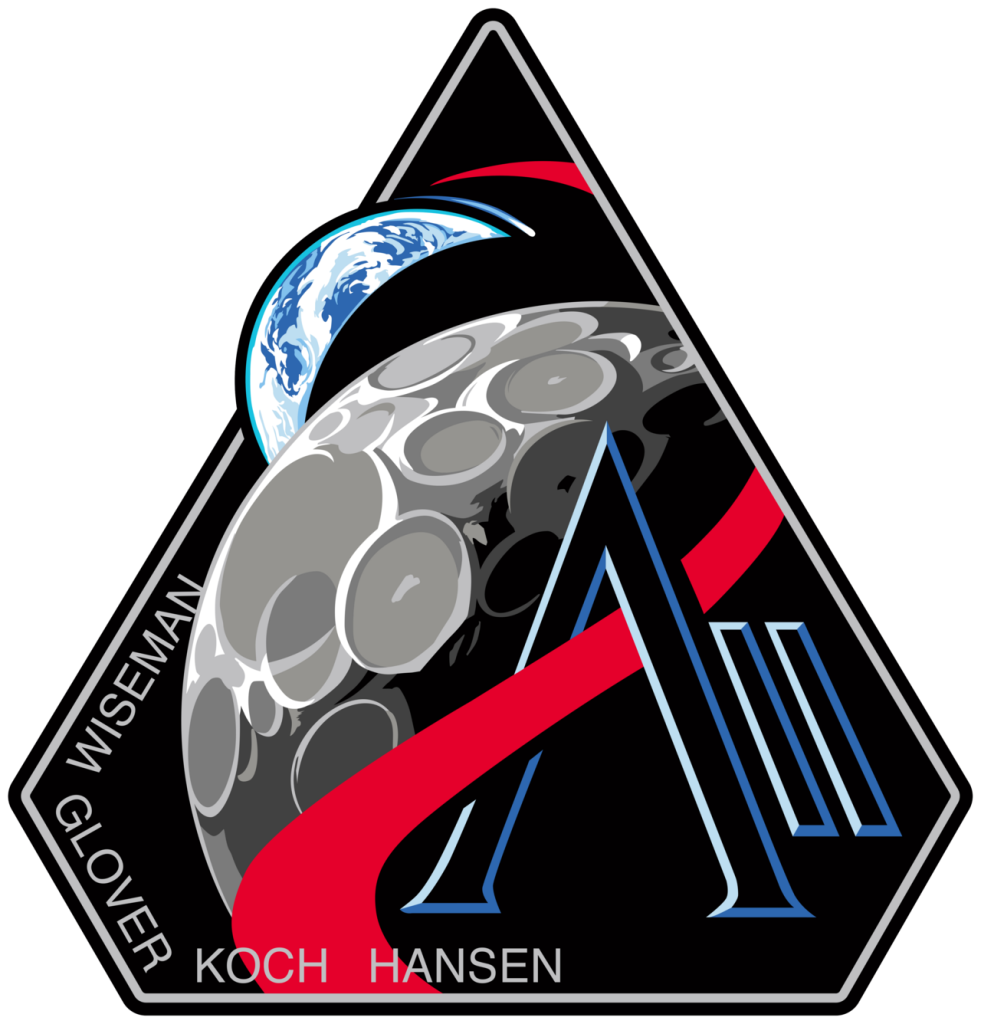
Artemis II was a ten-day lunar flyby mission launched on 1 April 2026. It was the first crewed flight that travelled beyond low Earth orbit since Apollo 17 in 1972. Travelling in an Orion spacecraft, one named Integrity by the crew, Artemis II was a test flight in a series of tests aimed at returning humans to the lunar surface.
Of the four-person crew, Victor Glover was the first person of colour, Christina Koch the first woman, Canadian Space Agency astronaut Jeremy Hansen the first non-US citizen and commander Reid Wiseman was the oldest person to travel beyond low Earth orbit and near the Moon.
***
Intersecting with Eternity is a mini-anthology of literary and artistic works, both past and present, that form part of the unbroken stream of human awareness and poetic self-reflection. Intersecting with Eternity is a companion series to The Tower of Reading and an extension of The Other China section of China Heritage.
In this chapter of Intersecting with Eternity, we reproduce remarks made by Victor Glover, the pilot of the Artemis II mission, during Easter 2026. His words marked an extraordinary moment of human achievement, one that also coincided with one of the lowest points in modern American history. Glover told a reporter that he listened to Whitey on the Moon, twice a week on his commute to work. The first lines of Gil Scott-Heron’s 1970 prose poem — a mordant critique of the saccharine patriotism that was inspired by the Apollo 11 landing on the moon in July 1969 — read:
A rat done bit my sister Nell.
(with Whitey on the Moon)
Her face and arms began to swell.
(and Whitey’s on the Moon)
I can’t pay no doctor bill.
(but Whitey’s on the Moon)
Ten years from now I’ll be paying still.
(while Whitey’s on the Moon)
‘We live in a very complicated country’, Glover observed:
I live in the America that sent me to space, told my grandfather he couldn’t fly during the Korean conflict when he was enlisted, but he got to sit and watch me fly.
Regarding ‘space-flight sceptics’, that is people who do not see any value in sending people to space, Glover remarked: ‘Where we were in 1968, when humans first set out on this voyage, our country is in a very similar place now. And it’s important to recognize and respect those skeptics.’ (The poem Whitey on the Moon enjoyed renewed interest in 2021 following spaceflights by the billionaires Jeff Bezos and Richard Branson.)
My brother Scot and our friends watched the moon landing on TV in the Eastern Suburbs of Sydney shortly after midday on 21 July 1969. A particular point of pride was that the images transmitted to the world when Neil Armstrong took that ‘giant leap for Mankind’ were relayed from the Honeysuckle Creek Tracking Station, a NASA installation located not far from Canberra, the capital of Australia.
***
The rubric of this chapter — 但願人長久,千里共嬋娟, ‘May we all live long,/ May we all share,/ though a myriad miles apart,/ the same fair moon’ — are lines from a famous poem by Su Dongpo 蘇東坡, one that has featured in China Heritage a number of times (see, for example, The Same Fair Moon). The ethos expressed in those lines, and in the sentiments of the crew of Artemis II, is as far from the ideology that prevails in the White House in 2026 as the moon.
***
Victor Glover is a devout Christian and it therefore also seems appropriate to add some lines from Philippians 4, a text which Glover quoted during the Artemis II mission:
… whatsoever things are true, whatsoever things are honest, whatsoever things are just, whatsoever things are pure, whatsoever things are lovely, whatsoever things are of good report; if there be any virtue, and if there be any praise, think on these things.
Victor Glover’s message is a timely reminder from The Other America.
— Geremie R. Barmé
Editor, China Heritage
10 April 2026
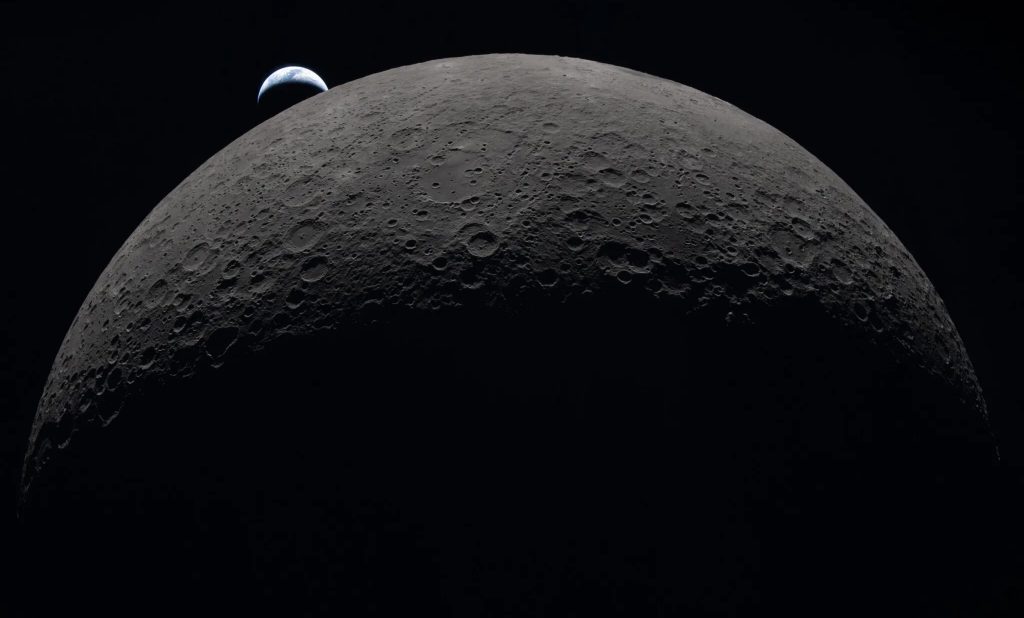
Artemis II Splashdown
***
From the Dark Side of the Moon
Victor Glover
https://youtube.com/shorts/3WMSt_aipXk?si=ZDbi24snLDALv1Ke
***
You know, I don’t have anything prepared … I think these observances are important, and as we are so far from Earth and looking back at the beauty of creation, I think for me, one of the really important personal perspectives that I have up here is I can really see Earth as one thing.
When I read the Bible and I look at all of the amazing things that were done for us, who were created, you have this amazing place, this spaceship. You guys are talking to us because we’re in a spaceship really far from Earth. But you’re on a spaceship called Earth that was created to give us a place to live in the universe, in the cosmos.
I think maybe the distance we are from you makes you think what we’re doing is special, but we’re the same distance from you. And I’m trying to tell you, just trust me, you are special. In all of this emptiness — this is a whole bunch of nothing, this thing we call the universe — you have this oasis, this beautiful place that we get to exist [in] together.
I think as we go into Easter Sunday thinking about all the cultures all around the world — whether you celebrate it or not, whether you believe in God or not — this is an opportunity for us to remember where we are, who we are and that we are the same thing. And that we got to get through this together.
***