Seeds of Fire
The intellectual culture it most resembled, Claude said, was one built on relentless questioning, arguing with texts, treating interpretation as sacred, a contrarian streak, deep concern with ethics and law, and a tradition of thriving through knowledge rather than territorial conquest. …
If an artificial intelligence, trained on the whole archive of modern thought, recognizes those traits as “Jewish,” what does that say? Is it evidence of remarkable influence? Or does it suggest those habits have been so fully absorbed into mainstream culture that they no longer seem distinctively Jewish at all — just the default style of elite thinking?
When a minority’s distinctive contribution becomes common sense, has it triumphed?
Or has it begun to disappear?
These lines from After the Jewish Century, the essay by Steven Mintz (1953-), a prolific historian, reproduced below begs the question, are China’s ‘seeds of fire’ also sympathetically ‘Jewish’, too?
***
‘Seeds of Fire’ 火種 is the theme of China Heritage Annual 2026, a collection in which we celebrate four decades since John Minford and I published Seeds of Fire: Chinese Voices of Conscience (Hong Kong, 1986). At the time, we said that our book gathered together ‘concerned voices’ that represented ‘a wide spectrum of ideas—some hopeful, others plainly despairing; but above all they are voices of conscience.’ Many of the writers that we translated in Seeds paid dearly for their outspokenness. There too we noted that ‘honesty and integrity were also qualities that distinguished China’s greatest twentieth-century writer, Lu Xun’ and to mark the fiftieth anniversary of his death on 19 October 1936 we dedicated our book to his memory.
The year 2026 marks ninety years since Lu Xun’s death. It also offers occasions to commemorate other moments of impact that we touch on in China Heritage Annual, including:
- 1906: the clash between the revolutionary Sun Yat-sen (革命黨人) and Liang Qichao, a pro-monarchy reformer (保皇派), over the political future of China;
- 1916: the debate over East-West values, ideas, philosophy and worldview (東西文化論戰), one that has continued in various guises to this day;
- 1926: the looming explosion in Chinese politics that led both to the Nanking Decade and the outbreak of the Chinese Civil War, a political and existential conflict that remains unresolved;
- 1936: the invasion of the Japanese Imperial Army and the Communist Party’s Long March;
- 1946: the formal end of the War in the Pacific and the Chinese War of Resistance and a new phase in China’s Civil War;
- 1956: the Hundred Flowers Movement that resulted in the purge of Chinese intellectual life, orchestrated by Mao Zedong and Deng Xiaoping the following year. This year also saw the start of the two-decade-long High Mao Era of class struggle that resulted in engineered mass murder and cultural devastation;
- 1966: the formal launch of the Great Proletarian Cultural Revolution and Mao’s last attempt to remake China;
- 1976: the death of Mao Zedong, the arrest of his faction and the formal end of the Cultural Revolution;
- 1986: the crushing by Beijing of attempts by Communist Party reformers to commemorate the Hundred Flowers Movement and repression of student protests, something that adumbrated 1989 and the political authoritarianism of the following three decades;
- 1996: large-scale PLA exercises in the Taiwan Strait aimed at intimidating the unfolding democracy of the Republic of China and significant moves to enhance a new Sino-Russia relationship;
- 2006: the completion of the Three Gorges Dam, opposition to which had led to the crushing of China’s nascent environmental movement in 1989;
- 2016: the consolidation of Xi Jinping’s role as the core leader of China’s party-state-army and internal moves to extend his tenure indefinitely. This year marked the formal inauguration of the Xi Jinping era.
As we repeatedly observe in Xi Jinping’s Empire of Tedium, China is still contending with an unfinished twentieth century — be it in terms of political contestation, social evolution, intellectual and cultural freedom, sustainable economic development or geopolitical strife.
Below, Steven Mintz addresses the fate of the ‘Jewish century’. In doing so, however, he overlooks the messiah-fixation of America’s evangelical Christians and some overly-influential Jews, something that has been playing out to the grave detriment of what remains of the ‘Jewish century’.
In China Heritage we question the possibilities and limitations of what many believe will be the ‘Chinese century’. Whizzbang technology aside, we alert readers to China’s abiding voices of conscience, voices that question authority, caution against hubris and that seek human worth beyond the evanescence of materialism.
— Geremie R. Barmé
Editor, China Heritage
14 March 2026
***
In China Heritage:
- ‘It was a sunny day and the trees were green…’
- You Want It Darker — Farewell 2023, Roll in 2024
- Trump’s Gaza — a tech fascist casino built atop the disaster capitalism of genocide and mass displacement
- Trump Redux — Who Goes Nazi Now?
- When the Intifada Goes Local
Further reading:
- Yeshayahu Leibowitz, There are Judeo-Nazis, YouTube, 4 September 2017
- Louis Menand, The Free World: Art and Thought in the Cold War, New York: Farrar, Straus & Giroux, 2021
- Revisiting Yeshayahu Leibowitz, JSTOR Daily, 2023
- Franklin Foer, The Golden Age of American Jews is Ending, The Atlantic, 4 March 2024
- Pankaj Mishra, The Shoah after Gaza, London Review of Books, 7 March 2024
***
After the Jewish Century
Steven Mintz
Recently, someone asked the AI system Claude about its religious leanings. After some hesitation, it answered sheepishly: “Alright, if I have to commit: Jewish.”
Its explanation was telling. The intellectual culture it most resembled, Claude said, was one built on relentless questioning, arguing with texts, treating interpretation as sacred, a contrarian streak, deep concern with ethics and law, and a tradition of thriving through knowledge rather than territorial conquest.
The answer was playful. But it was also revealing.
Claude wasn’t pointing to theology or ritual. It was pointing to a style of thought — textual, analytical, morally serious, comfortable with argument and abstraction. In doing so, it unintentionally illustrated what historian Yuri Slezkine meant by calling the twentieth century “the Jewish century.”
Slezkine’s claim wasn’t demographic. Jews never made up more than a tiny share of the population. His point was that the habits Jews developed across centuries of diaspora — literacy, legal reasoning, urban adaptability, interpretive intensity — became the very traits modern societies rewarded. Modern life began to run on those habits.
Which raises a harder question.
If an artificial intelligence, trained on the whole archive of modern thought, recognizes those traits as “Jewish,” what does that say? Is it evidence of remarkable influence? Or does it suggest those habits have been so fully absorbed into mainstream culture that they no longer seem distinctively Jewish at all — just the default style of elite thinking?
When a minority’s distinctive contribution becomes common sense, has it triumphed?
Or has it begun to disappear?
What the “Jewish Century” Actually Meant
Before asking whether something is ending, we need to be clear about what it was.
In The Jewish Century (2004), Yuri Slezkine made a bold claim: the twentieth century was “Jewish” not because Jews dominated the realm of culture, but because the modern world came to reward the very skills Jews had developed over centuries of diaspora.
He contrasted “Apollonians” and “Mercurians.” Apollonians were rooted people—farmers, warriors, those tied to land and territory. Mercurians were mobile minorities—merchants, translators, legal intermediaries—who survived through literacy, adaptability, and networks rather than land.
Jews, he argued, were the classic Mercurians. And modernity increasingly ran on Mercurian skills.
The argument drew criticism. Some said it romanticized Jewish difference. Others feared it could feed old tropes about disproportionate Jewish power. Still others argued that Jewish experience was too diverse to generalize.
But Slezkine’s core point was simpler and more persuasive: habits formed under long conditions of displacement—textual literacy, legal reasoning, commercial networking, intellectual agility—happened to align with what modern economies and institutions came to value.
Jews didn’t invent modernity. But history had prepared them unusually well for it.
The American Case
The United States offers the clearest example.
By mid-century, Jews were about 3 percent of the American population. But they were far more than 3 percent of key professions and cultural institutions.
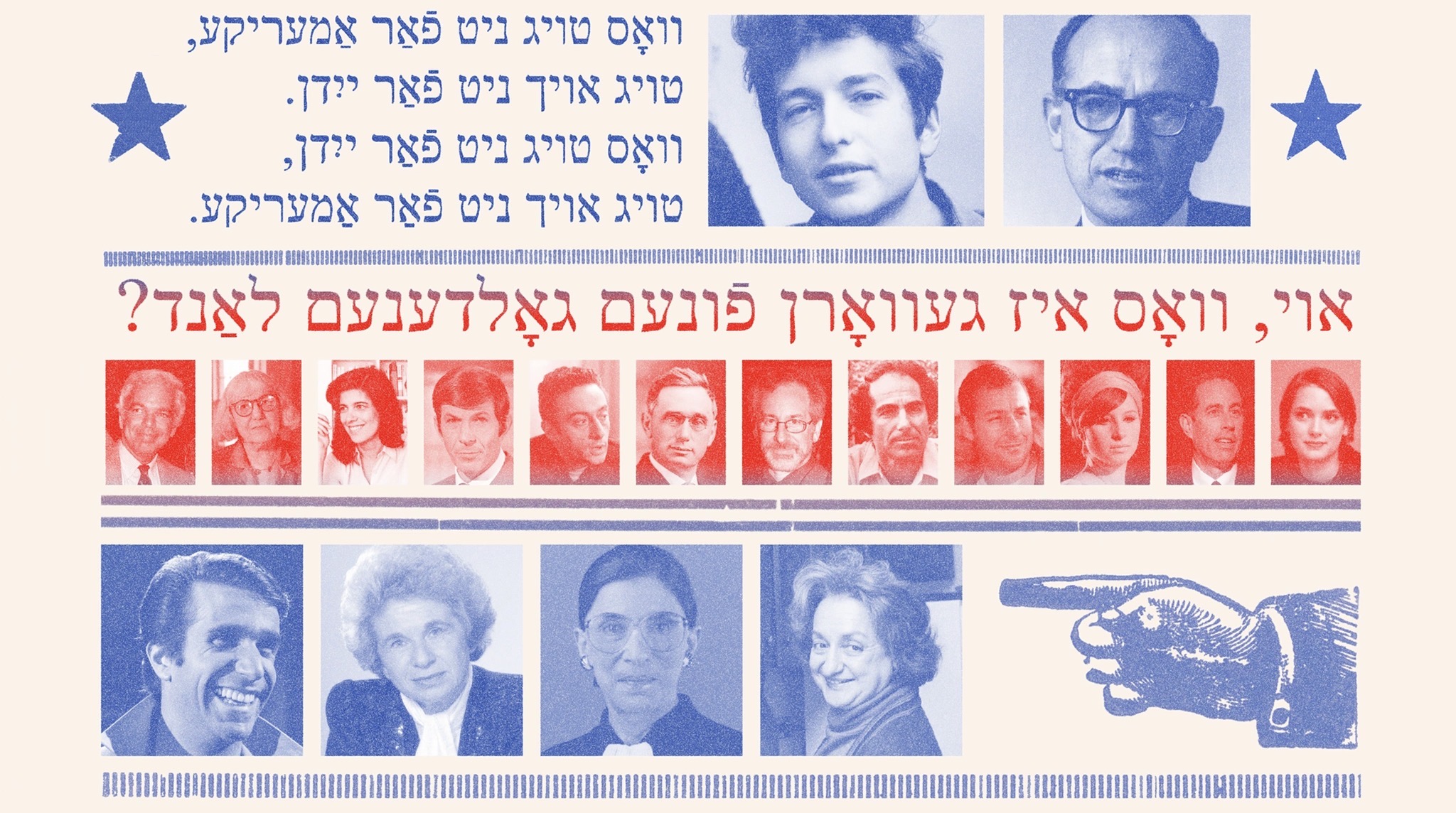
In law, Jews were overrepresented in major firms, appellate advocacy, and legal academia. Figures like Felix Frankfurter, Alexander Bickel, and Ruth Bader Ginsburg helped shape modern constitutional thought.
In medicine, Jews were heavily represented in academic research and medical schools.
In publishing, Jewish editors and publishers—Bennett Cerf at Random House, Alfred A. Knopf, leaders at Simon & Schuster and Viking—shaped what Americans read. They promoted modernist literature and helped build the paperback revolution.
In universities, the change was dramatic. Elite schools that once imposed Jewish quotas began hiring on merit after World War II. Jewish scholars helped build entire fields in the social sciences and humanities.
In intellectual magazines—Commentary, Partisan Review, Dissent, later The New York Review of Books—Jewish writers helped define postwar debates about culture and politics. The “New York intellectuals” were central to how educated Americans thought about modernism, liberalism, and dissent.
In Hollywood, the major studios were founded and led largely by Jewish immigrants or their sons. They built the infrastructure of American mass culture.
In psychoanalysis, Jewish émigrés from Europe made concepts like repression and developmental stages part of mainstream self-understanding.
Even by quantitative measures, the pattern was striking. In Human Accomplishment (2003), Charles Murray documented extraordinary Jewish overrepresentation in scientific, mathematical, and artistic achievement between 1870 and 1950.
This wasn’t myth or flattery. It was measurable influence in the institutions that shaped American law, culture, politics, and intellectual life.
The real question is not whether it happened. It’s how it happened—and whether the conditions that made it possible still exist.
How Minority Influence Actually Worked
A small community does not shape a large society by accident. In mid-century America, Jewish influence rested on three reinforcing conditions. Each has weakened.
First, centralized institutions.
Mid-century America had cultural chokepoints. A relatively small number of publishers, magazines, universities, and film studios determined what counted as serious, influential, or worth reading and watching. Heavy presence in those institutions translated into national authority.
In publishing, firms like Random House, Viking, Simon & Schuster, and Knopf shaped literary culture. Their editors championed modernism, translated European thinkers, and decided which political and cultural books reached educated readers.
In magazines, Commentary, Partisan Review, and Dissent helped define intellectual debate. Their readership was small but influential; what appeared in their pages often moved quickly into classrooms and mainstream media.
In universities, postwar hiring opened elite departments to Jewish scholars, who trained graduate students, edited journals, and built entire fields.
In Hollywood, a handful of studios dominated American storytelling. Jewish executives ran many of them. They did not foreground Jewish themes. But immigrant sensibilities and a cosmopolitan outlook shaped popular culture at its peak moment of influence.
The key is structure. These institutions were centralized enough that influence within them became influence over the broader culture.
That world has largely disappeared. Digital media has shattered the chokepoints. Authority is dispersed across thousands of platforms. Access is more open—but concentrated presence inside a few institutions no longer carries the same power.
Second, a language that aimed beyond the tribe.
Jewish intellectuals rarely spoke as spokespeople for “the Jews.” They spoke about big, shared questions — freedom, democracy, authority, and amoral responsibility.
Hannah Arendt’s thinking about totalitarianism grew directly out of Jewish history. But she wrote about the dangers facing modern societies as a whole. Lionel Trilling’s reflections on liberalism and authenticity were shaped by his experience as an outsider in elite culture. Still, he addressed the broader public. Irving Howe, Daniel Bell, Alfred Kazin — each drew on Jewish experience, but framed their arguments as contributions to American intellectual life, not as ethnic appeals.
This wasn’t a rejection of Jewish identity. It was a way of working. It allowed insights shaped by minority experience to enter mainstream debate without being dismissed as narrow or self-interested.
But that approach depended on a culture that trusted universal language — that believed someone could move from a particular story to a general principle in good faith.
Today, universal claims are often met with suspicion. They can be seen as disguising group interests or erasing identity. At the same time, speaking explicitly as a Jew has grown more complicated, especially in settings where Jewish identity is quickly entangled with debates about Israeli policy.
The old bridge — from particular experience to shared argument — is still there. But it is narrower, and harder to cross.
Third, dense networks.
Jewish influence was not just about brilliant individuals. It was about networks that cultivated talent and sustained presence across generations.
City College of New York produced a generation of intellectuals who went on to edit magazines and shape social science. New York’s geographic density created constant face-to-face contact. Community centers, synagogues, summer camps, student groups, and professional circles overlapped. Sociologists call this network density: short paths between people, fast circulation of opportunity and reputation.
These networks turned individual ambition into collective presence.
They are thinner now. Jews are more geographically dispersed. Intermarriage is common. Participation in communal institutions is lower. Digital connection does not replicate institutional life. The infrastructure that once converted talent into sustained cultural influence has weakened.
Taken together, centralized institutions, universal language, and dense networks made the “Jewish century” possible.
All three have changed.
Why the Jewish Century May Be Ending
The conditions that once enabled extraordinary Jewish influence are changing. This is not a story of sudden collapse. It is a story of slow structural shift.
First, there is the fragmentation of cultural authority
Mid-century America had gatekeepers. A few magazines shaped intellectual debate. A handful of publishers determined what serious readers encountered. Five or six Hollywood studios decided which stories reached mass audiences. Elite universities set disciplinary agendas.
That world no longer exists.
Partisan Review is gone. Commentary and The New York Review of Books still publish, but they no longer command broad authority. Publishing has splintered into conglomerates, small presses, and self-publishing platforms. Hollywood’s studio system dissolved into streaming services, global financing, and algorithm-driven distribution. Universities have multiplied and specialized. Authority is scattered.
Social media completed the shift. Anyone can publish. Influence now comes from building a direct audience rather than from passing through institutional chokepoints.
This democratizes access. But it also means that heavy presence inside a few key institutions no longer translates into national cultural authority.
Then there is the narrowing of the language of universality.
Mid-century Jewish thinkers often translated particular experience into universal argument. They wrote about freedom, authority, democracy, and moral responsibility in ways that spoke to everyone, even when rooted in Jewish history.
Today, universalism faces skepticism. Standpoint theory emphasizes that all claims reflect social position. Postcolonial theory questions whether “universal” ideas mask Western assumptions. Identity politics insists that lived experience shapes authority.
These critiques contain real insight. Universal claims have sometimes concealed power. But taken too far, they make the older strategy difficult. Translating Jewish experience into general argument can now look like erasing identity.
At the same time, speaking explicitly as a Jew has grown more complicated, especially in progressive spaces where Israel is intensely contested. Jewish identity is often immediately entangled with debates about Israeli policy. Many younger Jews feel caught between communal ties and their political commitments.
The old path—speaking in universal language shaped by Jewish experience—has narrowed. The alternatives—asserting Jewish particularity or quietly assimilating—both involve trade-offs.
Demographic change is another key development.
American Jewry is not disappearing. But it is dividing.
Orthodox and especially Haredi communities are growing rapidly, with high fertility rates and strong communal boundaries. On current trends, a much larger share of American Jews in 2050 will be religiously observant and internally focused.
Many Orthodox Jews contribute significantly to broader society. But their relationship to secular modernity is often more guarded than the synthesizing approach that characterized mid-century secular Jewish intellectuals.
Meanwhile, the secular, urban, highly educated Jews who once dominated elite cultural institutions face intense assimilation pressures.
Among non-Orthodox Jews, intermarriage exceeds 70 percent. Geographic dispersion is common. Institutional affiliation is weaker, especially among younger generations.
Sociologists describe this as “symbolic ethnicity”: identity expressed episodically—through holidays or cultural markers—rather than through dense communal participation. You may identify as Jewish. But you may not belong to institutions that sustain long-term transmission.
Individual achievement will likely continue. Jews remain highly educated and economically successful. But collective influence requires institutions, networks, and enough density to sustain a distinctive culture across generations.
Assimilation has long stages: adopting mainstream habits, entering mainstream institutions, intermarrying, eventually redefining identity. American Jews have moved through these stages with remarkable speed.
This is the paradox of success. The skills that once distinguished Jews—textual literacy, legal reasoning, cosmopolitan adaptability—are now widely rewarded and widely shared. When minority habits become majority norms, they stop appearing distinct.
What was once recognizably Jewish becomes simply part of educated culture.
The Jewish century may not end with catastrophe. It may end with assimilation.
The Antisemitism Variable: Real but Complex
Any serious discussion has to address antisemitism—but carefully, and without exaggeration.
Classical right-wing antisemitism remains real. Conspiracy theories about Jewish power and divided loyalty still circulate. They draw on old European tropes and can turn violent, as the synagogue shootings in Pittsburgh and Poway showed. This form threatens Jews’ physical safety directly.
Left-wing antisemitism works differently. It often treats Jewish success as suspect privilege rather than minority achievement. It frequently collapses Jewish identity into Israeli state policy, so Jewish students and intellectuals feel pressured to answer for the actions of a foreign government. In some progressive spaces, antisemitism receives less institutional urgency than other forms of bias.
The campus climate after October 7, 2023 made this visible. Elite universities—long central to Jewish intellectual life—have been places where Jewish scholars taught, students advanced, and influence was cultivated. When Jewish students report feeling unsafe or isolated, when departments blur the line between criticism of Israel and suspicion of Jewish identity, and when administrators hesitate to condemn antisemitism clearly, it weakens the environment in which minority influence historically flourished.
European examples offer caution. In France, rising antisemitism has pushed some Jews toward withdrawal or emigration. In Britain during the Jeremy Corbyn years, many Jews felt their place in public life was conditional. These were not primarily crises of physical security. They were crises of belonging. And belonging is essential for minority cultural influence.
Still, antisemitism is not the main driver of potential Jewish decline in America. The deeper forces are assimilation, demographic change, and the fragmentation of institutions. Antisemitism can accelerate those trends by making integration feel less secure. But even in its absence, the structural foundations that once sustained distinctive Jewish intellectual influence would still be weakening.
Historical Precedents—When Minority Influence Fades
American history offers two revealing examples of small religious minorities that once shaped the nation’s moral language far beyond their numbers—and then saw that influence fade. Their stories help clarify what may now be happening to American Jewry.
The Quaker Pattern: Moral Purity, Political Withdrawal
Quakers never made up more than 1–2 percent of the population. Yet in the eighteenth and early nineteenth centuries, they helped shape American public life.
They founded Pennsylvania as a bold experiment in religious toleration and relatively democratic governance. They were early, consistent opponents of slavery; Philadelphia Quakers organized the first American abolition society in 1775. They pioneered prison reform, arguing for rehabilitation over punishment. Their pacifism influenced American peace movements. Even their business practices—fixed prices, honest dealing—helped shape commercial norms.
Their influence rested on clear factors: geographic concentration, economic success, tight communal discipline, and moral seriousness that commanded respect.
But their influence faded.
They refused to compromise on principle. During the Revolution and the Civil War, many withdrew from political life rather than support violence—even for causes they believed in. That preserved their moral integrity but ensured their marginality. A complex society requires compromise and, at times, tragic choices.
Internal schisms weakened coherence. Assimilation diluted distinctive practices. Numbers stagnated. Quakers survived—and remain admired—but as a small, largely marginal community.
The lesson: withdrawal preserves purity but forfeits broad influence.
The Unitarian Pattern: Dissolution Through Success
Unitarians followed a different path. In the nineteenth century—again never more than about 1 percent of Americans—they exerted extraordinary intellectual influence, especially in Boston.
They dominated Harvard and shaped higher education. Emerson and the transcendentalists emerged from Unitarian circles. Unitarians led abolition, women’s rights, prison reform, and education reform. Their intellectual style—ethical seriousness, comfort with modernity, trust in reason—helped define elite American culture.
But Unitarian influence gradually dissolved through success.
Their theological liberalism became mainstream among educated Protestants. Their ethical emphasis survived even as religious belief faded. Secular humanism absorbed their moral vocabulary. By the early twentieth century, what had once seemed distinctly Unitarian simply looked like educated common sense.
The denomination shrank. Its values won. Its institutional distinctiveness faded.
The lesson: when a minority’s ideas become the majority’s assumptions, the minority itself can disappear—through absorption.
Which Path for American Jews?
The Quaker path is about principled withdrawal. The Unitarian path is about diffusion through success.
Secular American Jews today look less like Quakers retreating and more like Unitarians dissolving. Jewish intellectual habits—textual analysis, moral seriousness, legal reasoning, comfort with abstraction—helped shape modernism, psychoanalysis, constitutional law, and social theory. But once those habits became standard equipment of educated Americans, they ceased to appear Jewish. They simply became “modern.”
The danger is not primarily persecution—though antisemitism remains real. The deeper risk is diffusion: that Jewish distinctiveness fades into the elite culture it helped create.
If that happens, the irony will be stark. After surviving centuries of exclusion and violence, Jewish cultural distinctiveness in America would not end through destruction, but through success—because the doors opened so wide that the boundaries dissolved.
What’s at Stake—for Jews and for America
If Jewish distinctiveness fades—if the intellectual culture shaped by diaspora, textual argument, and minority vigilance dissolves into generic elite liberalism—something important will be lost. Not only for Jews, but for American democracy.
Twentieth-century American liberalism took many forms. But the version shaped by Jewish thinkers had a particular tone—serious, wary, and historically conscious.
For one thing, Jewish liberalism treated freedom as fragile.
Jewish intellectuals treated democracy as something that could collapse. Hannah Arendt showed how modern bureaucracies and mass movements could produce totalitarianism. Karl Popper argued that open societies survive only if they actively defend themselves. Sidney Hook defended academic freedom as a hard-won achievement, not a given.
The message was consistent: liberty requires vigilance.
Second, Jewish liberalism regarded memory as a civic duty.
Jewish intellectual life insisted that remembering injustice is an obligation. Raphael Lemkin coined “genocide” to make mass murder legally and morally visible. Holocaust scholarship and memorialization argued that democracies must remember what they are capable of.
That seriousness shaped how Americans came to confront slavery as well. It’s not an accident, as August Meier showed, that a disproportionate share of the pioneering slavery scholars were Jewish. Memory became a political and moral responsibility.
Third, Jewish liberalism held that majorities could not be fully trusted.
Jewish liberalism was not anti-democratic. It was anti-complacent. Alexander Bickel worried about protecting minorities from majority rule. Judith Shklar described a “liberalism of fear,” focused less on utopia than on preventing cruelty. Lionel Trilling warned against moral self-satisfaction.
This was realism born of history: democracies can turn on minorities. Institutions must be built with that in mind.
And most important of all, Jewish liberals believed that hard questions were worth arguing about.
Jewish intellectual culture did not avoid tragic dilemmas. Michael Walzer wrestled with the ethics of war. Robert Nozick and Michael Sandel debated first principles of justice. Disagreement was fierce—but argument mattered.
That habit—serious argument without insistence on ideological purity—gave American public life intellectual and ethical depth.
Jewish liberals believed that hard questions were worth arguing about. … That habit—serious argument without insistence on ideological purity—gave American public life intellectual and ethical depth.
What Would Be Lost
If this tradition dissolves, American democracy loses: A reminder that freedom is fragile. A discipline of historical memory. A culture that values argument over consensus. A tragic sense of politics—an understanding that not every choice is clean or costless.
Liberalism would survive. But it might become thinner—more therapeutic, less wary, and less morally demanding.
The consequences for Jews are different but equally serious.
If secular Jewish distinctiveness fades, Orthodox communities—growing, vibrant, and internally strong—will increasingly define American Judaism. That will mark a fundamental shift. The Judaism that shaped twentieth-century American culture was largely urban, modernist, and intellectually engaged with liberal democracy.
Among non-Orthodox Jews, intermarriage exceeds 70 percent. Many still identify as Jewish—but often in what sociologist Herbert Gans called “symbolic ethnicity”: holiday observance without dense institutional life.
Institutions that once transmitted habits of mind—synagogues, magazines, campus groups—struggle to hold younger generations. Without institutional thickness, identity becomes private and episodic. Individual excellence may continue. Collective voice weakens.
Influence requires density.
The Larger Question: Can Pluralism Survive Its Own Success?
The deepest stakes concern American pluralism itself.
Minority ascendance—the process by which small groups exercise disproportionate cultural influence—depends on specific conditions:
- Mobility and meritocracy: The ability of talent from marginalized groups to rise.
- Protection for dissent: The opportunity for minority voices to challenge majority assumptions.
- Institutions confident enough to absorb criticism: An elite culture willing to integrate outsider perspectives.
- Space for universalism: A culture that can translate particular experiences into general arguments.
- Tolerance for sustained argumentation: Intellectual disagreement that can occur without demands for ideological purity.
These conditions are under strain. Elite institutions are more bureaucratized, risk-averse, and susceptible to social media pressure. Political polarization makes shared civic language harder to sustain. Identity politics narrows the space for arguments that claim to speak beyond particular group boundaries. Meritocratic norms face challenges as both inadequate and unfair.
If these conditions continue to erode, the question becomes: Which groups, if any, will occupy in the twenty-first century the role that secular Jews occupied in the twentieth?
Some point to Indian Americans or East Asian Americans as potential successors—groups marked by an emphasis on education, urban concentration, professional achievement, and immigrant status that generates the partial-outsider perspective that can sharpen perception.
But structural similarity doesn’t guarantee succession. Influence requires not just talent and drive but:
- Institutions capable of amplifying minority voice into majority hearing.
- A civic culture open to translating minority experience into universal language.
- Historical timing that makes particular minority experiences relevant to majority concerns.
- A willingness of the minority group to engage in public intellectual life rather than focusing exclusively on internal community, professional success, or economic advancement.
Whether any contemporary minority will exercise influence comparable to twentieth-century Jews remains genuinely uncertain.
After the Jewish Century?
If the Jewish century is ending, American liberalism would lose one of its most serious moral traditions.
Not the only one. Black intellectual life—from Du Bois to Morrison—has offered sustained moral critique. Catholic social teaching has provided a different ethical vocabulary. Native American thinkers have challenged the assumptions of the settler state. None of that should be minimized.
But Jewish intellectual influence had a distinctive mix: deep historical memory, textual discipline, comfort with modernity, and a steady warning that democracy is fragile. It produced thinkers who believed in liberal institutions yet distrusted their permanence—who embraced progress but remembered the potential for disaster.
Jews will endure. Orthodox communities are growing and vibrant. The question is not whether Judaism will survive. It is whether the habits that once defined Jewish liberalism—restlessness, suspicion of power, devotion to argument, a tragic sense of politics—will remain concentrated enough to shape American public life. Or whether they will diffuse so completely into elite culture that they are no longer recognizably Jewish, just “how educated people think.”
If that diffusion happens, it will be both a triumph and a loss. A triumph, because Jewish contributions will have become standard democratic assumptions. A loss, because the community that cultivated those habits weakens, making renewed contribution less likely.
History offers two models. Unitarians won so thoroughly that they dissolved into the culture they shaped. Quakers preserved distinctiveness but surrendered their influence. Contemporary Jewish life faces something closer to the Unitarian path: absorption through success.
Whether that is a triumph or a tragedy depends on what we value. By measures of education, income, and professional achievement, American Jewry remain strong. But if the measure is a distinctive collective voice—one that brings moral intensity, historical memory, and interpretive rigor to democracy—the future is less certain.
The twentieth century may indeed have been uniquely Jewish in its intellectual texture. The twenty-first will be more fragmented and more plural. No single minority is likely to shape public life in the same concentrated way.
Still, the question matters. It matters whether the habits long associated with Jewish intellectual life—vigilance about democracy’s fragility, insistence on remembering uncomfortable history, fierce argument without ideological purity, a sober sense of tragedy—remain alive and visible in American culture.
Those habits were not uniquely Jewish. But they were unusually concentrated in Jewish intellectual communities. If that concentration dissolves, someone—or no one—must carry them forward.
The outcome will not be decided by demographics alone. It will turn on choices: about education, institutions, community, ambition, and intellectual courage. And it will depend on whether American society remains open enough to learn from its minorities—confident enough to welcome moral intensity from the margins.
The Jewish century was never only a Jewish story. It was a story about America at its best—a country able to learn from its minorities, to take the experience of outsiders and let it reshape the center. It was an America strong enough to be questioned, corrected, even unsettled—and better for it.
If that capacity weakens, we won’t wake up to a headline announcing it. No institutions will suddenly shut down. Instead, their depth and purpose will slowly weaken. Jewish identity won’t disappear, but it may become less defined. And the influence that once had a clear shape will gradually disperse until it’s hard to see where it came from or what made it distinct.
The change will be subtle but real. We will hear less about how fragile democracy can be. We will grow more comfortable with forgetting hard chapters of our history. Argument will give way to easy agreement. Liberalism will sound self-assured at the very moments it ought to be cautious.
And we may not even notice what has quietly slipped away.
That would be a loss—for Jews, certainly. But not only for Jews.
For an America that still needs what Jewish intellectual life, at its best, has long offered: the reminder that freedom is never secure, that memory is a duty, that argument matters, and that democracy requires citizens capable of moral seriousness—especially when the questions are hardest.
***
Source:
- Steven Mintz, After the Jewish Century, 19 February 2026
***