Intersecting with Eternity
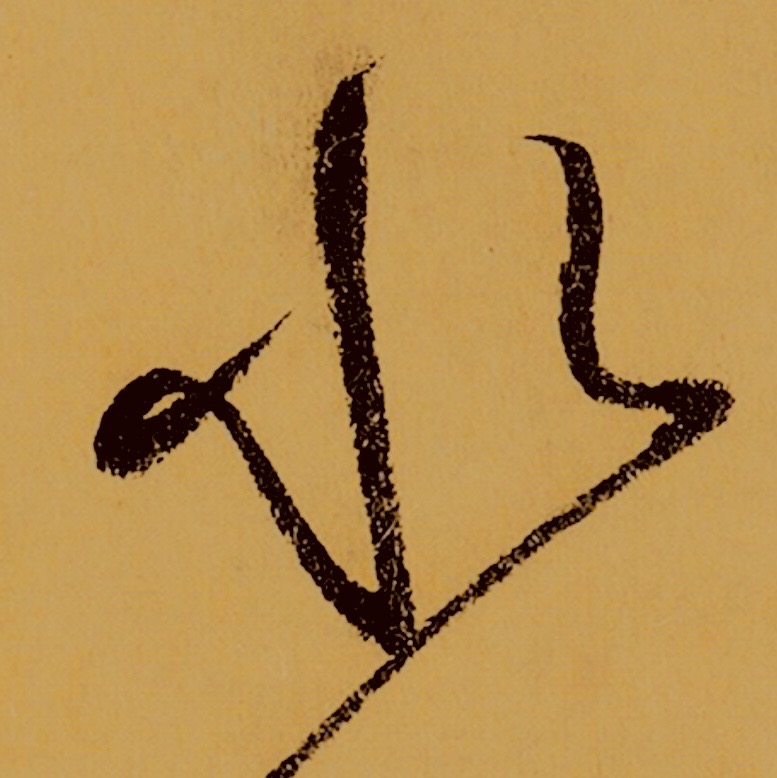
上善若水
In 2021, a century after Stefan Zweig wrote about the invisible republic of the spirit, we adapted the concept to our ongoing investigation into what we have long dubbed The Other China. In 1921, Zweig wrote that the frontiers of the invisible republic
are open to all who wish to dwell therein; its only law is that of brotherhood; its only enemies are hatred and arrogance between nations. Whoever makes his home within this invisible realm becomes a citizen of the world. He is the heir, not of one people but of all peoples. Henceforth he is an indweller in all tongues and in all countries, in the universal past and the universal future.
Our republic is more gender neutral than that posited by Zweig over a century ago as well as being culturally more ecumenical in a number of other ways.
In the following chapter in Intersecting with Eternity, a mini-anthology of literary and artistic works we feature a letter by Ece Temelkuran (1973-), author, journalist and Turkish exile, on ‘mourning in the future tense’.
In our series Xi Jinping’s Empire of Tedium, I have used André Aciman’s concept of the ‘irrealis mood’ to describe a recurrent sense of dread that I first experienced in early 1979. In Homo Irrealis: The Would-Be Man Who Might Have Been (Farrar, Straus & Giroux, 2021), Aciman describes the ‘irrealis domain’ in terms of
the might-have-been that never happened but isn’t unreal for not happening and might still happen, though we fear it never will and sometimes wish it won’t happen or not quite yet.
In 1979, when Wei Jingsheng was arrested for having posted his call for ‘the fifth modernisation’ on Xidan Democracy Wall in Beijing, when Deng Xiaoping announced the Four Cardinal Principles and initiated negotiations over the future of the British crown colony of Hong Kong, I sensed with dread that the rest of my life would be engaged with a revitalised and economically reformist Chinese autocracy. For a time, I devoted myself to the study of Japanese and Japan but soon found myself in the thrall of China once more (see You Should Look Back).
My irrealis dread would return, first in early 1987, shortly after the publication of Seeds of Fire, again at Bolinas, California, in 1989 and once more during Beijing’s Olympic year in 2008. Then, in 2012, the near-future loomed large. Each time I sensed the unfolding of a dark counterpoint to what might have been. In recalling those irrealis moments over the past fifty years, I realise that, to take a line from Ece Temelkuran, I was mourning in the future tense and fulfilling the promise of Jeremiah, my namesake.
When I launched China Heritage ten years ago, I suggested that due to my advancing years and uncertain health I doubted that I’d live long enough to witness the next turn in the road. Until then, China Heritage offers a few modest trail markers along the way, one of which is the following letter. Temelkuran writes:
You and I have made our homes in language. We built books with the only indestructible material of humankind: words. We constructed them so that in them, we and the readers could make sense of the wuthering mundanity around us. We lived in the language, so the world — once we raised our heads from the page to look at the streets — became meaningful and bearable. Once uttered, our words moulded a delicate yet mighty cloud, a home. And our cloud home was owned by no one, yet everyone can belong. The most magical aspect of this home made of words was that it was constructed without extracting anything from the Earth. Language is the only man-made wonder created out of nothing — a poetic rejection of dialectics.
They are sentiments that resonate with Stefan Zweig’s invisible republic of the spirit.
***
Ece Temelkuran describes Nation of Strangers: Rebuilding Home in the 21st Century, published by Canongate in February 2026, in the following way:
Nation of Strangers is a two-layered book. On the one hand, it is perhaps my most personal book yet – it tells the account of my ‘exile’ from Turkey, after I fled the threats of a fascist regime I had become dangerously critical of and consequently targeted by. After years of touring the Western world, warning politicians, academics, anyone who would listen, that fascism would soon be at their door, I found myself exhausted and forced to face my own circumstances, to finally face home, that vanishing dot on the horizon. I was compelled to seek out others who lived in this state, across history, literature and the cities that I drifted through. To connect our disparate experiences, I began to write a series of letters to these other strangers. As I did so, I realised that this loss of home, this ‘unhoming’ (a nineteenth-century word that I resurrect in the book), is occurring at a global scale and on so many levels as we enter a new and terrifying world order.
We are so often confronted by the physical loss of home in the form of refugee crises and migration at scale. In this book, I argue that many more of us are losing our homes – morally, politically and spiritually. We are losing our home to globally institutionalised cruelty, wars and fascism. Familiar political parties are no longer recognisable. Due to the climate crisis, we are losing our ultimate home, the planet. Because of AI, we are losing our spiritual home – language and art. Today, the anxiety and fear we are experiencing as humanity stem from this destabilisation, this loss of home. Amidst the noise of global rupture, we are experiencing a quiet collapse inside each of us. As we enter the age of survival, we should look to those who have already lost their homes and learned to rebuild out of nothing – the exiles, refugees, immigrants and homeless of the world – and who will lead the way.
— In conversation with Ece Temelkuran, Women’s Prize
Temelkuran also observed that among the living writers who have inspired her are Arundhati Roy and Naomi Klein, although, she says that ‘Hannah Arendt has been my ultimate muse, not only her work but also for the way she lived her life.’ Yanis Varoufakis has offered that her prose and her life mean that she ‘is in serious danger of becoming the new Hannah Arendt’.
Temelkuran’s other books include:
- How to Lose a Country: The 7 Steps from Democracy to Fascism, 4th Estate, 2019; and,
- Together: A Manifesto Against a Heartless World, Canongate, 2021.
***
Intersecting with Eternity is a mini-anthology of literary and artistic works, both past and present, that form part of the unbroken stream of human awareness and poetic self-reflection. Intersecting with Eternity is a companion series to The Tower of Reading and an extension of The Other China section of China Heritage.
The rubric of this chapter in Intersecting with Eternity — 上善若水 shàng shàn ruò shuǐ, ‘the best is like water’ — comes from the Tao Te Ching. This chapter is also included in Seeds of Fire: China Heritage Annual 2026.
— Geremie R. Barmé
Editor, China Heritage
8 March 2026
International Women’s Day
***
We are likely to find ourselves as intellectuals or political philosophers facing a situation in which our chief task is not to imagine better worlds but rather to think how to prevent worse ones. … the kind of intellectual who draws big pictures of idealized, improvable situations may not be the person who is most worth listening to.
— Tony Judt, Thinking the Twentieth Century, 2012, p.304
***
A letter from
Ece Temelkuran
Global displacement has reached its highest level in recorded history. “But it is not only that. The world loses home altogether,” says Ece Temelkuran. Her new book, Nation of Strangers, explores moral, political, and spiritual homelessness in today’s world. Temelkuran claims that we are building a new nation whose citizens are strangers in various ways. The book, composed of letters to strangers everywhere, will be published in several languages in and beyond Europe this spring. We asked Temelkuran for one extra letter. It is a letter to you, dear reader. Do you feel at home? For how much longer?
— European Review of Books, Issue 10, 18 December 2025
***
24th October, 2025
Kraków
Dear stranger,
I’m writing to you from, of all places, Kraków, Poland. It is a rainy morning. Still too early for tourists to studiously stroll around with their makeshift nylon rain covers. The supplier vans are making their rounds to cafes and restaurants, preparing the old town to look postcard-perfect for the rest of the day. The historic square will soon begin to offer that smooth time tunnel atmosphere, as if the past were a more harmless place. The streets are about to be ready with their exquisite beauty to comfort the tourists who have come to see Auschwitz. How many Polish dumplings, the famous comfort food, can soothe the lead-heavy darkness of those who have just visited the old wounds of fascism?
Ironically, my trip is also about fascism — the renewed version of it. I spoke about it yesterday in Kraków, and tomorrow I’ll be speaking again in another Polish city, Łódź. And once more, I will tell all those who seek hope that it will be our faith in humanity and our innate urge to create beauty that will sustain us against the dark cloud of radical evil. The political action will and can only come from our faith in our inherent beauty as humans. You see, I am in search of words to heal the human soul tarnished by contemporary fascism. And that is why I am writing to you. Do you still have words to heal humanity?
You and I have made our homes in language. We built books with the only indestructible material of humankind: words. We constructed them so that in them, we and the readers could make sense of the wuthering mundanity around us. We lived in the language, so the world — once we raised our heads from the page to look at the streets — became meaningful and bearable. Once uttered, our words moulded a delicate yet mighty cloud, a home. And our cloud home was owned by no one, yet everyone can belong. The most magical aspect of this home made of words was that it was constructed without extracting anything from the Earth. Language is the only man-made wonder created out of nothing — a poetic rejection of dialectics.
Yet today, the proud violence and the shameless cruelty are creeping towards our intimate world, the poetic core from where the words of beauty and meaning originate. The essence of humanity, our language, and thus our home, are under attack. On one side, rising fascism terrorises the language, stupefying it. Fascism decimates the intellect not only among its supporters but also among those who are struggling against it by trapping them in a repetitive “no.” On the other side, humanity’s new, obscure toy AI, with its immoral masters, is invading the land of meaning by enslaving the foot soldiers of language, the words. When a clever and endlessly talkative machine-entity asks us, “Would you like me to write a poem?” is it still possible to keep remembering that “it” doesn’t feel? What is feeling if it is not the language? When these two disasters intertwine, can language remain our home?
I left my initial home, Turkish, at the age of 43 and began writing in this sour language, English. I made a crooked home with its foreign vocabulary and its sounds. Like the food you prepare with substitute ingredients when away from home, this home too is a bit tasteless, yet a home, nevertheless. Funnily, some people love calling me an exile. They believe the brand is exotic even when the whole world is losing its home one way or another. I’d rather call myself unhomed. I use the word hoping that many will realise that they, too, are unhomed. You don’t have to be a refugee, immigrant, or exile to be unhomed. After all, this is a time when we all feel unhomed morally, politically, and many will soon lose their homes to wars, climate change, and political oppression.
As our basic human morals don’t match the blunt cruelty of our world, we become morally homeless. Like a rough sleeper, we carry our moral values on the streets, trying to find shelter for them. We build communities to protect ourselves. We go inward.
Since our political demands — dignity and equality for all — have become irrelevant to realpolitik, many of us find ourselves politically homeless. Like any refugee, we look for political accommodation. We find temporary places, yet not a permanent residency that would feel like home.
And then, of course, millions of us become physically homeless every day. Wars, inequalities, climate catastrophe, and the desire to be free or simply to be, drive thousands to begin new lives in foreign lands.
Even if you feel at home in time and space today, you know that you are already in mourning for the future loss of everything that is beautiful. This is the first time humanity is mourning in the future tense. The future, too, is unhoming us.
In myriad ways, we are all becoming strangers.
Stranger is a joyful word. There is a possibility for instant yet profound solidarity in that word. It’s like escaping a pretentious party to smoke and finding a comrade who is equally exhausted from the fake smiles that sustain the illusion of “everything is normal.” How existentially delicious those bitter conversations are when you both despise the play inside and laugh together with the humble pride of being on the outside. An à-la-minute home is built on the spot between two people — a home with words and a shared smoke cloud of truthfulness. Nobody smokes anymore, but you know what I mean. I imagine that the truthful moment of feeling at home built between strangers, the outsiders, can be enlarged to the entire humanity when many more acknowledge their unhomedness. A new home can be built in this unhoming world among humans with the last thing we can own when all is lost: words. Do you think one can still build homes with words?
I walked to the old Jewish quarter yesterday, alongside all the other tourists walking to the same destination from every direction. We all walked towards an absence to see what is no longer there. Why is it that the old Jewish quarters are always such lively spots in European cities, you think? With bars, restaurants, art, design and everything that reminds us of the beautiful? Why do we rush to these spots like blood pouring into the wound to heal? Perhaps, to prove to ourselves that we can survive while staying beautiful, even after Auschwitz. But this time, with this new brand of radical evil, with a genocide ongoing, with what words, with whom and toward which destination will we rush to make a language home? Do you still have faith in words? Or, like any true believer, do you have doubts?
What is the beautiful enough word to save us this time around?
Are you still at home? For how much longer?
Shall we go out for a minute for a cigarette? We can just talk a bit if you don’t smoke. You know, nothing is normal and I’m so exhausted of this charade. Tell me about your home and how you keep it intact.
Yours sincerely,
Ece
***
Source:
- Ece Temelkuran, A letter from, The European Review of Books, Issue 10, 18 December 2026
***
we are all strangers and … we are being unhomed
***