
The Other China
伏天兒之鼓譟
Liu Chan 劉蟾, who also goes by the literary name Dasheng 大生, is a writer, scholar and calligrapher. Born in Shaanxi, he lives in Beijing where he edits The Chinese Study 中國書房. We have frequently featured Liu’s work in The Other China.
In this chapter, Liu Chan 劉蟾 offers a calligraphic comment on the online mockery of Richard Yu (Yu Chengdong 余承東), a prominent executive, business strategist and head of the smart car business of Huawei, China’s industrial behemoth, involving a bamboo cicada children’s toy.
Liu Chan’s couplet is followed by a commentary published in The East is Read, a worthy state-aligned media outlet in Beijing that has a knack for soft-selling hard messages. The authors are well attuned to just which tiger’s arses can be touched, and when.
Indeed, the Bamboo Cicada Incident brings to mind the famous discussion of ‘the untouchable tiger’s arse’ 老虎屁股摸不得 that started in the Maoist era and was revived following Mao’s death. Communist Party leaders thought they were above reproach, although their prideful ways attracted barbs nonetheless. For details of that ongoing debate A Winking Owl, a Volant Dragon & the Tiger’s Arse, the illustrated proem of our series Xi Jinping’s Empire of Tedium. Over the decades, people have learned that, at best, even to think about touching the sacrosanct tiger’s arse is little more than an expression of the power of the powerless. The Janus mien of Huawei — a company that is both a pillar of the state and a commercial enterprise in China’s unique market economy — ultimately means that it, too, is untouchable.
***
China Heritage is grateful to Dasheng for sharing his recent work. Explanatory material has been added to our translation. For previous chapters in this series, see:
- War, OpenClaw and CEOs — Dasheng’s Calligraphic Comments on Current Affairs (I), 20 March 2026
- Hong Xiuquan’s American Brother, Orbán Goes and the KMT Comes — Dasheng’s Calligraphic Comments on Current Affairs (II), 16 April 2026
- The Zealot and the Pretender — Dasheng’s Calligraphic Comments on Current Affairs (III), 1 May 2026
- Black gold streaked red with blood — Dasheng’s Calligraphic Comments on Current Affairs (IV), 30 May 2026
- The Qin Empire Inspires, and Haunts, Xi Jinping’s China — Dasheng’s Calligraphic Comments on Current Affairs (V), 3 August 2026
***
The Chinese rubric of this chapter — 伏天兒之鼓譟 — refers to the annoying buzzing or social disturbance 鼓譟 created by cicadas 伏天兒.
— Geremie R. Barmé
Editor, China Heritage
6 August 2026
Killing Off a Bamboo Buzz
To Save Yu Chengdong’s Face
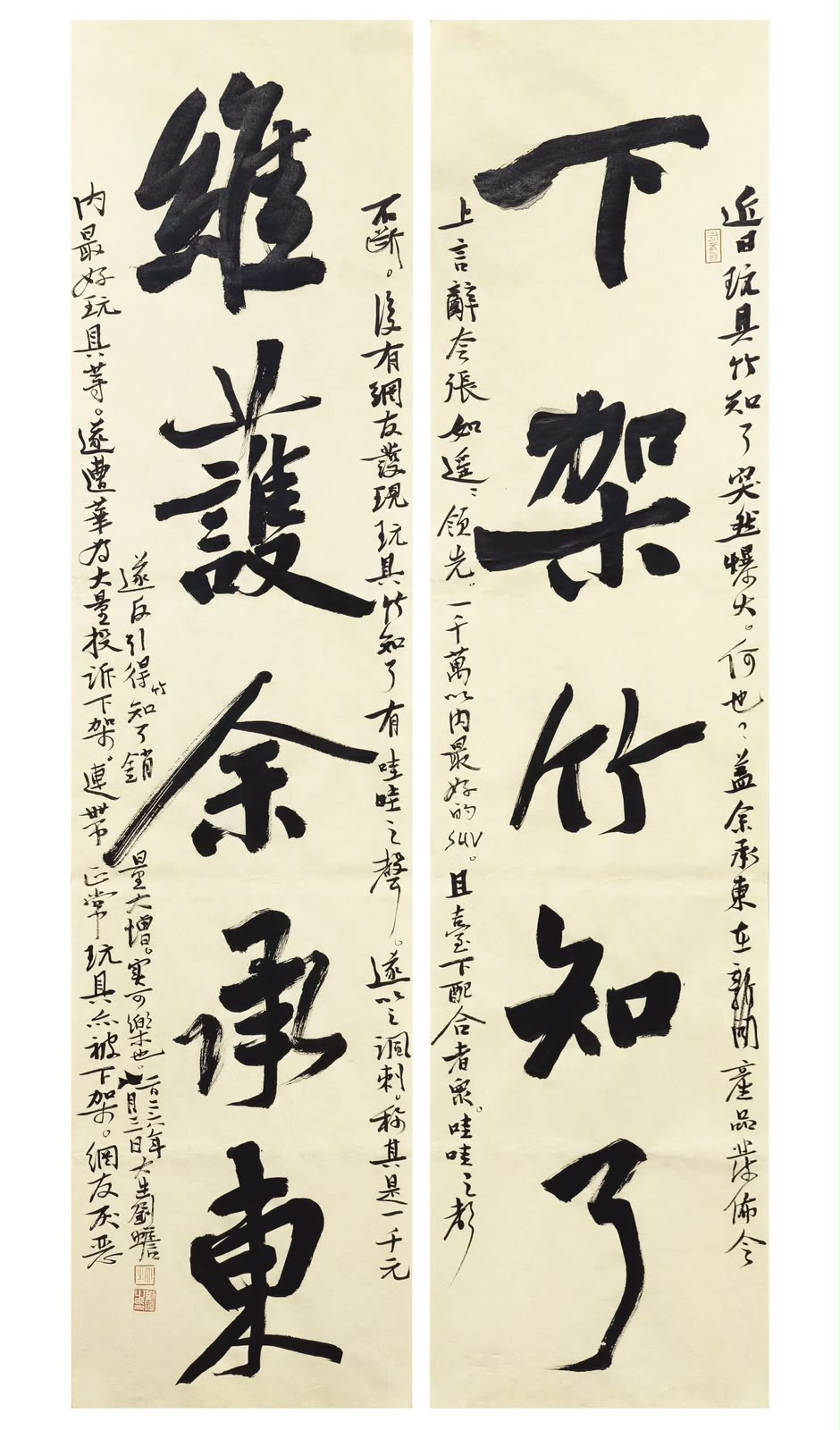
On 3 August 2026, Dasheng Liu Chan reported that:
Recently, bamboo cicada toys have taken off big time. Why, you may ask? During a product launch, Yu Chengdong [Chairman of the Board of Directors of the Consumer BG at Huawei] made an exaggerated claim that his company manufactured ‘the best SUV under 10 million yuan’. Responded with the requisite enthusiasm, his audience hailed the statement, applauding like a chorus of cicadas.
Subsequently, online jokesters realised that bamboo cicada toys made a similar buzzing noise. Thereupon they directed their satirical jibes at Yu Chengdong, even claiming that they had found ‘the best bamboo cicada under 1000 yuan’ on the market.
The onslaught of online mockery led to numerous complaints from Huawei and demands that cicada toys be withdrawn from sale. Even other inoffensive toys were taken off the shelves. The popular response to such high-handed behaviour was that sales of bamboo cicadas soared. What a hoot!
— trans. GRB
***
やがて死ぬ
けしきは見えず
蝉の声
The cry of the cicada
Gives us no sign
That presently it will die.
— Bashō 芭蕉
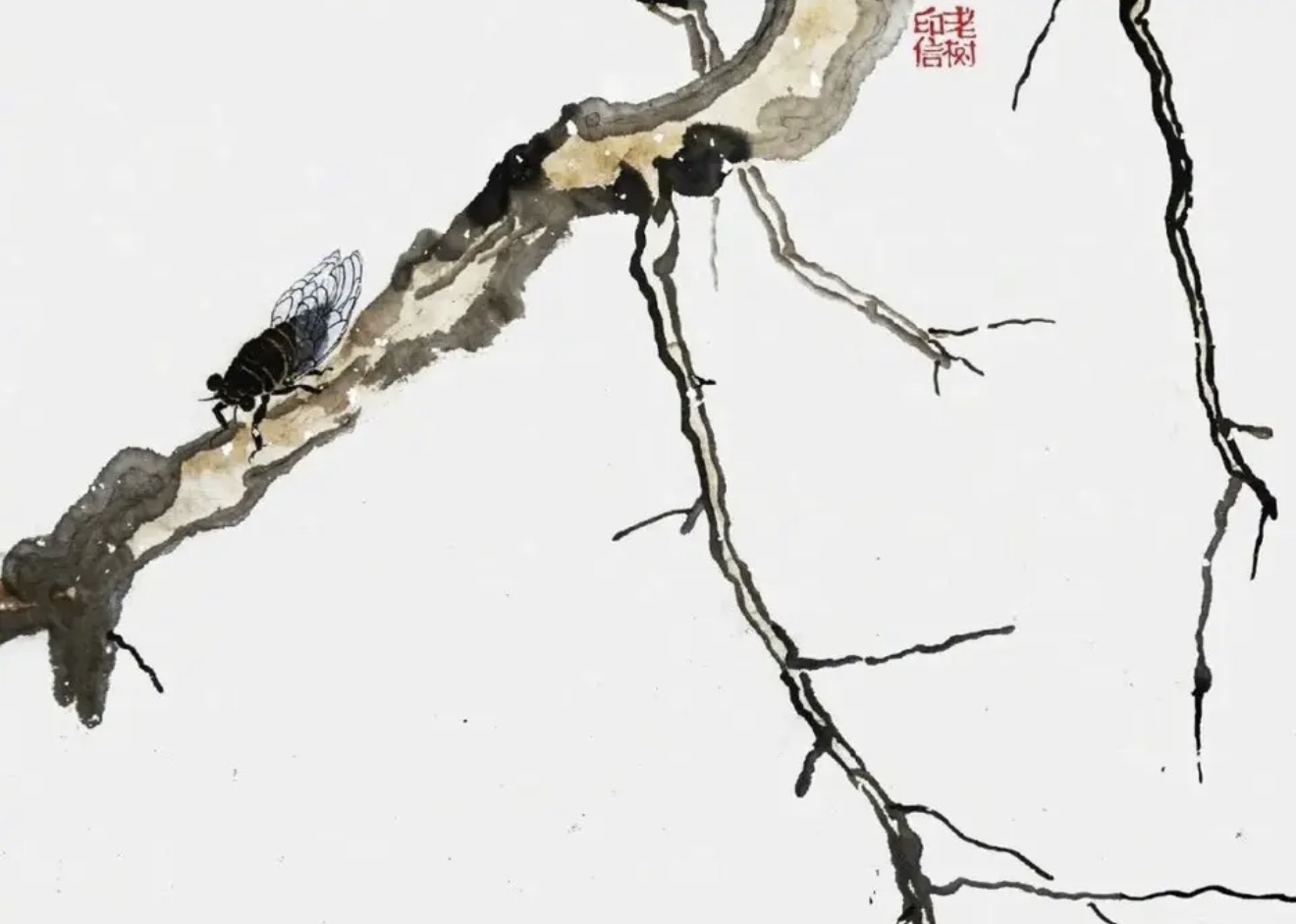
一蟬高柳嘶鳴,有人寫入《詩經》。
從此無人再見,誰知其中隱情?
今日有人重讀,千年一夢方醒。
慢慢爬出詩行,窗外吹過微風。
— 老樹,宜聽蟬鳴,《老樹日曆》,2026年8月11日
***
Huawei Mocked Over a Child’s Toy
A viral bamboo cicada joke exposed the tensions between Huawei’s status as a symbol of China’s technological rise and its role as a consumer brand.
Yuxuan Jia & Zichen Wang
Huawei has responded to one of China’s most talked-about online controversies in recent days, after a traditional bamboo toy unexpectedly sparked a public debate over how a company that has become China’s national symbol of technology against U.S. persecution should respond when its consumer products and marketing face criticism at home.
Huawei’s consumer-facing device business, including smartphones, tablets, and laptops, had been one of the company’s most important growth drivers. But that has come under severe pressure after U.S. restrictions in 2019 limited its access to key technologies, including advanced chips and Google’s mobile ecosystem for Android. The restrictions accelerated Huawei’s efforts to build a technology ecosystem of its own.
Huawei now brings its technologies into vehicles, working with carmakers on design, software, intelligent cockpits, assisted-driving systems, marketing, and retail while leaving manufacturing to its partners. The Aito M9, launched on 26 December 2023, was a flagship example of this strategy.
At the product launch, Richard Chengdong Yu, head and face of Huawei’s smart car business, described the vehicle, priced at beginning around 500,000 yuan, as “the best SUV under 10 million yuan”, generating enthusiastic response from a live audience.
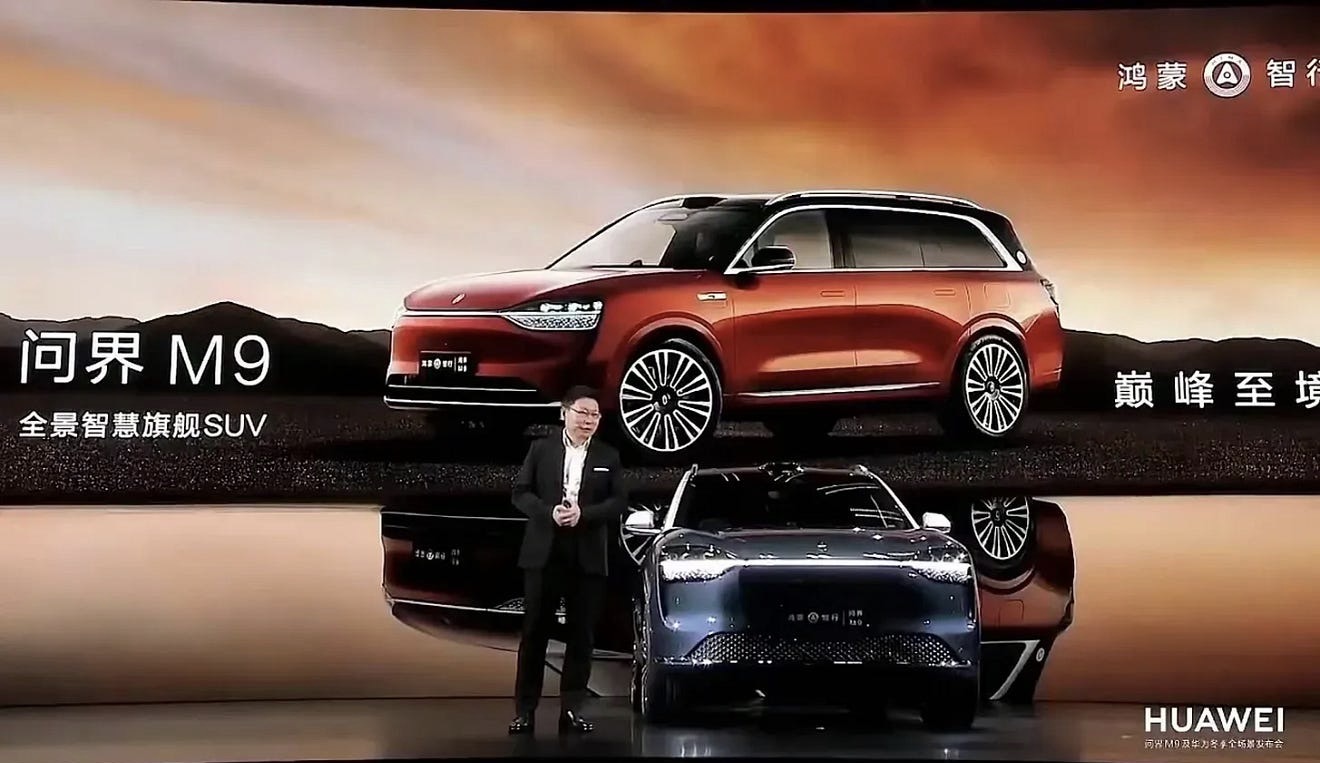
Yu has long been known for a presentation style that inspires both admiration and parody. His rapid-fire delivery, repeated catchphrases, and theatrical product claims have become familiar ingredients in Chinese internet memes and short videos.

Last month, the online meme took another form in a traditional bamboo toy. Known as a “bamboo cicada” [竹知了] in China, the handmade toy is made from bamboo pieces and strings that produce a distinctive “wa-wa” sound when spun, which users noticed bore an uncanny resemblance to the audience’s reactions at the Aito M9’s unveiling in 2023.
Soon enough, content that Huawei considered defamatory — including edited videos, manipulated audio, AI-generated images, and personal attacks against Yu — also emerged on social media platforms, prompting the company to file complaints with the platforms.
Chinese media reported one case cited by Huawei as crossing the line: a website called “Bamboo Cicada: Spin It and It Goes Wa-Wa” that transformed Yu’s image into a bamboo cicada character.
Then, in the first days of August, claims that Huawei was seeking across-the-board removal of bamboo-cicada content on social-media platforms spread wildly, intensifying criticism that the company had overreacted to a joke.
The parody also took on a commercial life of its own. Online sellers quickly capitalised on the attention, promoting bamboo cicada toys with slogans such as “Same model as Mr. Yu’s” and “the best cicada toy under 1,000 yuan”. Some promotional videos urge viewers to “buy now before it gets taken down”.
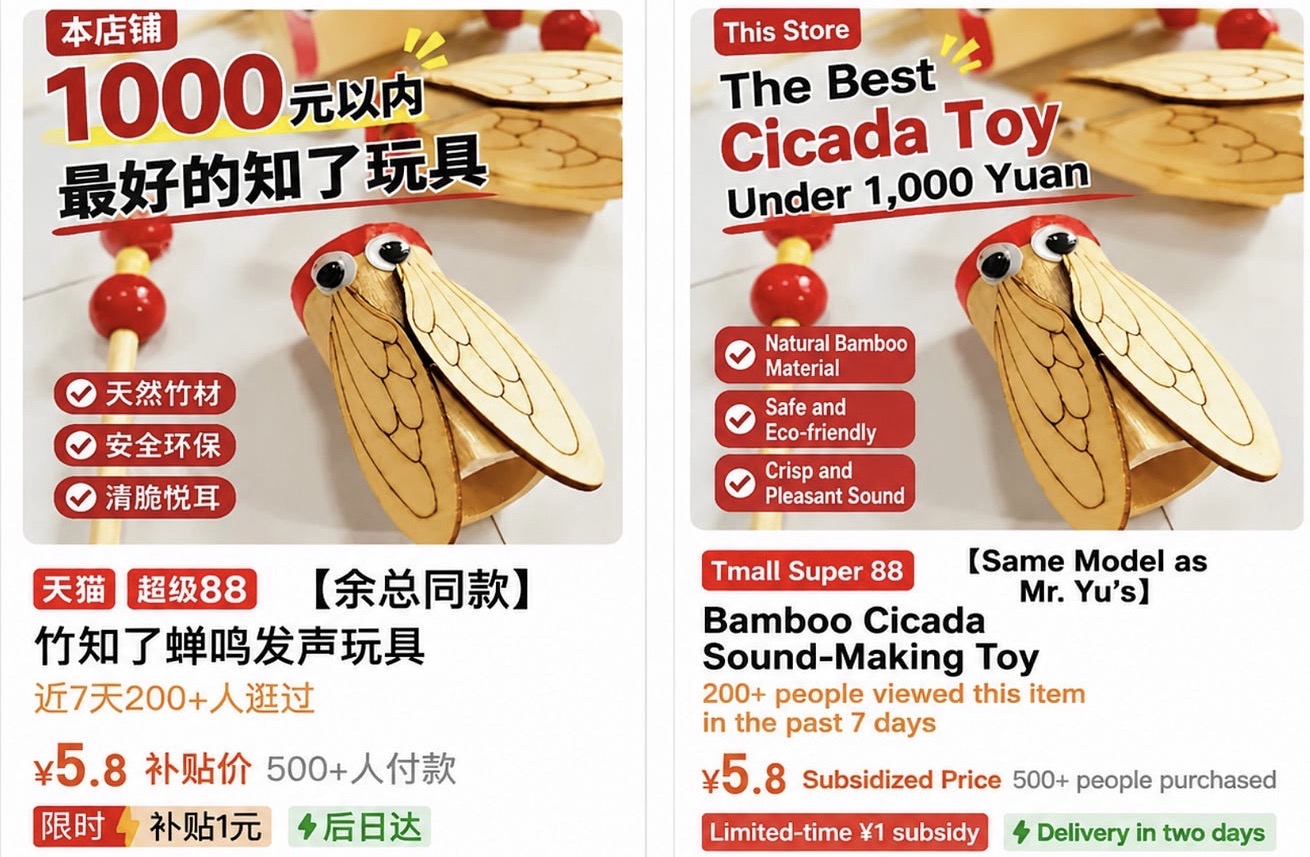
On 4 August, Huawei issued its first public statement in response to the controversy. It denied targeting bamboo-cicada toys or carrying out a sweeping removal campaign. It said it had filed complaints against only 171 pieces of content, of which 144 were removed by platforms, and stressed that these cases involved specific videos containing what it considered serious violations rather than ordinary discussion, parody, or sales of the toy.
Huawei said the complaints were part of its long-running effort to address recurring online violations of executives’ personal rights. Chinese companies broadly harbour suspicions that sustained online criticism could originate from or are amplified by commercial rivals. However, the statement did not settle the controversy.
On 5 August, Zhejiang Publicity, an influential WeChat account run by the Publicity Department of the Communist Party’s Zhejiang provincial committee, intervened with a commentary on the affair.
The commentary acknowledged Huawei’s right to defend itself against malicious rumours and commercial defamation. But it also raised a critical question: where should the line be drawn between protecting a brand’s reputation and allowing public scrutiny? Much of the bamboo-cicada debate, it noted, was not about rejecting Huawei’s technological achievements, but about questioning its public image and relationship with consumers. Treating every joke or imitation as an attack, it warned, could blur that line.
It further highlighted how Huawei’s extravagant product messaging can create its own challenges.
Categorical claims such as “the best” can make product launches memorable, but they can also invite scrutiny and become targets of satire when they appear disconnected from consumers’ experiences.
But the debate was about more than a bamboo toy or a single marketing dispute. Influential Chinese commentator Ming Jinwei, a former Huawei employee and longtime supporter of the company, explored this tension in a commentary published on 5 August, describing the existence of “two Huaweis”.
One Huawei, he wrote, is a strategically important technology company that has come to represent China’s efforts to strengthen capabilities in areas such as semiconductors and operating systems against U.S. restrictions. The other is a consumer brand selling smartphones, laptops, smart cars, and other products. In that capacity, Huawei should face the same questions as any other company: whether its products perform well, offer good value, and provide satisfactory user experiences. Criticism of those issues should not be mistaken for hostility towards a national champion.
The bamboo-cicada controversy, in this sense, was ultimately about this second Huawei.
***
Source:
- Yuxuan Jia and Zichen Wang, Huawei Mocked Over a Child’s Toy, The East is Read, 4 August 2026. The YouTube video about the incident has been added by China Heritage
***
Cats and Tigers Share a Common Ancestor

‘Cats and tigers are of a kind: When a tiger becomes the leader it is much given to willful self-importance and no one can criticise it [lit. “you can’t touch its arse”]. That’s why everyone calls it the Master of Monologue Hall. Cats are far more likable and their meowing is winsome. When they become artists they are popular with everyone. There are those who lavish them with praise and those who spray them with perfume, as well as others who caress them. But, be warned: when a cat turns on you for no reason and spits in anger, you’d better not try touching its arse. It’s then you realise that its original “tiger nature” still lurks within.’
貓虎同宗,老虎先當了領導,剛愎自用,老虎屁股摸不得,人咸稱一言堂主。小貓形象可愛,嗓音又妙,成了文藝工作者,人均愛之,捧場者有之,噴香水者有之,摸順毛者有之,偶逆其意即大叫小貓屁股也摸不得,可見虎性尚存。
— from GR Barmé, A Winking Owl, a Volant Dragon & the Tiger’s Arse
***
