Celebrating New Sinology
左道旁門
‘What use is Song poetry?’ It was 2010 and the questioner was a professor of social sciences. A few months earlier, with the support of my university and the Australian federal government, I had established a centre based on the ideas of New Sinology, which I had first proposed in 2005.
Recognising a new globalised era of China both as a burgeoning economic power and a potentially powerful cultural presence on the world stage, New Sinology proposed a holistic engagement with the Chinese world of ideas, politics and humanities. I summed up the ethos of my new centre as being an academic enterprise that was ‘grounded in the humanities, embraced the social sciences and engaged both with public policy and the public’. This wordy mantra was put into practice with the collaboration of a team of scholars drawn from a number of leading academic institutions who developed research topics, generous support for post-doctoral fellows, short courses on China for government agencies and, from 2012, a doctoral program and the launching of The China Story website (August 2012-February 2025) and The China Story Yearbook series (2012-2024).
Given the aims of the new research centre, I was invited to chair a panel created by the university in an attempt to meld the disparate programs in Chinese Studies that straddled subjects in the humanities and social sciences. Having experienced the decades-long cleft between the two, I was not surprised when the ‘conversation’ became acrimonious and the attempt at collegial integration failed. Why bother about language, culture and history since China was becoming increasingly integrated in the post-WWII global system and academia itself was following the lead of the United States? I had begged to differ from as early as the 1990s, but …
One supporter of that outspoken critic of ‘Song Poetry’ (yes, dear reader, he was an American who was weighed down by the usual disciplinary baggage) suffered from a particular form of intellectual agita. An upcoming scholar of Gender Studies — then an increasingly fashionable and well-supported field — had previously questioned the validity of New Sinology, in particular because I repeatedly suggested that today, more than at any other time in the post-Mao era, apart from one’s chosen area of academic expertise, a basic competence in literary Chinese and its complex historical, cultural and intellectual heritage, was important, and even useful. The scholar in question was primarily interested in studying subaltern women and thought that my advocacy of fustian ‘Sinology’ was misguided. For my part, I suggested that since the literary language suffused such disparate cultural works as TV court dramas, pop songs, online activities and kungfu movies, all of which required a basic competence in ‘semi-literary semi-vernacular’ 半文半白 Chinese, she might well miss out on the complex cultural terrain that underpinned the lives, imaginations and hopes of many of her subjects. But my argument left her unimpressed. The uncomfortable truth was, that beyond her narrow disciplinary nous and outside of theoretical carapace, she was fundamentally illiterate.
‘What use is Song poetry?’ It was a snarky one-liner that dismissed anything but discipline-bound academic utilitarianism. It also recalled the 1964 debate on Chinese Studies and the Disciplines (see New Sinology in 1964 and 2022 and Brian Moloughney, Sinology vs. the Disciplines, Then & Now.)
My attitude then, as now, was somewhat more relaxed. By all means pursue your disciplinary (or cross-disciplinary) studies, build a career teaching, publishing papers and monographs. Present papers, attend symposia and conferences; travel to exotic locales and edit academic tomes. But, the Chinese world, a world that makes meaning using Chinese languages, both contemporary and literary, offers a rich and rewarding realm that cannot be so confined.
At the risk of repeating myself (ad nauseam) New Sinology is a Sinology that engages with today’s Sinosphere by embracing some of the practices developed by scholars from the Late-Ming while combining a fluency in the practices of the ‘China Studies’ that developed during the Cold War with the academic disciplines that have flourished in academic institutions world wide. New Sinology engages equally with Official China via its bureaucracy, ideology, propaganda and culture, as well as with Other Chinas — those vibrant and often disheveled worlds of alterity, be they in the People’s Republic, Hong Kong, Taiwan, or scattered around the globe.
My advocacy of the study and reading of literary Chinese and attention to modern Chinese culture is not merely a way of justifying support for underfunded academic programs. As I have repeatedly argued, when things with China ‘went south’ — that is as the systemic inertia of party-state autocracy continued to cast a pall over contemporary Chinese life, as I had no doubt that it would following the events of 1989 — students and scholars would always have recourse to the vast world of literature, history and thought that made a study of China also a study of human greatness, genius and potential.
New Sinology is nothing less than a laissez-passer into the Invisible Republic of the Spirit. For many people who live in the Chinese world, or both in- and outside, the Sinosphere, because politics, culture and the realm of ideas are integral to lived reality, New Sinology is second nature.
***
What then of the political scientists who were so dismissive of Song poetry and literary Chinese back in 2010? Following estimable academic careers they, like their works, have all but faded from the scene. As Liu Jianjun, the scholar whose essay on the social sciences is reproduced below, observes, ‘most of the theories, concepts, and paradigms produced by today’s academia will be relegated to the dustbin of history’. Turning to the abiding value of literature, and by inference the humanities, he says that:
… from an aesthetic or intellectual perspective, the pleasure of reading Su Shi or William Shakespeare far surpasses anything offered by Max Weber or John Rawls. In this sense, Su Shi and Shakespeare are immortal and eternal, whereas the vast majority of social science theories are ephemeral, scarcely leaving a bubble in the vast ocean of human knowledge, not even amounting to a minor footnote.
Su Shi was, we hasten to point out, a Song-dynasty poet.
[Note: ‘Song poetry’ — the petulant polisci panjandrum quoted above used this expression to dismiss holus-bolus China’s pre-modern literary heritage. Although he landed on ‘Song poetry’, some of us who were present knew that what he really meant was 唐詩宋詞 Táng shī Sòng cí, the unparalleled corpus of poetic expression and creativity produced over a period of six-hundred-and-sixty years. It is one that continues to influence Chinese thought and culture, and even political expression, to this day. After all, Mao first expressed his vaunting imperial ambitions in a Song-style cí 詞, lyrical poem, and today Xi Jinping peppers his speeches with carefully selected lines and passages from Tang and Song poems.]
Today’s China specialists, academics, policy wonks, advisers, think-tankers, etc, would be well advised to heed Professor Liu. Making a career, or a contribution, not to mention making a buck, are all well and good, but since few people can hope to be even a ‘minor footnote’ in the study of China, and China in the world, we encourage readers to find the time to appreciate The Other China and seek solace in Intersecting with Eternity. (Also, for a selection of classical texts presented in the context of a New Sinological approach, see The Tower of Reading).
***
Celebrating New Sinology is the theme of China Heritage Annual 2025. In it we celebrate New Sinology, which I first proposed in May 2005, along with the twentieth anniversary of the publication of China Heritage Quarterly, the precursor to China Heritage.
We are also marking three decades since The Gate of Heavenly Peace, a website that I designed with Richard Gordon and colleagues at the Long Bow Group in 1995. That site — my first foray into digital publication — accompanied the screening of our documentary film The Gate of Heavenly Peace, for which I was the main writer and senior academic adviser, at the New York Film Festival in October 1995. This year also marks four decades since I was invited to work on a project that resulted in Seeds of Fire: Chinese Voices of Conscience, a book published in 1986.
This year, 2025, also marks a decade since I bid farewell to institutional academia.
***
In this chapter of Celebrating New Sinology we reproduce a translation of an essay by Liu Jianjun, a professor at Fudan University in Shanghai, published by The East Is Read, an online publication that ‘locates, summarizes, contextualizes, and translates Chinese articles, speeches, and policy documents from Chinese mainland sources.’ Edited by Zichen Wang and Yuxuan Jia, The East is Read is supported by the Center for China and Globalization in Beijing. Sihan Zhao and Yuxuan Jia, who preface a translation of Professor Liu’s essay with an editorial comment, are mindful of the controversial implications of his argument. They overlap with ‘conversations’ that I have had for over two decades, ones that are even more urgent in an unfolding era of AI-assisted scholarship in which academic logorrhoea threatens to ‘flood the zone’.
***
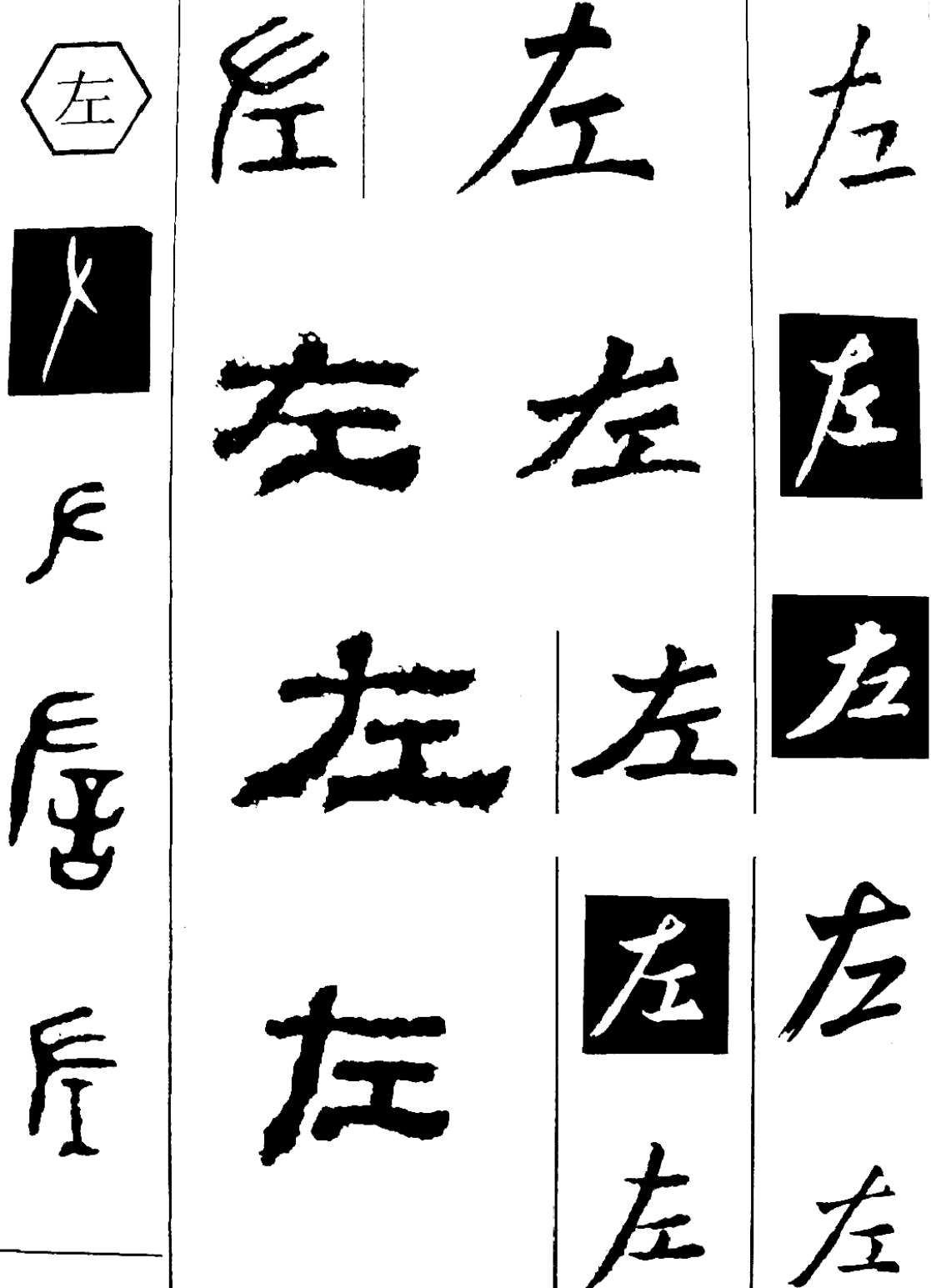
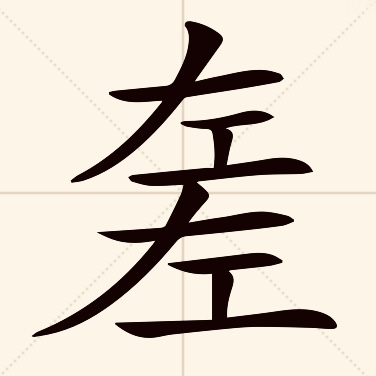
Liu Jianjun’s views are, to use an American idiom, ‘out of left field’, that is, ‘heterodox’ or 另類 lìng lèi. For this reason, we have selected左道旁門 zuǒ dào páng mén, as the Chinese rubric for this chapter in Celebrating New Sinology. It means ‘nonconformist’, or ‘unconventional’. It is a commonplace expression in modern Chinese that is drawn from a line of poetry in Investiture of the Gods 封神榜, a Ming-dynasty novel that has enjoyed a revival in popularity as a result of various online and on-screen adaptations. That line reads:
左道旁門亂似麻,
只因昏主起波查。
And can be roughly translated as:
A befuddled ruler on the throne will excite
a muddle of renegade ideas and practices.
— Geremie R. Barmé
Editor, China Heritage
16 June 2025
Liu Jianjun: the false faith in social sciences
Sihan Zhao and Yuxuan Jia
Disillusioned polisci professor at Fudan believes what he studies and teaches to be a “self-indulgent fantasy” that may be superfluous to human knowledge.
刘建军 Liu Jianjun, Professor at the School of International Relations and Public Affairs, Fudan University and President of the Shanghai Yilian Centre for Social Governance, moans [about] the “self-indulgent fantasy” of social sciences after more than 30 years navigating its tangle of paradigms, variables, and intellectual vanity. Most of it, he says, is useless and a performative means to survive.
In a blistering, almost confessional essay, Liu launches a broadside against the excesses of social science, especially political science, not just questioning its relevance to understanding and reality, but also rebuking the discipline for the “sin of knowledge”—disorienting human perceptions with a deluge of burdensome, redundant textual clutter. Drawing on everyone from Han Feizi to Henry Kissinger, Liu urges a downsizing of the field and suggests a return to practical wisdom and even literature.
This is a highly controversial view, one with which I personally disagree. In the age of artificial intelligence, the relative decline of the humanities and social sciences has sparked international debate, and it is a topic of growing concern in China as well. With the tough employment landscape, fields like the liberal arts, already challenging in terms of job prospects, are increasingly being shunned or regarded with disdain. This article may be part of that broader conversation.
We are sure criticism and denunciation will follow in response to this article. That is precisely why we have chosen to publish it.
— The East is Read, 15 June 2025
***
***
The Humanities Won’t Die Out, But They Must Downsize
Liu Jianjun
I’m writing this short piece for one reason alone: after nearly half a century of reading, my mind feels utterly exhausted. The sheer weight of so many ideas and so much knowledge has left me battered and overwhelmed. Years ago, I came across an English book titled The Sin of Knowledge. This is a rather extreme assertion, yet today’s information explosion lends it a certain validity.
This got me thinking: My intellectual world is in dire need of pruning. I must extricate myself from this oppressive realm of knowledge. Let me be clear—these reflections and judgments concern only me. Neither are they commentary on others, nor on political science or the social sciences at large. So, no need to read yourself into them. I’m simply pondering how to wring the excess from my own knowledge and travel light.
Let me state my central thesis upfront: I’ve come to believe that the vast majority of research in the social sciences—especially political science—contributes little of real value and may even be superfluous to human knowledge. If so, then neither nations nor societies need so many people devoted to studying these fields.
Ironically, it’s often those outside the social sciences who see this most clearly. They recognise that many so-called “findings” in these fields are not about uncovering truth or enlightening life, but about burdening humanity with unnecessary constructs, wishful thinking, and intellectual self-indulgence. There’s no harm in studying social sciences out of sheer interest. But to presume one’s writing can uncover truths or dictate the course of history? That’s pure delusion.
The more I read political science books, the stronger my scepticism, aversion, and despair toward the discipline grow. After more than 30 years of studying in this field, my overall impression is this: the more I read, the more confused I am, the more hollow I feel, the more ignorant I become, and the less interesting it all appears.
I once told my mentor, Professor Cao Peilin of Fudan University, that the biggest regret of my life was studying political science under him. The esteemed professor then took the time to write me a letter by hand, and its core message boiled down to two words: regret not. I now keep that letter in a treasured spot in my study, taking it out to read from time to time. To be honest, regret is pointless now! There’s no turning back in life.
So what’s to be done? My current research on the politics of capital cities is an attempt to ground political science in a tangible space, making it more concrete and engaging. In 2024, I taught a graduate course at Fudan University’s School of International Relations and Public Affairs titled “Studies on the Chinese Path to Modernisation,” aiming to steer my research toward real, substantive issues rather than obsessively hunting for independent variables like some academic predator, turning scholarship into a self-indulgent fantasy.
My intention was simple: to avoid squandering my finite life in this disheartening reverie of knowledge, to steer clear of Max Weber’s bitter, resentful, world-weary visage, and to escape the bewilderment of staring at the endless profusion of concepts devised by this master of typologies.
I have come to realise that political science is inherently fraught with paradoxes it cannot resolve. For instance, the grand principles of political science hold little value for actual politicians. Statesmen operate on much shorter time horizons when governing. Tenets like “Water that floats the boat can also sink it [Xunzi, 3rd century BC],” “The Great Wall remains through the ages, but the Qin Emperor who built it has vanished into history [Zhang Ying, 17th century],” or “Justice is the first virtue of social institutions [John Rawls, A Theory of Justice, 1971]” offer little practical guidance for the decisions and actions politicians must take in specific circumstances.
Ultimately, the connection between political science and governance is far less substantial than we imagine. Throughout history and across cultures, political science either serves politics and the state or exists as a professionalised means to survive. It is the state that dictates political science, not the other way around.
Henry Kissinger once remarked that while teaching at Harvard, he believed world events were governed by structures and laws, only to discover, in the White House, that history is shaped by the actions of specific individuals. This was no offhand comment; it reflected profound reflection. His statement stands as a fundamental rebuke to, and a scornful dismissal of, academic orthodoxy. I can only imagine how bitterly Harvard professors must have resented him.
Prof. Chen Xianda of Renmin University, in his book Philosophy and Society: Old-Age Meditations, articulated a point that struck me as profoundly true:
I often remind myself: I am a bookish intellectual. Apart from having read a few books, I know far too little about society and lack practical experience. For a Marxist theorist, this is a fatal flaw. We pontificate on the laws of historical development while remaining ignorant of human history; we hold forth on globalisation without ever having set foot beyond the nation’s borders; we expound on governance without having held even one official post—not so much as a team leader; we debate fairness and justice through abstract notions of “ought” and “is,” yet remain blind to the concrete realities of social polarisation. At least the armchair strategist Zhao Kuo [3rd century BC] had studied military texts extensively—we fall short even by his standard. We write about what we do not understand, as if ideas could emerge from writing alone. But they do not. An empty mind produces empty words. When emptiness meets emptiness, the result is utter hollowness. What flows from blood vessels is blood; what flows from water pipes is water.
There is only one society, so why are there so many theories? Some say the mass of theories stems from society being more complex than the natural world. But I’ve come to believe that this complexity is largely imagined. Society is not inherently so intricate, nor does it possess so many dimensions and variables—these are impositions forced upon it by people. Life cannot bear the weight of so much theory. The excess of theories leaves me gasping for air.
In universities, students of social sciences are tormented by this relentless barrage of theories. The sheer volume is not a sign of intellectual abundance but of bewildering disorder, leaving one utterly lost. To put it bluntly, many theories are nothing more than reckless talk, baseless fabrications, and sheer arrogance. The secret to producing theories is to complicate simple issues. The more convoluted it gets, the more theories multiply—until even their creators can no longer make sense of what they have said.
The social sciences do not need this many theories, nor does society itself contain them. A state nearing collapse breeds excessive regulations; a mind nearing stupidity breeds excessive thoughts. All the excessive notions and theories are, in truth, burdens upon life and civilisation. Han Feizi [Chinese Legalist philosopher, c. 280 – 233 BC] once warned: “If he sees too much, his eyes will not be bright. If he hears too much, his ears will not be sharp. And if his thinking and worry go beyond the limits, his wisdom and knowledge will be confused.”
Today, social sciences worldwide are charging headlong down a path that glorifies research techniques, fractures social realities with the language of variables and causal mechanisms, and plunges into a self-congratulatory abyss. Social sciences in the U.S. embody this tendency most fiercely and extremely. Social sciences research has not only devolved into a means to survive and performative display but has also rendered the world of knowledge increasingly complicated. Our students are left to flounder in this labyrinth of complexity, utterly disoriented. Some even stake their lives on it, becoming sacrificial offerings to the false idols of social science. It is truly heartbreaking. After more than thirty years of teaching at universities, I am increasingly convinced that social science education has betrayed its original purpose.
Take political science as an example—in truth, ninety per cent of its books are burdens on knowledge, some even amounting to sins of knowledge. Based on my modest experience, mastering political science essentially requires reading just three categories of thinkers, each likely comprising no more than twenty individuals. Even someone like Alexis de Tocqueville wouldn’t make the list; he was at best a clever and perceptive chronicler of political observations.
As Prof. Chen Xianda said, “Most of us authors are ‘thieves,’ pilfering the ideas of others. Our writings can only be called ‘reading reflections,’ a regurgitation of past thinkers or classical theories. True thought is original, articulating what no predecessor has. I myself have not produced a single such piece.” This isn’t humility on Prof. Chen’s part; the reality is that almost no one has. Given this, the number of books truly worth our earnest engagement is vanishingly small. Below, I outline the three categories of thinkers or texts that merit such attention:
(1) Social thinkers who shaped the course of civilisation
Very few social thinkers have exerted a substantive influence on the course of human civilisation. Most writings are mere self-indulgent fantasies, utterly detached from civilisation and reality. The genuine shapers include Confucius, Jesus, Buddha, Muhammad, Adam Smith, John Maynard Keynes, John Locke, Karl Marx and Friedrich Engels, Dong Zhongshu, Cicero, and others. Such thinkers who have left a lasting mark on the arc of civilisation are few and far between. One might argue that nearly everyone, everywhere, today lives within the intellectual legacy of these figures.
(2) Statesmen who transformed the world
Changing the world is far more difficult than understanding or interpreting it. As Marx put it: “Philosophers have only interpreted the world in various ways; the point, however, is to change it.” The doctrines and grand principles that are the pride of political scientists have little relevance to how statesmen actually reshape the world. History records no statesman who governed according to a theoretical framework of causality, a conceptual model, or an academic paradigm. Truly great politicians continuously refine their ideas, theories, wisdom, and skills through arduous practice.
Among statesmen throughout history and across civilisations, only a select few have established enduring institutional legacies, exerted lasting influence, and effected substantive transformations of the political world. Representative figures include Qin Shi Huang, Mao Zedong, Deng Xiaoping, George Washington, Abraham Lincoln, Franklin Roosevelt, Napoleon Bonaparte, Charles de Gaulle, Winston Churchill, Peter the Great, and Joseph Stalin.
(3) Thinkers (scholars) who influenced the structure of knowledge
Setting aside those scholars who merely produce textual clutter, the ones who warrant our attention are those who have shaped the structure of knowledge. Most of these figures are academics, especially university professors in the modern era. They are deeply enamoured with their own words, convinced that their writings can shape society and history. This belief, however, is a grand delusion.
Today, students in the social sciences spend their days wrestling with these figures, whose works are often labelled “classics.” As a university professor, I’ve seen countless students tormented by these texts, finishing them only to remain just as confused. And many professors who teach these works fit Professor Chen’s description: people with no real-world experience beyond academia. Those teaching diplomacy have never practised it; those lecturing on management have never managed anything; those expounding on governance have never even led a small team. That’s why I often tell my students: As things stand, your social sciences professors aren’t much wiser than you are!
The thinkers who shaped the structure of knowledge are few. Those deserving a place on our reading list include Plato, Aristotle, Augustine of Hippo, Thomas Aquinas, Laozi, Max Weber, Émile Durkheim, Michel Foucault, Jean-Jacques Rousseau, Liang Qichao, and others. Of the three categories I’ve outlined, this is the one whose works should be read the least. Most of them are also manufacturers of intellectual baggage and complications. They invent concepts but do not shape civilisation.
Of course, some will disagree, convinced that their own words can command history, sway the world, or reshape others. Yet the truth is, much of what’s been written—whether books or papers—is little more than verbal accumulation. In today’s age of information overload, most academic works likely have only two readers: the editor and the author. Online, their fate is also simple—they gather likes, not readers!
Friedrich Nietzsche proclaimed, “God is dead.” But in the end, it wasn’t God who died—it was Nietzsche himself. As one thought-provoking advertisement put it: “Nietzsche says, ‘God is dead.’” God says, ‘Nietzsche is dead.’”
To be honest, the influence of nearly all scholars today is confined within academic institutions and libraries, and even that influence is often a fiction.
The Social Sciences Will Always Remain Subordinate to Literature
Let me make one final point: the social sciences will always remain subordinate to literature. Reading literary works is infinitely more fun than studying social science! Decades from now, most of the theories, concepts, and paradigms produced by today’s academia will be relegated to the dustbin of history, whereas classics such as Romance of the Three Kingdoms, Water Margin, Journey to the West, and Dream of the Red Chamber, or works by Yu Hua, Liu Zhenyun, and Mo Yan, will still be read.
When it comes to shaping political perceptions and judgment among the Chinese people, Romance of the Three Kingdoms has far exceeded the influence of Records of the Three Kingdoms, the official historical account. As Honoré de Balzac observed, “A novel is regarded as the secret history of a nation.” [Chinese novelist Chen Zhongshi cited this quote at the beginning of his 1993 novel White Deer Plain, sourced probably from Balzac’s Avant-propos to La Comédie humaine: “I might succeed in writing the history forgotten by so many historians—the history of manners, customs, and morals.”] And indeed, a nation’s secret history is not found in social science theories, but in its literature.
[Note: See Ren Jingjing, Which “Forty Thousand Words” Are We Mourning? — The Textual Fate, Aesthetic Power, and Enduring Significance of Chen Zhongshi’s White Deer Plain, Chinese Literature and Arts, 16 June 2025 — The Editor, China Heritage.]
In fiction, everything but the names and places may be true; in the social sciences, everything but the names and places may be false. Literature reveals truth; social sciences are false. This, after three decades of studying political science, is my most profound realisation.
Though this view may seem extreme, the current trajectory of the social sciences has confirmed it beyond doubt. Much of the material used in scientific research in the name of science is artificially constructed. Even setting that aside, from an aesthetic or intellectual perspective, the pleasure of reading Su Shi or William Shakespeare far surpasses anything offered by Max Weber or John Rawls. In this sense, Su Shi and Shakespeare are immortal and eternal, whereas the vast majority of social science theories are ephemeral, scarcely leaving a bubble in the vast ocean of human knowledge, not even amounting to a minor footnote.
In summary, studying social sciences or political science should not be so exhausting. The deluge of theories, paradigms, variables, and concepts ultimately becomes burdensome, redundant knowledge. To torment oneself and one’s students with such excess is a sin of knowledge. What I am doing now is streamlining and downsizing my intellectual world, striving for a simpler, clearer, and healthier way of life. While talk of the “decline of the humanities” may be overly pessimistic, a “downsizing of the humanities” is definitely necessary.
***
Source:
- Sihan Zhao and Yuxuan Jia, Liu Jianjun: the false faith in social sciences, The East is Red, 14 June 2025. (The subheading ‘The Social Sciences Will Always Remain Subordinate to Literature’, a line drawn from Professor Liu’s text, was added by China Heritage.) For the original Chinese text, see 刘建军,文科不会消亡,但需要缩水,上海益联社会治理促进中心,2025年1月21日. The Shanghai Yilian Centre for Social Governance describes itself as a non-governmental organisation dedicated to supporting community development and social governance through research, policy consulting, institutional development, and project design. It is led by Liu, the author of the present essay.
***