Seeds of Fire 40th Anniversary
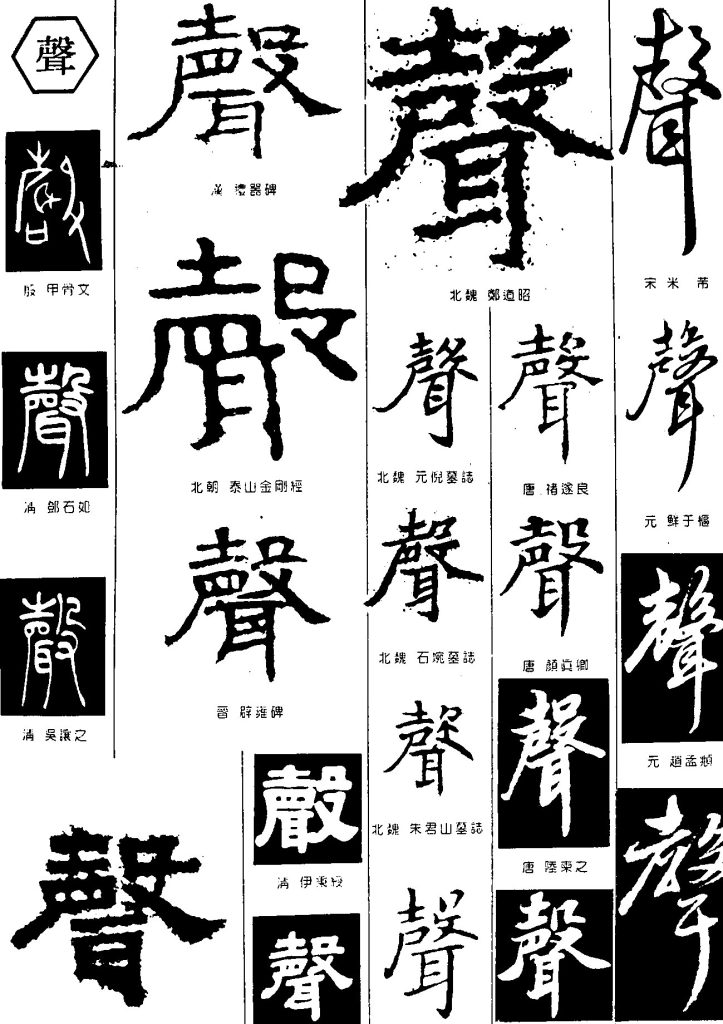
The human chorus is incomplete without your voice.
This quotation comes from an interview with Dave Eggers, writer, publisher, teacher, on the Wild Card podcast. During the conversation, Eggers says that he tells his students that:
Your voice is the only thing that you have naturally. It’s the one thing that nobody can replace. And so let’s hear your truth. Even if it’s raw, even if it’s unpolished, even if it doesn’t come in the five paragraph essay or whatever, like let’s have it straight from you.
— from Dave Eggers on why using AI to speak for you “is such a crime against yourself”, Wild Card, 11 June 2026
***
Dave Eggers came to fame with his memoir A Heartbreaking Work of Staggering Genius, published in 2000. Friends at the Long Bow Group in Boston urged me to read it. We were working on wildly contrasting film projects, one on America as seen through the story of Las Vegas. The draft work was titled American Armageddon. The other was a documentary film about China’s own cataclysm, the Cultural Revolution. After September 11, it was all but impossible to secure funding for Armageddon. Work on Morning Sun 七八點鐘的太陽, however, proceeded. Co-directed with Carma Hinton and Richard Gordon, our film premièred at the 53rd Berlin Film Festival in February 2003.
Although I was not as enamoured of Dave Eggers’ writing as my Boston friends, I continued to follow his work, in particular Timothy McSweeney’s Quarterly Concern. His project Voice of Witness, founded in 2004, also resonated with me.
***
For nearly half a century ‘voices’ have featured prominently in my work. For the most part, these have been Chinese voices, voices heard and recorded in interviews, voices expressed in prose, poetry, theatre, film and art, daring and uplifting voices, voices of conscience and protest, as well as disagreeable voices. Some of those disagreeable voices, both past and present, have wanted to drown out others that they find discordant, disturbing or dissident.
Silent China has been a deafening reality of the Xi Jinping era (2012-) and since being founded in 2016, China Heritage has had an interest in listening to those voices that would challenge the silence. As I said when launching China Heritage in December 2016:
Next year [2017] marks the centenary of the start of China’s New Culture Movement, a movement that advocated mass literacy and writing. At this conference one of your guiding lights is Lu Xun, who died in 1936. In 1927, as I noted in the above, he gave a lecture in Hong Kong called ‘Silent China’ 無聲的中國. In it he spoke of the ‘fearful inheritance’ 可怕的遺產 of China: the burden of the classical written language and its limitations. He called for the use of vernacular that could truly give voice to the aspirations of the Chinese. But Lu Xun knew better than most that language itself did not determine reality — though he did not live to see the fearful miscegenation of modern Chinese with its mangled European-ised syntax and vocabulary, classical affectation and the wooden parole that I have described elsewhere as New China Newspeak 新華文體. Towards the end of his talk Lu Xun said:
Youth must first transform China into a China with a voice. They must speak boldly, move forward courageously, forget all considerations of personal advantage, push aside the ancients, and express their authentic feelings. … Only an authentic voice will be able to move the Chinese and the world’s people; it is necessary to have an authentic voice so that we may live in the world with others. [trans. Theodore Huters]
The propagandists and socialist-nationalists of the People’s Republic would claim that they speak with just such a voice, and that Xi Jinping’s version of The China Story is the sole true, authentic version of China and account of the Chinese. You must determine that for yourselves, find your authentic voice and decide if and when you might ‘speak boldly, move forward courageously’.
— quoted in A Raid on the Kingdom of the Past
***
Next year, 2027, marks one hundred years since the outbreak of China’s Civil War. Over the century, the conflict has stopped and started, mutated and evolved. The differences between the two entities involved in the struggle — the Beijing party-state and the Taiwanese republic — are stark. One of the most important of these relates to free speech, journalism and academic independence.
In his Wild Card interview, Dave Eggers talks about self-expression in the age of AI, an era from which it seems none, be they in the Chinese People’s Republic or on Taiwan — or anywhere else for that matter — will be able to find an easy refuge.
***
This chapter in Seeds of Fire, a series that commemorates four decades since the publication of Seeds of Fire: Chinese Voices of Conscience, should be read in conjunction with an earlier chapter in the series titled ‘Silence, silence! Unless we burst out, we shall perish in this silence!’.
— Geremie R. Barmé
Editor, China Heritage
15 June 2026
What is something you want younger generations to understand?
Dave Eggers: Well, I’ll go on my Al rant because I do this once a week with students. And I was at a high school class the other day and when a teacher asked me like last words, I’m always like: Well, listen, we’re in this era where all of these my kids are 17 and 20. I’m in high schools all the time. They’re more tempted and this is the first time in history when a whole generation is being told or tempted to have a machine write for them to express themselves. But I say like you are one of one unprecedented in the history of human evolution. There’s only one of you. If your name is Asher, you know, Asher’s never been before you. There’s never been you ever and there never will be another one of you.
So to give your voice to a machine to say speak for me, I’m going to be silent and I’m going to tell a machine to express myself or to tell my narrative is such a crime against yourself. It’s so dystopian beyond anything I could do in a dystopian novel and I did a lot. I never saw this coming [that there] would be an entire generation tempted and too many of them acquiescing to the silencing of their own voice in favor of a bland unthinking machine to voice their souls. I mean who [snorts], what dystopian novelist would ever think that this was possible? But if you can tell them, even your roughest drafts, even your most disjointed seeming thoughts are going to be valid. And your voice is essential. The human chorus is incomplete without your voice.
And I’m going to listen to whatever you say, even the rough drafts, whatever. I want those. I want to see it all. Then we can make sure that that they’re heard and that they feel like there are humans out there that want to hear that voice and not the machine processed voice. So, that’s my advice. Good lord, we’re at a really scary time, you know, but every adult has to be that person. Every teacher, every parent has to be the one saying, “Do not do this.” Your voice is the only thing that you have naturally. It’s the one thing that nobody can replace. And so let’s hear your truth. Even if it’s raw, even if it’s uh unpolished, even if it doesn’t come in the five paragraph essay or whatever, like let’s let’s have it straight from you. So l love it when they hand write in class, which a lot of teachers are having their students do right now. And I love it when anything that takes them away from processing it through, or giving your voice to a machine.
— from the machine-generated transcript of Wild Card (minute 39:08 to 42:02), polished by China Heritage.
***
Dave Eggers’ Wild Card Interview
Wild Card is a celebrity podcast series hosted by Rachel Martin and produced by NPR. In 2024, The New York Times listed Wild Card as one of the ten best podcasts of the year.
***