
This is the eighty-second chapter in Other People’s Thoughts, a China Heritage series inspired by a compilation of quotations put together by Simon Leys (Pierre Ryckmans), one of our Ancestors, during his reading life.
Pierre remarked that the resulting modest volume of quotations was ‘idiosyncratically compiled for the amusement of idle readers’ (see Simon Leys, Other People’s Thoughts, 2007). Our aim is similar: to amuse our readers (idle or otherwise); as is our modus operandi: to build up an idiosyncratic compilation, one that reflects the interests of The Wairarapa Academy for New Sinology and its coterie.
In collecting this material, and by adding to it over time, we accord also with a Chinese literary practice in which quotations — sometimes called yǔlù 語錄, literally ‘recorded sayings’ — have a particular history, and a powerful resonance.
The most famous collection of recorded sayings is The Analects 論語, compiled by disciples of Confucius. Then there is the timeless 5000-words of Laozi’s The Tao and the Power 道德經, as well as the Chan/Zen 禪宗 tradition of what in English are known by the Japanese term kōan 公案, dating from the Tang dynasty. Modern imitations range from the political bon mots of Mao Zedong to excerpts from the prolix prose of Xi Jinping’s tireless speech writers, and published snippets from arm-chair philosophers and motivational speakers.
Other People’s Thoughts also finds inspiration in the ‘poetry talks’ 詩話, ‘casual jottings’ 筆記 and ‘marginalia’ 眉批 of China’s literary tradition.
***
As is now customary in Other People’s Thoughts, this chapter in the series also includes videos and illustrative material. Our thanks to Reader #1 for sharing Simon Schama’s comment on the ‘book-drunk’ Founding Fathers of the United States of America.
— Geremie R. Barmé
Editor, China Heritage
10 July 2026
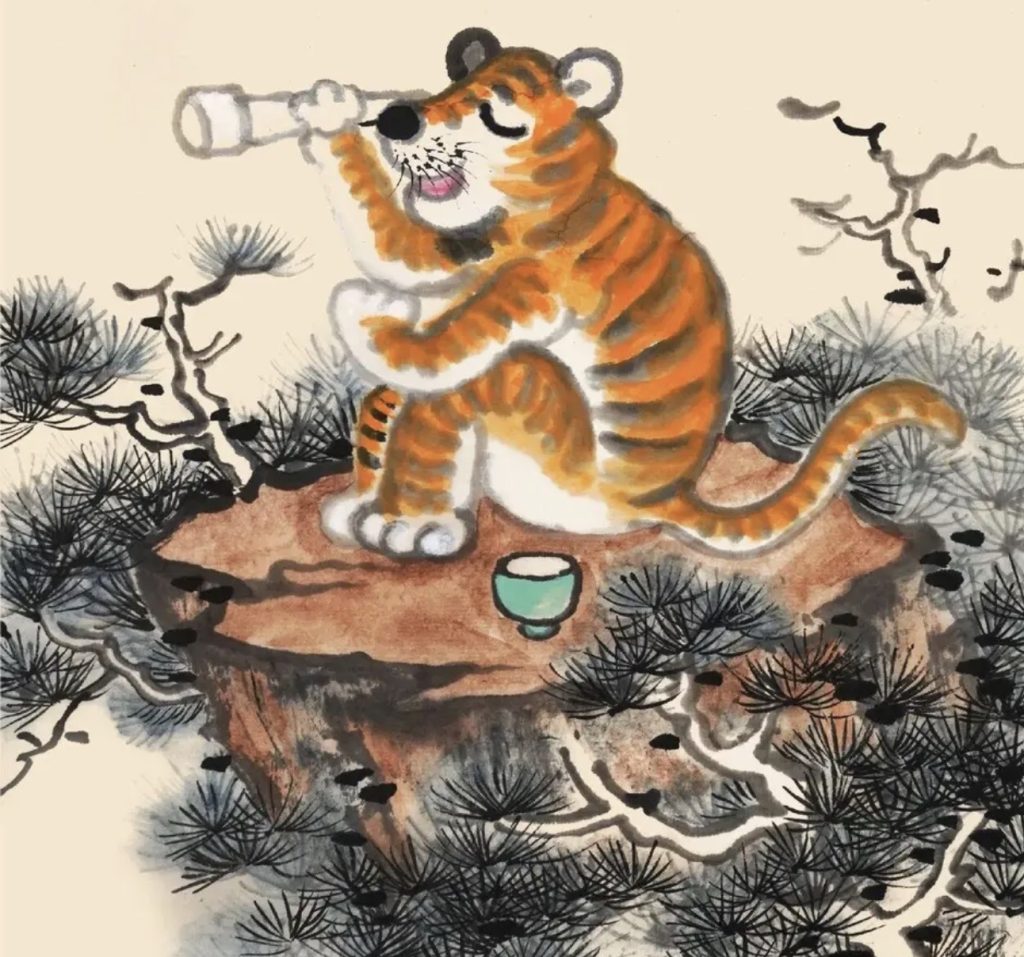
過去已經過去,
當下總在徘徊。
不妨滿懷希望,
憧憬一下未來。
The past is long gone and done with,
now we simply waiver in the present.
Maybe try and fill yourself with hope,
perhaps even imagine a better future.
— Lao Shu 老樹
trans. GRB
老樹,向前看,《早安》,網易網,2026年7月10日
***
Other People’s Thoughts LXXXVII
Trump to Zelensky: “Would you go to Moscow?” Zelensky; “It’s difficult. There are a lot of Ukrainian drones there. It’s very dangerous.”
— NATO meeting, Ankara, 8 July 2026
The Grifter Reich
We live in Grifter Hell. America, The Grifter Reich, has exported a mode of rabid turbo-hustling that has spread like black mould through the minds of people the world over. The global economy is a human centipede of conmen — giant sperm whales being fed upon by a seemingly infinite stream of self-sucking minnows.
— Patrick Marlborough, The Yea Nah Review, 2 July 2026
色而不淫
問君薄肌似輕綢,不猛不猙自帶柔,
腹有輕痕三四縷,腰無贅肉一痕收,
若肯燈前掀半角,勝看明月上西樓。
— Neruda Ling
***
Macbeth’s Dagger
Is this a dagger which I see before me,
The handle toward my hand? Come, let me clutch thee.
I have thee not, and yet I see thee still.
Art thou not, fatal vision, sensible
To feeling as to sight? or art thou but
A dagger of the mind, a false creation,
Proceeding from the heat-oppressed brain?
I see thee yet, in form as palpable
As this which now I draw.
Thou marshall’st me the way that I was going;
And such an instrument I was to use.
Mine eyes are made the fools o’ the other senses,
Or else worth all the rest; I see thee still,
And on thy blade and dudgeon gouts of blood,
Which was not so before. There’s no such thing:
It is the bloody business which informs
Thus to mine eyes. Now o’er the one halfworld
Nature seems dead, and wicked dreams abuse
The curtain’d sleep; witchcraft celebrates
Pale Hecate’s offerings, and wither’d murder,
Alarum’d by his sentinel, the wolf,
Whose howl’s his watch, thus with his stealthy pace.
With Tarquin’s ravishing strides, towards his design
Moves like a ghost. Thou sure and firm-set earth,
Hear not my steps, which way they walk, for fear
Thy very stones prate of my whereabout,
And take the present horror from the time,
Which now suits with it. Whiles I threat, he lives:
Words to the heat of deeds too cold breath gives.[a bell rings]
I go, and it is done; the bell invites me.
Hear it not, Duncan; for it is a knell
That summons thee to heaven or to hell.
— William Shakespeare, Macbeth, Act 2 Scene 1
Aspen Vacuum
This is what the end of history looks like, in practice, thirty years on. Not the calm liberal-democratic plateau Fukuyama imagined in 1992, but a panel on which the man who declared the end of history sits next to the man who is engineering its end, and the room cannot tell the difference between them. …
A pope of the Roman Catholic Church, an American, called for international regulation of a technology that its builders will not restrain. And in response, one of the most powerful venture capitalists in America [Peter Thiel] told a room of your peers that this pope is an agent of the Chinese Communist Party, and your peers laughed.
— Mike Brock, The Room at Aspen, Notes from the Circus, 3 July 2026
The Germans have a saying, that if 10 people are at a table, and a Nazi arrives, and everyone continues conversing with the Nazi, you have 11 Nazis.
Don’t Die
Bryan Johnson, the tech millionaire spending heavily in a quixotic effort to avoid death, has received yet another stark reminder of his terminal mortality.
Last week, Johnson announced he has been diagnosed with autoimmune gastritis, an incurable disease that causes the immune system to attack healthy stomach cells. “My stomach is eating itself,” he wrote.
Normally, such a diagnosis would be no laughing matter. But we can make an exception for Johnson, one of the more ridiculous characters to emerge during Silicon Valley’s pivot to AI psychosis. Johnson, who claims he will not die, has started a cult movement called Don’t Die, which is based on convincing gullible people that death is optional (and getting them to buy the health supplements Johnson sells).
— Gil Durán, Bryan Johnson’s Diagnosis Exposes Billionaire Death Panic, The Nerd Reich, 8 July 2026
Down Under
In Australia
Inter alia,
Mediocrities
Think they’re Socrates.
— Peter Porter
***
***
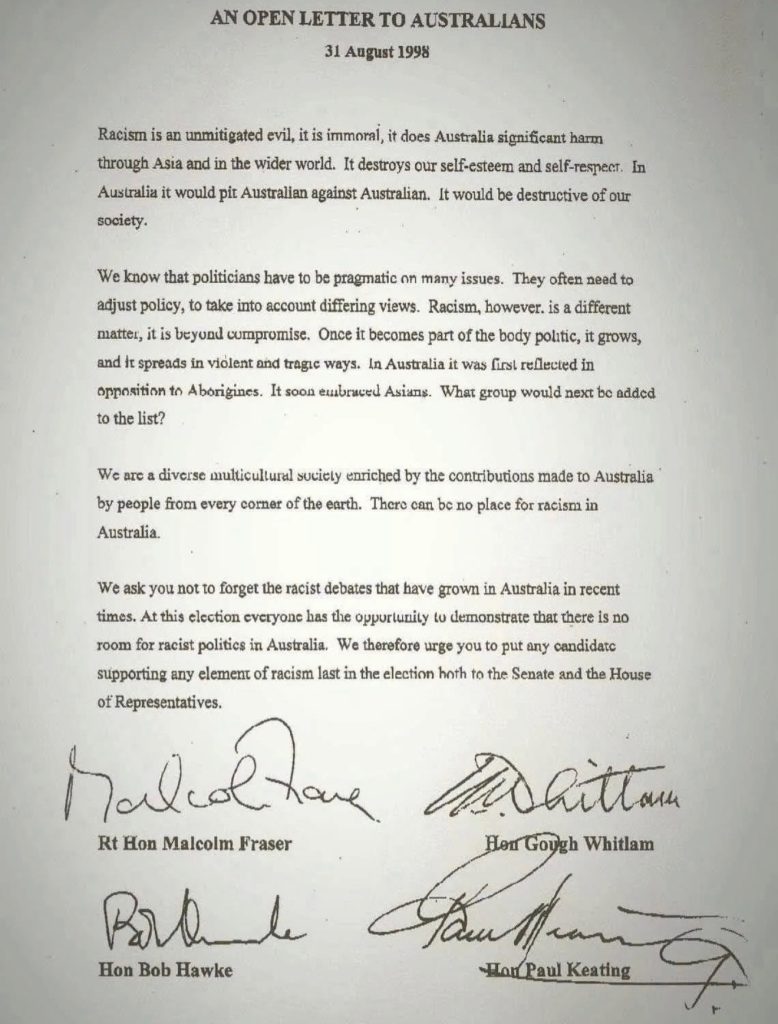
This is a special kind of loathsomeness: a blend of historical deafness, grotesque stupidity, and comically ludicrous self- importance. As if the little people’s rage against immigration somehow is superior to the war against the 3rd Reich and entitles this comic book nobody to lecture the actual heroes.
***
At 250
***
The Founders, on the other hand, were book-drunk, endlessly pondering, weighing, conversing about what they had read. They constituted the most consequential book club there has ever been, and their true religion was the mighty force of words.
— Simon Schama, The founding fathers and the battle for America’s future, Financial Times
I thought Meat Neck would be bad for the country, but I hadn’t thought he would be effective enough to be catastrophic. But he didn’t need to be effective, I realized. There was a violent, angry streak under the skin of the country. All we needed was a leader who celebrated it and it would push to the surface. Scarier than the laws would be what was socially permissible, what was not worth prosecuting, what was not worth stopping.
— Rebecca Novack, Murder Bimbo, 2026, p.87
During the American Revolution, British Member of Parliament John Sinclair wrote a letter to Adam Smith. He was worried about how badly the war was turning out for Britain. “If we go on at this rate, the nation must be ruined,” he wrote, emphasis in the original. Smith’s response was one of the wisest things he ever said. “Be assured, my young friend, that there is a great deal of ruin in a nation.”
***
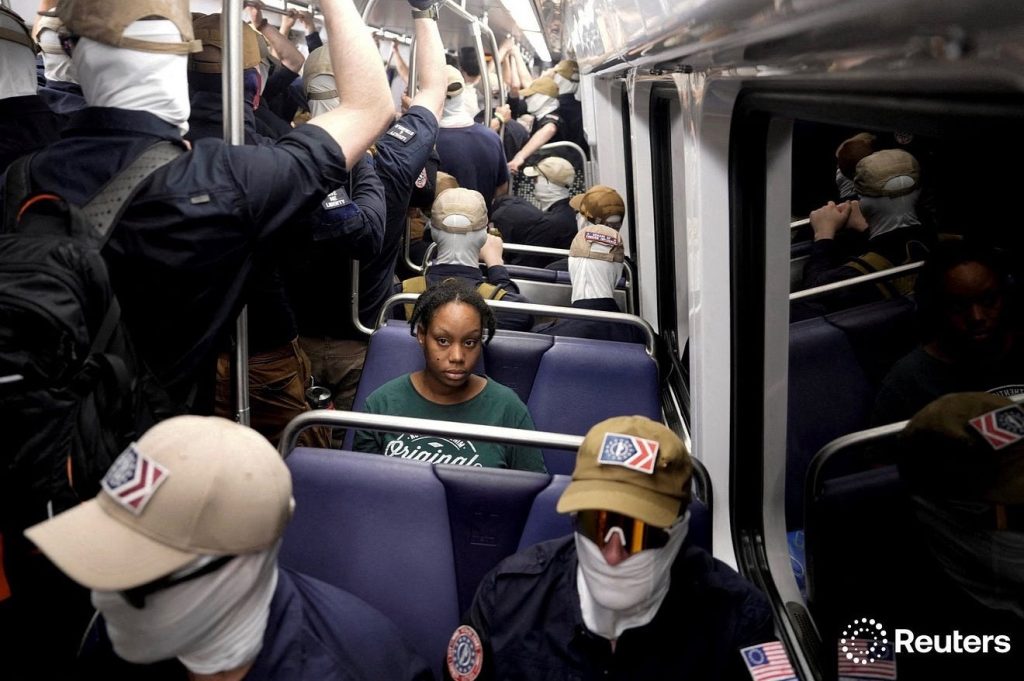
Seen on the Fourth of July 2026
***
I’m not lighting fireworks this Fourth of July. I’ll light candles: for Palestine’s slain children, Iran’s slain children, America’s slain children. I’ll light candles for the world no one deserved.
My daughter asked me if I loved America, and this is what I said. I know it is what I said because she made me write it down. “I love this country more than anyone I know,” I told her. “But you have to love it honestly. This country has done acts of incredible evil, almost unparalleled evil. And you have to be honest about that. In order to love it, you need to be honest. You can only love the good things and then be honest about the rest. Then your love will be honest too.” She nodded and said she understood. “But you have to be that way about people too,” I said, my voice breaking. “And that is the hardest thing.”
— Sarah Kendzior, The Last American Road Trip: A Memoir
State of the Nation
NATO WASN’T THERE WHEN WE NEEDED THEM, AND THEY WON’T BE THERE IF WE NEED THEM AGAIN. REMEMBER GREENLAND, THAT BIG, POORLY RUN, PIECE OF ICE!!! President DJT, 8 April 2026
“Mate. You run a country with 600,000 homeless people sleeping on the street tonight. A country where 40% of adults can’t cover a $400 emergency without borrowing money. A country where insulin costs more than a car payment and people are rationing it to survive. A country where medical debt is the number 1 cause of bankruptcy. A country where women are dying in hospital car parks because doctors are too scared of abortion laws to treat a miscarriage.
You lock up more of your own citizens than any nation on earth. More than China. More than Russia. More than North Korea. The land of the free has 2 million people in cages, and a quarter of them haven’t even been convicted of anything. They’re just too poor to make bail.
Your life expectancy is going backwards. You’re the only developed nation where that’s happening. Your infant mortality rate is worse than Cuba’s. Your kids do active shooter drills between maths and English while you sell the gunmaker’s stock to your mates.
Your minimum wage hasn’t moved in 15 years. You’ve got teachers working 2 jobs and veterans sleeping under bridges and you just spent a trillion dollars flattening a country that didn’t attack you.
And you’ve got a convicted felon, adjudicating raping, paedophile protecting, porn star shagging insurrectionist running the biggest dumpster fire war campaign since the Taliban thanked you very much for losing again.
And you’re calling Greenland poorly run?
Greenland has universal healthcare. Free education. One of the lowest incarceration rates in the world. Nobody goes bankrupt there because they got sick. Nobody dies in a waiting room because their insurance said no.
‘NATO wasn’t there when we needed them.” When exactly was that, champ? September 11? Because NATO invoked Article 5 for the first and only time in history FOR YOU. Soldiers from dozens of countries deployed, fought, bled, and died in Afghanistan FOR YOU. Australia wasn’t even in NATO and we still showed up. For 20 years.
And you pulled out at 2am without telling anyone and left them to deal with the mess.
So maybe before you start calling other countries poorly run, have a look at your own backyard, you spray-tanned aluminium siding salesman. The only thing poorly run in this picture is your fucking mouth.”
— IFLA
***
The Addams Family: the healthiest family on TV
***
Ho Wan Kwok 豪萬郭
Attorney for the United States, Sean S. Buckley, Acting under Authority Conferred by 28 U.S.C. § 515, announced that MILES GUO, a/k/a “Ho Wan Kwok,” a/k/a “Guo Wengui,” a/k/a “Brother Seven,” a/k/a “The Principal,” a/k/a “Boss,” was sentenced yesterday by U.S. District Judge Analisa Torres to 30 years in prison for racketeering conspiracy, conspiracy to commit wire fraud, securities fraud, and money laundering, among other charges, for leading an expansive and complex scheme to solicit more than $1 billion of investments in various entities and programs through false statements and misrepresentations to thousands of GUO’s online followers. On July 16, 2024, GUO was convicted following a seven-week jury trial.
— Southern District of New York, Miles Guo Sentenced To 30 Years In Prison For Leading Billion-Dollar Fraud, United States Department of Justice, 30 June 2026
***
“Ballad of the Skeletons” — Allen Ginsberg’s Centennial, 3 June 2026
***
東南西北
敗北
“敗北”之“北”,並非方位,實為“背”的通假字,意指轉身背離。古時兩軍對陣,短兵相接;一旦潰敗,士卒轉身奔逃,以背向敵,故稱“北”。後世將此義與“敗”相合,凝固為“敗北”一詞,泛指戰事失利、競技落敗或事業受挫。
歸西
此詞深植於華夏文化的空間觀念與宗教想象。傳統視野中,西方為日落之處,象徵歸寂;佛教又有“西方極樂世界”之說,故西方常被視作靈魂歸宿與往生之所。由此,“歸西”漸成死亡的委婉說辭,在諱言生死的語境中,為生命終局平添一份莊重與安寧。
做東
其源出自古人的建築格局與賓主禮儀。傳統宅院多坐北朝南,主人居東廂,賓客處西廂;宴飲之際,主位在東,客位在西,以明尊卑、顯禮敬。於是,“東”引申為主人代稱,“做東”遂成請客設宴、主持飯局的雅稱。
南牆
傳統北方四合院坐北朝南,大門內側正對一堵影壁,便是“南牆”。它橫在進門必經之路,意在擋煞遮景,亦提醒來人需繞行而入。執拗不知變通者,往往直撞其上。久而久之,“南牆”便成了執念與碰壁的象徵。“不撞南牆不回頭”這句俗語,將處世的迂迴智慧藏於方位建築之中,直白而警醒。
回南
今日我們依託衛星雲圖與超級計算機,可實時追蹤颱風動向,氣象部門亦能通過網絡、媒體發佈預警。而在科技未興的古代,先民身處狂風驟雨之中,全憑經驗判斷颱風是否遠去。粵、閩、浙等沿海地區,百姓世代相傳一條樸素的生存智慧——觀風向是否“回南”。颱風肆虐時,眾人閉門不出;唯有閱歷深厚的長者一句“回南了”,便知風雨將歇、險情已過。在通訊不便的年月,這短短一語,便是最令人心安的氣象預報。至此,“回南”亦如“敗北” “歸西” “做東” “南牆”一般,凝練為一枚承載地域智慧與人文溫度的傳統語匯。
— 朱東海,中華傳統名詞:敗北、歸西、做東、南牆、回南,《美中時報》
***
費事
***
Si hortum in bibliotheca habes, nihil deerit.
‘If you have a garden in your library, you will lack nothing.’
— Cicero to Varro in 46BCE, Epistulae ad Familiares, Book 9, Epistle 4
Advice
Folks, I’m telling you, birthing is hard and dying is mean — so get yourself a little loving in between.
— Langston Hughes
少而又少
口中言少,自然禍少;腹中食少,自然病少;心中欲少,自然憂少;身上事少,自然苦少;大悲無淚,大悟無言。人活著,不能一切都向錢看。不求一生福,只求眼下好。
— 養真集
The ABC
‘Twas midnight in the schoolroom
And every desk was shut
When suddenly from the alphabet
Was heard a loud “Tut-Tut!”
Said A to B, “I don’t like C;
His manners are a lack.
For all I ever see of C
Is a semi-circular back!”
“I disagree,” said D to B,
“I’ve never found C so.
From where I stand he seems to be
An uncompleted O.”
C was vexed, “I’m much perplexed,
You criticise my shape.
I’m made like that, to help spell Cat
And Cow and Cool and Cape.”
“He’s right” said E; said F, “Whoopee!”
Said G, “‘Ip, ‘Ip, ‘ooray!”
“You’re dropping me,” roared H to G.
“Don’t do it please I pray.”
“Out of my way,” LL said to K.
“I’ll make poor I look ILL.”
To stop this stunt J stood in front,
And presto! ILL was JILL.
“U know,” said V, “that W
Is twice the age of me.
For as a Roman V is five
I’m half as young as he.”
X and Y yawned sleepily,
“Look at the time!” they said.
“Let’s all get off to beddy byes.”
They did, then “Z-z-z.”
— Spike Milligan, The ABC
As Long as There Is Death, There Is Hope
Einstein is dead. Schopenhauer is dead… and I’m not feeling so well myself!
— Brother Theodore
***
40歲以後的心態
***
***
“有” 與 “無” 之間
案頭攤著幾幅舊藏書畫,紙頁泛著歲月的沈黃,想來這些筆墨珍跡,從古至今,經了多少藏家之手,聚聚合合,散散分分,從來沒有定數。
世間人物亦復如是。生生死死,去去來來,舊影漸遠,新聲又起,像檐前日月交替,像階下草木枯榮,循環往復,不曾停歇。
捨身投入這萬丈紅塵,功過榮辱,情緣得失,萬般世事都在 “有” 與 “無” 之間流轉。人這一生,也便在這得失起落里,兜兜轉轉,徘徊往復,終是看不破,也逃不脫。
— 老樹,宜沈思,《老樹日曆》,2026年7月3日
***
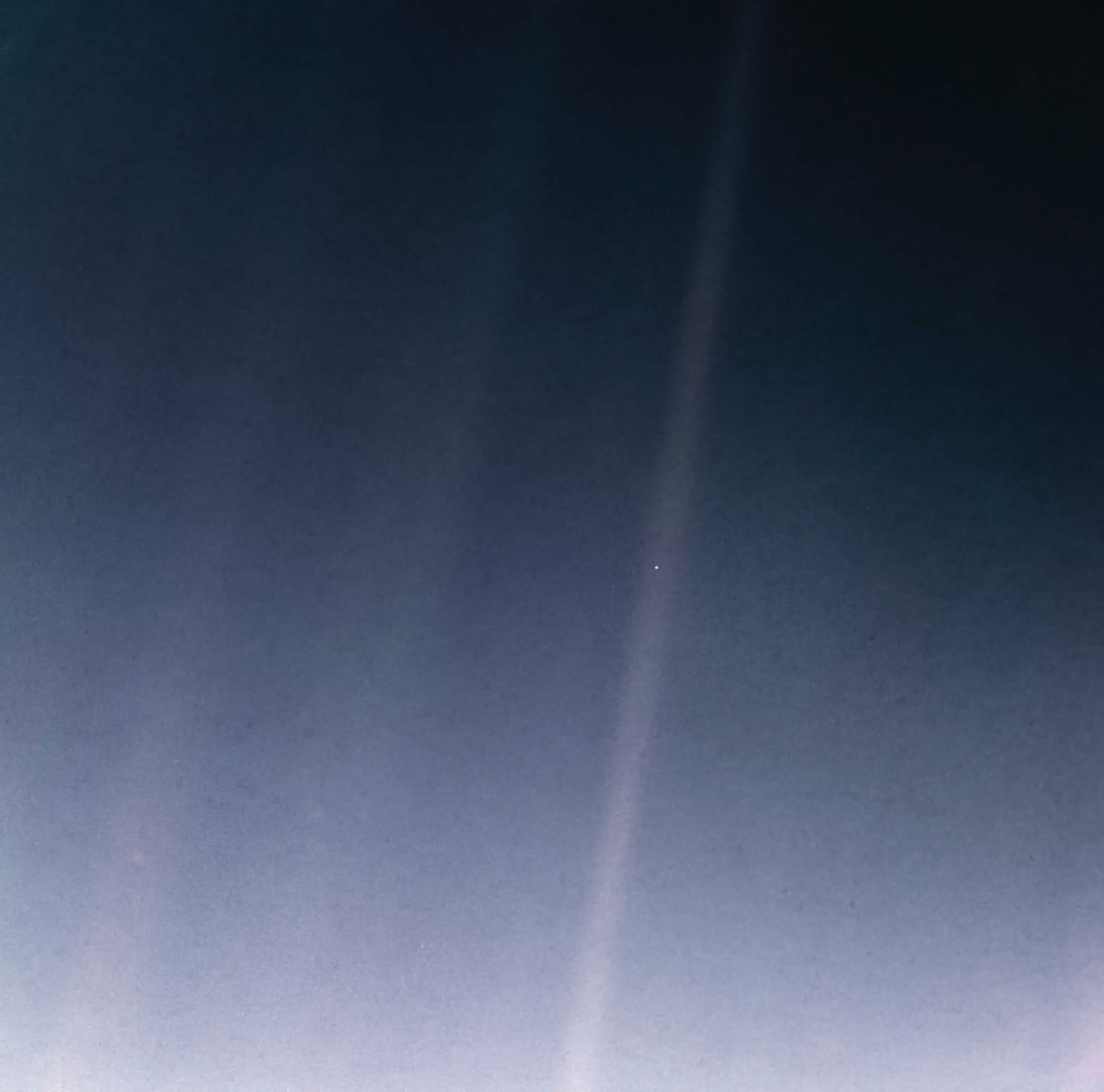
The Pale Blue Dot
Look again at that dot. That’s here. That’s home. That’s us. On it everyone you love, everyone you know, everyone you ever heard of, every human being who ever was, lived out their lives. The aggregate of our joy and suffering, thousands of confident religions, ideologies, and economic doctrines, every hunter and forager, every hero and coward, every creator and destroyer of civilization, every king and peasant, every young couple in love, every mother and father, hopeful child, inventor and explorer, every teacher of morals, every corrupt politician, every “superstar,” every “supreme leader,” every saint and sinner in the history of our species lived there—on a mote of dust suspended in a sunbeam.
The Earth is a very small stage in a vast cosmic arena. Think of the rivers of blood spilled by all those generals and emperors so that, in glory and triumph, they could become the momentary masters of a fraction of a dot. Think of the endless cruelties visited by the inhabitants of one corner of this pixel on the scarcely distinguishable inhabitants of some other corner, how frequent their misunderstandings, how eager they are to kill one another, how fervent their hatreds.
Our posturings, our imagined self-importance, the delusion that we have some privileged position in the Universe, are challenged by this point of pale light. Our planet is a lonely speck in the great enveloping cosmic dark. In our obscurity, in all this vastness, there is no hint that help will come from elsewhere to save us from ourselves.
The Earth is the only world known so far to harbor life. There is nowhere else, at least in the near future, to which our species could migrate. Visit, yes. Settle, not yet. Like it or not, for the moment the Earth is where we make our stand.
It has been said that astronomy is a humbling and character-building experience. There is perhaps no better demonstration of the folly of human conceits than this distant image of our tiny world. To me, it underscores our responsibility to deal more kindly with one another, and to preserve and cherish the pale blue dot, the only home we’ve ever known.
— Carl Sagan, Pale Blue Dot, 1994