Celebrating New Sinology
維恆之蔭德
‘Translating 里 as “tricent” today in memory of Victor Mair, who was a generous scholar and a kind and decent man.’
This note by Brendan O’Kane, characteristically arch and affectionate, alerted me to Victor’s death on Sunday, 28 June 2026.
I had long thought of Victor Mair (梅維恆, 25 March 1943-28 June 2026) as being what Jao Tsung-I (饒宗頤, 1917-2018), the Grand Old Man of Chinese Letters in Hong Kong, would have recognised as a Complete or Comprehensive Scholar 通人, that is, an academic whose learning was grounded in the diverse fields of Chinese as well as universal intellectual and cultural pursuits.
Shortly after I proposed the concept of New Sinology in 2005, some of his former students, writing in a festschrift to mark Victor’s sixtieth year, observed that:
Victor has always cast his nets widely, and he could routinely amaze us with observations far afield from the Chinese text we were reading in class. Today people often attempt to simulate this cosmopolitanism under the rubric of interdisciplinary study, but for Victor, it was quite untrendy: he simply had an insatiable appetite for knowledge and pushing boundaries. Indeed, border-crossing has been our mentor’s dominant mode of scholarship, a mode that has constantly interrogated where those very borders are both geographically and categorically. Though never sporting fashionable jargon, Victor has always taken on phenomena and issues that engage aspects of multiculturalism, hybridity, alterity, and the subaltern, while remarkably grounding his work in painstaking philological analysis. Victor demonstrates the success of philology, often dismissed as a nineteenth-century holdover, for investigating twenty-first-century concerns.
— from The Scholarly Contributions of Professor Victor H. Mair, in China at the Crossroads:
A Festschrift in Honor of Victor H. Mair, Asia Major, vol.19, no.1/2 (2006)
These observations resonated with the academic milieu in which I, too, had been educated.
***
When I mentioned Victor’s death to Duncan Campbell, a dear friend and frequent contributor to my online pursuits, we both thought of the opening line of In Praise of Boyi 伯夷頌, an essay by Han Yu 韓愈 of the Tang dynasty:
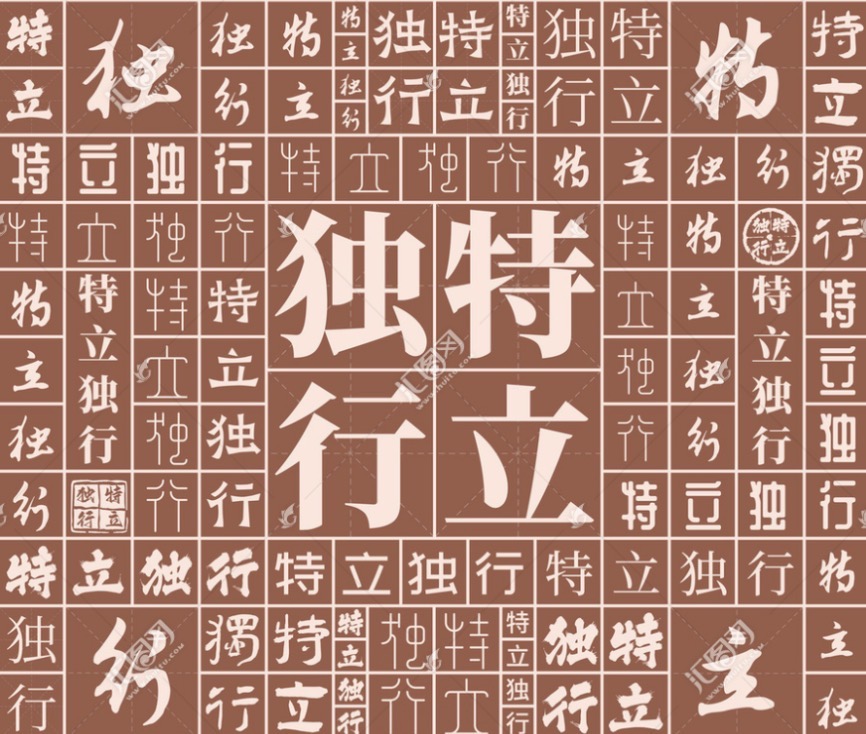
士之特立獨行,適於義而已,不顧人之是非,皆豪傑之士,信道篤而自知明者也。
Scholars who stand alone and act independently, with the sole purpose of complying with the principles of righteousness, without regard to the views of others, are outstanding men, who have profound faith in the Way and know themselves clearly.
***
My email correspondence with Victor increased in frequency following the sudden notoriety of Professor Xu Zhangrun 許章潤, the Tsinghua academic who came to fame in July 2018 when he published an unsparing critique of Xi Jinping (see Imminent Fears, Immediate Hopes — a Beijing Jeremiad 我們當下的恐懼與期待).
Victor was as much taken with Professor Xu’s unique, and lapidary, style of written Chinese as he was with his dissection of Xi Jinping’s agenda. Every time I sent him a new essay by Zhangrun, Victor would immediately respond. More often than not, he wondered out loud why the becalmed Beijing academic had not been jailed. He was impressed by Zhangrun’s unwavering stance, one that summed up in his declaration that:
I will not submit,
I will not be cowed.
老子不服,老子不怕.
***
The work of China Heritage, both in relation to Xu Zhangrun and to his fellow men and women of conscience, is summed up in a famous maxim that links Wang Guowei (王國維, 1877-1927) and Chen Yinque (陳寅恪, 1890-1969, aka Chen Yinke):
independent spirit and unfettered mind
獨立之精神,自由之思想
Along with Victor Mair, I believe that we are all citizens of ‘the invisible republic of the spirit’.
***
Upon reading the present modest commemoration of Victor Mair, Professor Xu Zhangrun wrote:
梅老遽歸道山,悲乎,悲乎!又一個可堪引為道友的正派之士走了,心中便多了一個空洞。而老一代漢學家絡繹凋零之時,正是這個世界時代風雨飄搖之際,嗟乎!
— Geremie R. Barmé
Editor, China Heritage
3 July 2026
***
On Boyi:
In Praise of Boyi
Han Yu
translated by Shih Shun Liu
Scholars who stand alone and act independently, with the sole purpose of complying with the principles of righteousness, without regard to the views of others, are outstanding men, who have profound faith in the Way and know themselves clearly. There are only a few who can press forward persistently and are not beset by doubts despite the objections of the family. There is only one in the whole empire who can press forward persistently and is not beset by doubts despite the objections of the whole state or prefecture. There is only one in a hundred years or a thousand years who can press forward and is not beset by doubts despite the objections of the whole world.
士之特立獨行,適於義而已,不顧人之是非,皆豪傑之士,信道篤而自知明者也。一家非之,力行而不惑者,寡矣。至於一國一州非之,力行而不惑者,蓋天下一人而已矣。若至於舉世非之,力行而不惑者,則千百年乃一人而已耳。
A man like Boyi[1] went so far as to disregard even heaven and earth and the judgment of numberless generations after him in order to do what he thought was right. In his presence the sun and moon had no luster, the Tai Mountains[2] lost their altitude, and heaven and earth dwindled in capacity.
若伯夷者,窮天地,亘萬世而不顧者也。昭乎日月,不足爲明;崒乎泰山,不足爲高;巍乎天地,不足爲容也。
When the Yin dynasty came to an end and the Zhou dynasty rose to replace it, a worthy man like Viscount Wei[3] had left the former with his sacrificial vessels, and sages like King Wu and the Duke of Zhou attacked the Yin dynasty in conjunction with the empire’s distinguished scholars and its feudal lords. No one was ever heard to disapprove of them. However, Boyi and Shuqi[4] were the only ones that disagreed.
當殷之亡,周之興,微子,賢也,抱祭器而去之,武王周公,聖也,從天下之賢士,與天下之諸侯,而往攻之,未嘗聞有非之者也。彼伯夷叔齊者,乃獨以爲不可。
After the extinction of the Yin dynasty, the whole empire pledged allegiance to the Zhou dynasty. Only these two men were ashamed of eating at the hands of the new regime, even at the risk of starving to death. Were they seeking after something that they behaved thus? No, they were merely men who held firm convictions and knew themselves well.
殷旣滅矣,天下宗周。彼二子乃獨恥食其栗,餓死而不顧。繇是而言,夫豈有求而爲哉。信道篤而自知明也。
The so-called scholar of today feels elated even when an ordinary mortal compliments him, and imagines himself lacking when an ordinary mortal obstructs him. On the contrary, Boyi had the courage to express his disapproval of the sages and felt sure of himself, though these sages were indeed held up as examples for numberless generations to come. That is why I say that a man like Boyi stood alone and took independent action in disregard of heaven and earth and the judgment of posterity. However, but for these two men, rebellious ministers and villainous sons would have followed in succession in later generations.
今世之所謂士者,一凡人譽之,則自以爲有餘,一凡人沮之,則自以爲不足。彼獨非聖人,而自是如此。夫聖人乃萬世之標準也。余故曰,若伯夷者,特立獨行,窮天地、亙萬世而不顧者也。雖然,微二子,亂臣賊子接跡於後世矣。
Notes:
- Eldest son of the ruler of Guzhu 孤竹君, whose domain extended through parts of modern Hebei, Liaoning and Inner Mongolia.
- High mountain range extending through Shandong Province.
- Elder brother of Emperor Zhou 紂 of the Yin dynasty, whose rule was overthrown by the Zhou 周 dynasty.
- Younger brother of Boyi who died of starvation with him after the fall of the Yin dynasty.
***
Source:
- Classical Chinese Prose — The Eight Masters of the Tang-Sung Period 唐宋八大家文選, Selected and Translated by Shih Shun Liu with Notes and Chinese Texts, A Renditions Book, Hong Kong: The Chinese University Press, 1979, pp.38-40. Wade-Giles romanisation of Chinese names converted to Hanyu Pinyin by China Heritage
***