Contra Trump
越瘦秦肥
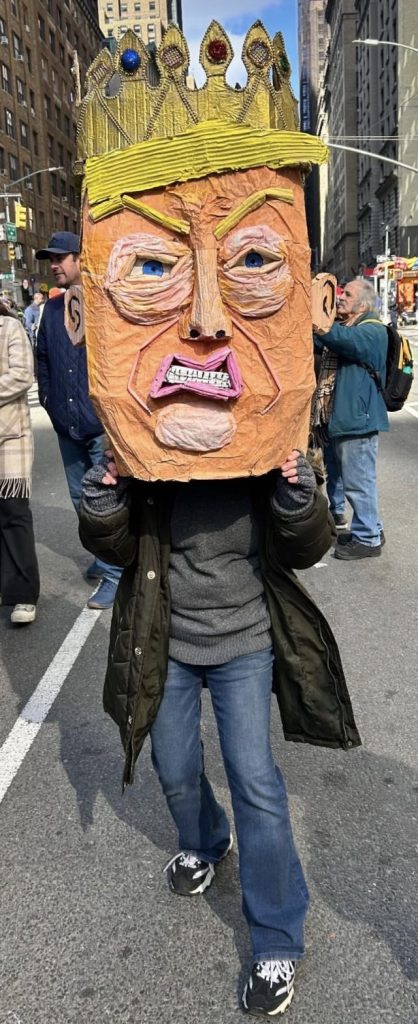
The focus of this chapter of Contra Trump is No Kings Day, 28 March 2026. We featured earlier mass protests against Donald J. Trump’s rule organised under the banner of No Kings in:
Here we commemorate the mass demonstrations with an essay by Chris Hedges in which he comments on the empty heart of America’s autocrat. It can also be read as a psychological portrait of Mao Zedong, the Chinese leader with whom we compared Donald Trump a decade ago (see: A Monkey King’s Journey to the East).
***
Following Mao Zedong’s death in 1976, China experienced a partial de-maoification, one that was both a spontaneous popular rejection of High Maoism (c.1956-1976) and the commandeering presence of Mao Zedong himself as well as being engineered and directed by the Communist Party, an organisation that was ‘in recovery’ following the decade of devastation wrought by Mao’s Cultural Revolution. At the height of China’s post-Mao hangover, Sun Jingxuan 孫靜軒, a writer in Sichuan, eloquently summed up the dark legacy of the past and the looming threat it posed to the future in a poem titled ‘A Spectre Prowls Our Land’ 一個幽靈在中國大地遊蕩.
We have repeatedly featured Sun’s poem, first in 1986, in Seeds of Fire: Chinese voices of conscience, and a number of times in the first decade of China Heritage. Since 2012, Xi Jinping’s rule over what we think of as China’s ‘semi-feudal social-capitalist’ system has demonstrated that Sun’s trepidation over the ‘spectre haunting China’ was prescient.
***
As we have argued for many years, the United States and the People’s Republic of China share a great deal in common. It is in their worldly materialism that they are most alike, even though both promote their own brand of numinous nonsense when it comes to the sanctity of the state and its historical mission. They respectively champion systems that amass wealth for favoured individuals and war as the average punter — nowadays often referred to as ‘garlic chives’ 韭菜 in China fuels the system. Commentators on geopolitics have a penchant for quoting a line from The Melian Dialogue in Thucydides’s History of the Peloponnesian War; it is just as relevant when discussing the autocratic systems of China and the United States:
The strong do what they can and the weak suffer what they must.
China’s ‘Epstein class’ of interconnected privilege, presumption and prestige is hidden behind a system of secrecy that has been rigorously developed and jealously guarded since the Yan’an days of the 1940s. The raw reality of America is far more confronting, even as its operations are labyrinthine in their workings. In 2026, it is piquant to observe that some who seek to flee the egregious malevolence of Trump’s America believe they can find solace in the fictions of Xi Jinping’s frictionless China and its ersatz values. Neither is a refuge, though there might be a scintilla of mutual recognition.
Geremie R. Barmé
28 March 2026
No Kings Day
***
***
… Have you seen
The Spectre prowling our land?
You may not recognise him,
though he stands before your eyes,
For like a conjurer,
master of a never-ending transforming,
One moment in a dragon-robe of gold brocade
He clasps the dragon-headed sceptre,
The next in courtier’s gown
He swaggers through the palace halls;
And now — behold — a fresh veneer!
The latest fashion! And yet
No mask, no costume, no disguise
Can hide the coiled dragon
branded on his naked rump…
— from Sun Jingxuan, ‘A Spectre Prowls Our Land’, trans. John Minford with Pang Bingjun 龎秉鈞
***
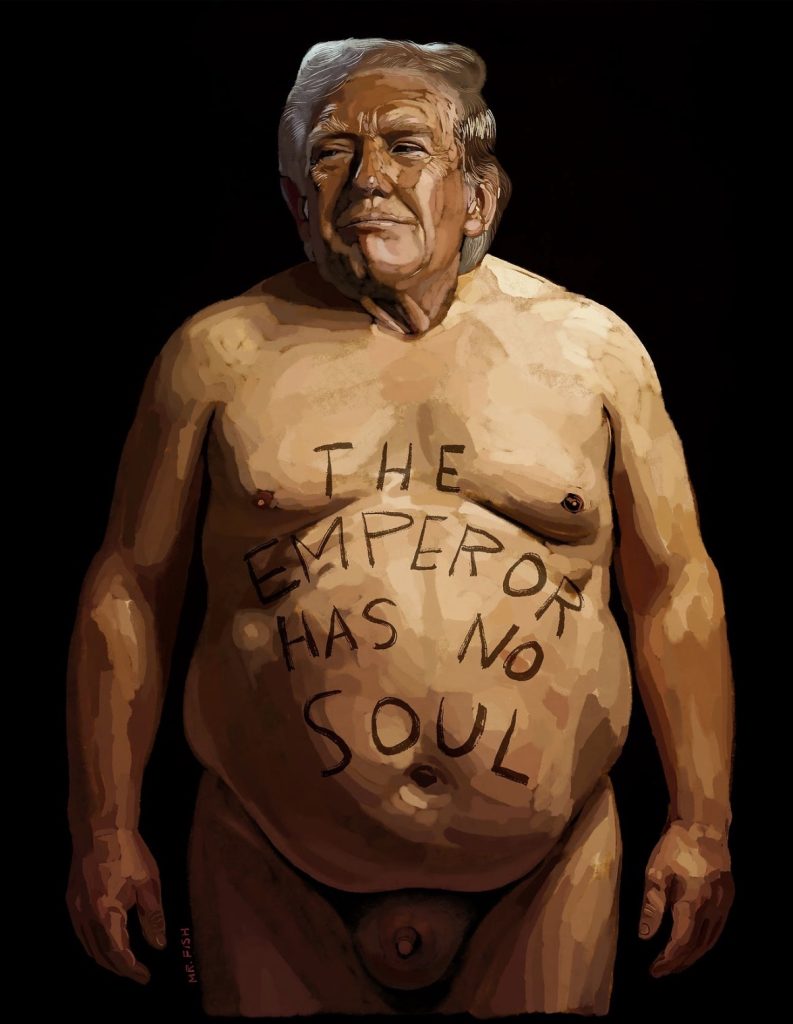
Trump Has No Soul
Chris Hedges
Trump is dangerous not simply because of his imbecility and unbridled narcissism, but because he lacks the core attributes of empathy and understanding that define the human soul.
The most profound realities of human existence are often the ones that can never be measured or quantified. Wisdom. Beauty. Truth. Compassion. Courage. Love. Loneliness. Grief. The struggle to face our own mortality. A life of meaning.
But perhaps the greatest conundrum is the concept of a soul. Do we have a soul? Do societies have souls? And, most basically, what is a soul?
Philosophers and theologians, including Plato, Aristotle, Augustine and Arthur Schopenhauer, have all grappled with the concept of a soul, with Schopenhauer preferring to define the mystical force within us as will. Sigmund Freud used the Greek word psyche. But most have accepted, whatever the definition, some version of a soul’s existence.
While the concept of the soul is opaque, soullessness is not. Soullessness means something inside of us is dead. Basic human feelings and connections are shut down. Those without souls lack empathy. I saw the soulless in war. Those so calcified inside they kill without any demonstrable feeling or remorse.
The soulless exist in a state of insatiable self-worship. The idol they have erected to themselves must be constantly fed. It demands a never-ending stream of victims. It demands abject obedience and subservience, publicly on display at Trump cabinet meetings.
Psychologists, I expect, would define the soulless as psychopathic.
I write this not to get into an esoteric debate about the soul, but to warn what happens when those without souls seize power. I want to write about what is lost and the consequences of that loss. I want to caution you that death, our death — as individuals and as a collective — mean nothing to those without souls.
This makes the soulless very, very dangerous.
Those who lack souls have no concept of their own limitations. They feed off a bottomless and self-delusional optimism, giving to their cruelest deeds and bitterest defeats, the patina of goodness, success and morality.
Those without souls — as Paul Woodruff writes in his small masterpiece “Reverence: Renewing a Forgotten Virtue” — do not have the capacity for reverence, awe, respect and shame. They believe they are gods.
The soulless cannot respond rationally to reality. They live in self-constructed echo chambers. They hear only their own voice. Civic, familial, legal and religious rituals and ceremonies that transport those with souls into the realm of the sacred, into a space where we acknowledge our shared humanity, forcing us, at least for a moment, to humble ourselves, are meaningless to those without souls. Those without souls cannot see because they cannot feel.
The soulless, enslaved by narcissism, greed, a lust for power and hedonism, cannot make moral choices. Moral choices for them do not exist. Truth and falsehoods are identical. Life is transactional. Is it good for me? Does it make me feel omnipotent? Does it give me pleasure? This stunted existence banishes them from the moral universe.
Human beings, including children, are commodities to the soulless, objects to exploit for pleasure or profit or both. We saw this soullessness displayed in the Epstein Files. And it was not only Epstein. Huge sections of our ruling class including billionaires, Wall Street financiers, university presidents, philanthropists, celebrities, Republicans, Democrats and media personalities, consider us worthless.
Thucydides understood. Reverence is not a religious virtue but a moral virtue. Woodruff went so far as to define it as a political virtue. Reverence for shared ideals, Woodruff writes, is the only thing that can bind us together. It is the only attribute that ensures mutual trust. Reverence allows us to remember what it means to be human. It reminds us that there are forces we cannot control, forces that we will never understand, forces of life that we did not create and must honor and protect — including the natural world — and forces that allow us moments of transcendence, or what in religious terms, we call grace.
“If you desire peace in the world, do not pray that everyone share your beliefs,” Woodruff writes. “Pray instead that all may be reverent.”
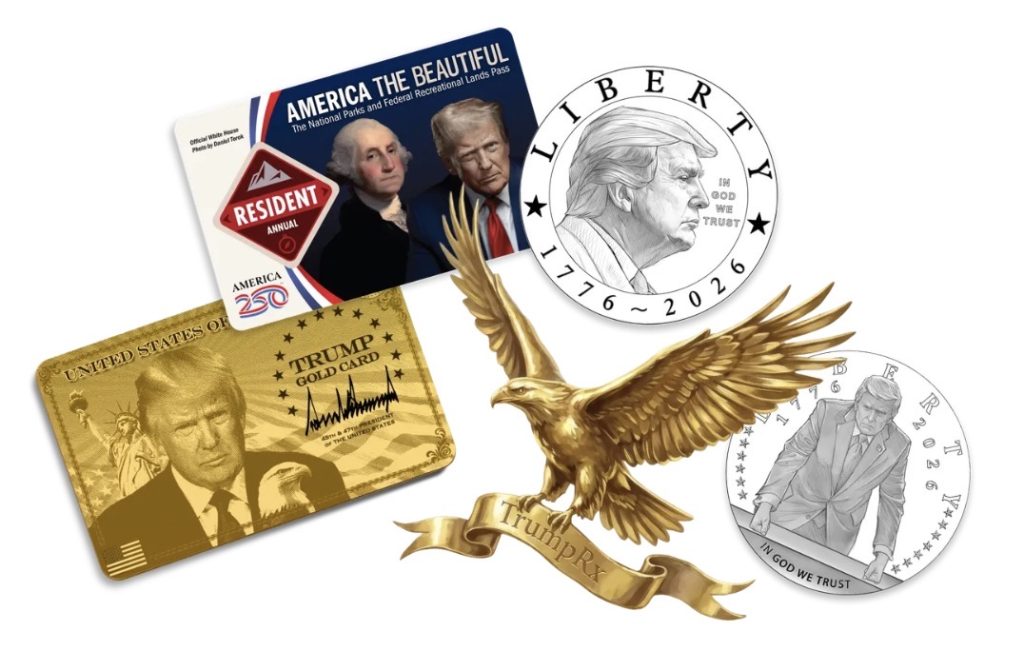
Trump’s celebration of himself is made manifest in his stunted vocabulary of superlatives and his rebranding of national monuments. He tears down the East Wing to construct his gaudy and oversized $400 million ballroom. He proposes a 250-foot-tall memorial arch, adorned with gilded statues and eagles, in honor of himself, an arch that will be bigger than the Arch of Triumph erected by North Korean dictator Kim II Sung in Pyongyang. He is planning a “National Garden of American Heroes” that will include life-size statues of celebrities, sports figures, political and artistic figures deemed by Trump to be politically correct, along with, of course, himself. His face adorns the sides of federal buildings on huge, well-lit banners. He changed the name of the John F. Kennedy Memorial Center for the Performing Arts to the Donald J. Trump and the John F. Kennedy Memorial Center for the Performing Arts. He added his name to the headquarters of the U.S. Institute of Peace. He has announced a new fleet of U.S. naval vessels called Trump-class battleships.
These are monuments not only to Trump, but to a perverted ethic, to the insatiable self-worship that defines the inner void of the soulless. Monuments, houses of worship and national shrines dedicated to justice, self-sacrifice and equality, which demand from us humility and introspection, which require the capacity for reverence, mystify the soulless.
The soulless have no sense of aesthetics. They have no sense of balance, symmetry and proportion. The bigger, the gaudier, the more encrusted in gold leaf, the better. They seek to shut out everything and everyone else, to herd us with offerings to the feet of Moloch.
When the soulless wage war it is part of this perverted drive to build a monument to themselves. When war goes badly, as it is going in Iran, the soulless, unable to read reality, demand greater levels of violence and destruction. The more they fail, the more they are convinced everyone has betrayed them, the more they descend into a tyrannical rage.
Trump, potentially facing a humiliating debacle in Iran, will lash out like a wounded beast. It does not matter how many suffer and die. It does not matter what weapons, including nuclear weapons, must be employed. He must triumph, or at least appear to triumph.
“Fathers and teachers, I ponder, ‘What is hell?’” Father Zossima asks in Fyodor Dostoevsky’s “The Brothers Karamazov.” “I maintain that it is the suffering of being unable to love.”
This is the plight of the soulless. They seek, in their misery, to make their hell our own.
***
Source:
- Chris Hedges, Trump Has No Soul, The Chris Hedges Report, 26 March 2026
***
Ashley Cai, Everything With Trump’s Signature, Name and Likeness: Currency, Buildings and More, The New York Times, 28 March 2026
***