Mythopoetic China — China Heritage Annual 2027
遷想妙得
China Heritage Annual 2027, the theme of which is Mythopoetic China, will be formally launched on 1 January 2027.
This preview features the homepage of the Annual as it stands at present.
— Geremie R. Barmé
Editor, China Heritage
22 November 2026
***
***
Over the past decade, China Heritage has touched the ‘mythopoetic historical complex’ of the People’s Republic of China any number of times. As we enter our second decade, in January 2027, it seems only fitting to expand our analysis of what I regard as the interstitium of China’s party-state.
As we will argue in China Heritage Annual 2027, the mythopoetic network spans and permeates every layer of Chinese thought, culture and life. Official, unofficial and commercial China are all enmeshed in what is essentially a ‘third circulatory system’, one that complements the political, economic and social order. To study and understand this network further illuminates the world envisioned and policed by China’s Communist Party.
[Note: For a discussion of the interstitium, see: Sam Sifton, It’s All Connected, The New York Times, 11 May 2026; and, Avraham Z. Cooper and Jérôme Berthier, Inside the Interstitium, the Human Body’s Hidden Pathways, The New York Times, 11 May 2026.]
My encounter with the concept of the ‘mythopoetic’ came from reading Slavo Žižek’s observations on the Yugoslav Wars of the 1990s. In 2008, Žižek wrote an essay about the military-poetic complex that brought to mind the heady early days of China’s Cultural Revolution. He had previously observed that there is ‘no genocide without poetry’ and then, in that new article he offers an answer to the question ‘How were they able to do it?’
War has been defined as ‘a continuation of politics by other means’, but the fact that Karadzic is a poet enables us to see that ethnic cleansing in Bosnia was the continuation of (a kind of) poetry by other means. True, Milosevic ‘manipulated’ nationalist passions – but it was the poets who gave him the means to do this. They – the sincere poets, not the corrupted politicians – were at the origin of it all, when, back in the 1970s and early 1980s, they started to sow the seeds of aggressive nationalism, not only in Serbia, but also in the other ex-Yugoslav republics. Instead of the military-industrial complex, we in post-Yugoslavia had the military-poetic complex personified in the twin figures of Ratko Mladic and Radovan Karadzic.
The term ‘military-poetic complex’ resonated with my understanding of the ‘mythopoetic’. Although both expressions had a very different history, together they struck me as being able to encapsulate my understanding of the militant and highly romantic revolutionary culture of post-1949 China. In fact, ‘mythopoetic’ immediately evoked memories of Embroidery for Premier Zhou 三繡周總理, a song performed by Guo Lanying (郭蘭英, 1929-2026) during a performance at the Great Hall of the People in Beijing organised by the Communist Party and the PLA to commemorate the memory of Zhou Enlai in January 1977. That performance, which I saw half a century ago, will be the subject of a chapter in this series.
Official China has been known to use the term 詩史合一 shī shǐ héyī to describe the poetical flights of fancy and historical afflatus found in the works of writers like Mao Zedong. Indeed, Mao’s poetry will feature in this series, just as it has in previous works like Shades of Mao: the Posthumous Cult of the Great Leader (1996), For Truly Great Men, Look to This Age Alone (2012) and in Ruling the Rivers and Mountains.
***
***
As I have noted for over two decades, New Sinology encourages a holistic approach to the study of China. In doing so, I emphasise the tradition of 文史哲 wén shǐ zhé, one that embraces the ‘literary, historical and intellectual’. To accommodate this old formula to the realities of China’s post-1949 party-state, I also suggest that contemporary tricolon of 文史哲 is made up of ‘propaganda/ PR, mytho-poetic historiography and Stalino-Maoist based ideology’.
Those who would meaningfully engage with the modern Chinese world should seek a familiarity with the interwoven realities of the abiding and the modern aspects of the tradition. To understand the varied terrain of mythopoetic China is also essential for that quest.
The rubric of China Heritage Annual 2027 is 遷想妙得 qiān xiǎng miào dé, an aesthetic concept first articulated by Gu Kaizhi (顧愷之, c. 344-406). Roughly translated, it means ‘imaginative associations that express the ineffable’.
In the present issue of China Heritage Annual, we remind readers that the year 2027 marks three significant centenaries:
- The suicide of Wang Guowei 王國維 on 2 June 1927;
- The Shanghai Massacre of 12-15 April 1927 and the start China’s Civil War, one that continues to the present day; and, linked to that massacre,
- The Nanchang Rebellion on 1 August and the creation of the Red Army 紅軍, or the Chinese Worker-Peasant Red Army 中國工農紅軍, the armed wing of China’s Communist Party. In the late 1940s, the Red Army and its successors would be named the People’s Liberation Army.
Other noteworthy anniversaries that also fall in 2027 include:
- The centenary of the start of the Nanking Decade in 1927, and ninety years since its end in 1937 with the outbreak of the Second Sino-Japanese War; the Nanking Massacre; and, the negotiated untied front involving the Nationalist and Communist parties in 1937, ten years after the Shanghai Massacre of April 1927;
- Seventy years since Anti-Rightist Campaign of 1957 which saw the purge of over 50o,000 people;
- Fifty years since the gaokao university exam system was revived in 1977;
- Forty years since the fall of Party General Secretary Hu Yaobang in 1987 and the official denunciation of Bourgeois Liberalism, something that set the scene for the events of 1989; and,
- The thirtieth anniversary of the ‘Hong Kong handover’ at midnight on 1 July 1997 when the United Kingdom transferred sovereignty of the 150 year-old colony to the People’s Republic of China.
***
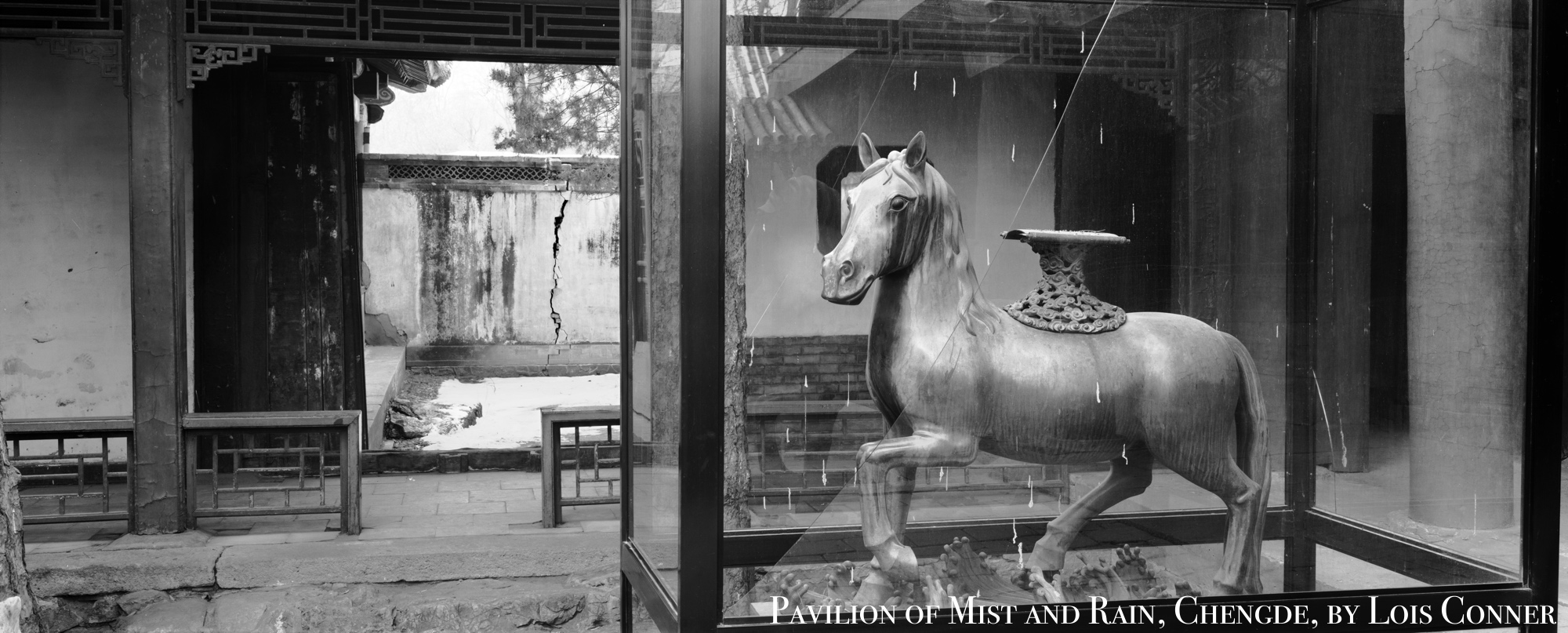
My thanks to Callum Smith and Lois Conner for supporting this new venture.
— Geremie R. Barmé,
Editor, China Heritage
20 November 2026
Formal launch: 1 January 2027
***
***
Mythopoetic China
Contents
- Prologue — The Interstitium and Mythopoetic China
- The Ninth of September 1976 and the Birth of Mythopoetic Mao
- For Truly Great Men, Look to This Age Alone
- Guo Lanying and Zhou Enlai in January 1977
- The Long March — a Mao poem and Edgar Snow
- to be continued …
***